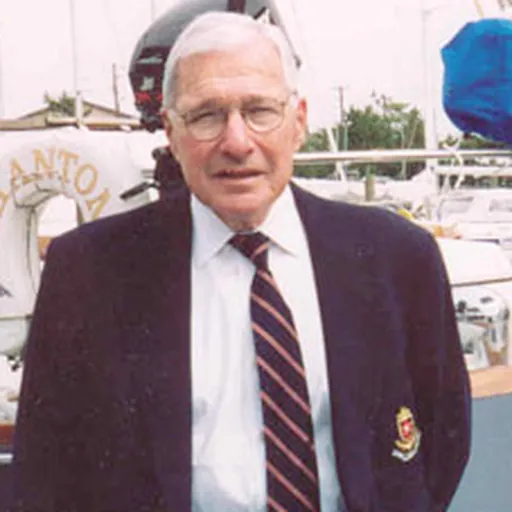
About Edmund Sonnenblick
Lived 1932 – 2007 (aged 74). Edmund Sonnenblick was an American cardiologist.
Edmund Hiram Sonnenblick (December 7, 1932 – September 22, 2007) was an American medical researcher and cardiologist. His studies of the function of cardiac muscle cells during the 1960s proved that the heart behaves as a muscle, and thus shaped the basis of both cardiovascular physiology and the modern treatment of cardiovascular disease, making possible the development of ACE inhibitors. In 1962, he was credited as the first person to image the heart muscle under scientifically-controlled conditions using the electron microscope.
Reflecting on Sonnenblick's discoveries, Harvard cardiologist Eugene Braunwald wrote that "Ed Sonnenblick occupies an honored place along with Ernest Starling, Carl Wiggers, and very few others in the pantheon of the greatest cardiovascular physiologists of the twentieth century." After Sonnenblick's death in 2007, a tribute published in the prominent peer-reviewed journal Circulation Research remembered Sonnenblick as "simply an intellectual giant in the field of cardiovascular research, and the work that he did will forever shape everyday treatments of heart disease." Another tribute hailed him as "one of the most prominent and important cardiologists in the history of American medicine"
Early life Sonnenblick was born in New Haven, Connecticut on December 7, 1932, to Israel "Ira" and Rosalind Sonnenblick. He grew up in Hartford, Connecticut, and after graduating as the salutatorian of his high school class, he attended Wesleyan University. He was also made an associate professor of medicine at Harvard Medical School. In Boston, he continued his research and trained a group of cardiologists who went on to lead their own research laboratories and divisions of cardiology. Among his notable discoveries during this period was his description of a functional defect in the sarcoplasmic reticulum of the heart of the hereditary cardiomyopathic hamster—one of the first identified biochemical defects in the failing heart.
Albert Einstein College of Medicine: 1975–2007 In 1975, Sonnenblick relocated to New York City and was appointed the inaugural director of the Cardiology Division and Olson Professor of Medicine at the Albert Einstein College of Medicine. He soon partnered with the established cardiology program at Montefiore Medical Center, which led to the award of a joint NIH research fellowship training grant and an NIH-supported program project grant, of which Sonnenblick served as the principal investigator. With James Scheuer and Leslie Leinwand, Sonnenblick developed the Einstein Cardiovascular Research Center and supported the creation of one of the United States' first molecular cardiology programs. The couple had three daughters. His oldest daughter, Emily Sonnenblick, is a radiologist at Mount Sinai Hospital in New York. She is married to cancer geneticist and oncologist Kenneth Offit. His youngest daughter, Charlotte Sonnenblick, is married to artist and author Adam Van Doren, grandson of Pulitzer Prize-winning poet, Mark Van Doren. Sonnenblick's middle daughter, Annie Sonnenblick, died of sepsis in 1984. Wesleyan University's annual Sonnenblick Lecture and Annie Sonnenblick Writing Award are named in her honor.
Sonnenblick was an enthusiastic sailor and owned a series of sailboats, which he would use regularly around Cape Anne and Cape Cod.
Legacy The idea that "the heart is a muscle" in a basic anatomical sense was not controversial in the early 1960s. Before Sonnenblick's studies, the dominant framework for understanding cardiac function was hemodynamic and hydraulic: the heart was understood as a pump, described by the Frank-Starling law. But there was no cellular mechanical explanation for what the law held.
Sonnenblick had a long career but his scientific legacy rests on a foundational body of work completed largely before he turned thirty-five. The 1962 force-velocity paper and subsequent studies of sarcomere-length—what Braunwald described as his "two grand slam home runs"—are among the few scientific contributions of the 20th century that fundamentally reoriented cardiovascular science. By demonstrating that the contractile behavior of isolated cardiac muscle follows the same mechanical laws governing skeletal muscle—and by extending those findings to the intact ventricle—Sonnenblick supplied the physiological framework within which the modern concepts of preload, afterload, and contractility became clinically operational. His work supplied the theoretical justification for afterload reduction as a therapeutic strategy, which in turn laid the conceptual groundwork for the development and widespread adoption of ACE inhibitors in the treatment of heart failure and hypertension.
Don’t just read it —
keep it.
Full-length biographies made to live with: read them, listen on the way to work, watch them tonight.
- E-book
- Audio
- Video
Instant download · yours to keep · every purchase keeps this site free
Important facts
People in Edmund Sonnenblick's life
Named in this biography and alive at the same time



Related people
Same field, nearest in time



Contemporaries
People whose lives overlapped Edmund Sonnenblick's



Frequently asked questions
Who was Edmund Sonnenblick?
American medical researcher and cardiologist
When was Edmund Sonnenblick born?
Edmund Sonnenblick was born on 7 December 1932 in New Haven.
When did Edmund Sonnenblick die?
Edmund Sonnenblick died on 22 September 2007 in Darien.
What was Edmund Sonnenblick's occupation?
Edmund Sonnenblick was a cardiologist.
What nationality was Edmund Sonnenblick?
Edmund Sonnenblick was American.
Sources & further reading
· Wikipedia: Edmund Sonnenblick
Cite this page
APA: Biography.guide. (2026). Edmund Sonnenblick. https://biography.guide/edmund-sonnenblick/
MLA: "Edmund Sonnenblick." Biography.guide, https://biography.guide/edmund-sonnenblick/.
Chicago: "Edmund Sonnenblick." Biography.guide. https://biography.guide/edmund-sonnenblick/.
Data last updated: 2026-09-23 · Spot an error? Report a correction.
Portrait: Wikimedia Commons · author & licence
Page generated 2026-09-27 05:05 UTC