
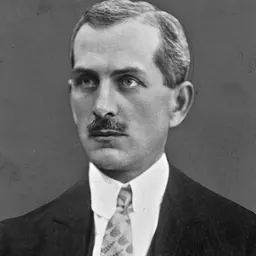
Bernard Lown
American cardiologist, developer of the DC defibrillator and the cardioverter
About Bernard Lown
Lived 1921 – 2021 (aged 99). Bernard Lown was a Lithuanian and American cardiologist, peace activist, inventor, physician and scientist, known for International Physicians for the Prevention of Nuclear War.
Early life and education Lown was born in Utena, Lithuania as Boruch Lac, on June 7, 1921, the son of Nison and Bela (Grossbard) Lac. His family was Jewish, and one of his grandfathers was a rabbi. They emigrated to Maine when Lown was 14, His mentor in cardiology was the renowned clinical cardiologist Samuel A. Levine.
Development of the defibrillator Lown helped raise international medical awareness of sudden cardiac death as a leading cause of mortality in the developed world. Based on patient observations, Lown concluded that sudden cardiac death was reversible and survivable, and that people who were successfully resuscitated could have a near normal life expectancy. Untold lives were saved by getting patients out of bed.
Until the 1950s, ventricular fibrillation of the heart was treated with drug therapy alone. In 1956 American cardiologist Paul Zoll described resuscitations during open-heart surgery and, later after sudden cardiac death, by means of an alternating current (AC) electric shock, derived from a wall socket. AC current was untested as to its safety and efficacy and could cause death. In 1959, Lown demonstrated that AC was injurious to the heart and could be lethal. Indeed, in 1967, Rene Favoloro performed what is regarded as the first coronary artery bypass operation in Effler’s surgical department at Cleveland Clinic. DC defibrillation provided a safe way to restore a normal heart rhythm during the surgical bypass of obstructed coronary arteries.
Lown went on to investigate the possibilities of the defibrillator to treat non-life-threatening tachycardias. He discovered that timing the electrical discharge outside the heart’s brief vulnerable period of 0.03 seconds in duration prevented ventricular fibrillation or sudden cardiac death. He called this method of timed DC discharge "Cardioversion." The cardioverter and DC defibrillator were especially valuable in coronary care units, when patients are hospitalized when most susceptible to sudden cardiac death and other potentially malignant arrhythmias.
In addition to advancing medical technology, Lown discovered new applications for two drugs that were widely used for cardiac problems: digitalis and lidocaine. Until the 1950s, digitalis poisoning was a major cause of fatality among patients with congestive heart failure. During a medical residency at the Montefiore Hospital in New York City, Lown demonstrated the critical role of potassium in determining the safe use of digitalis. His discovery led to abandonment of long acting digitalis drugs like digitoxin. Instead, the short acting digitalis glycoside gained universal acceptance. Lown also focused medical attention on potassium loss with the use of various diuretics.
In 1964, Lown introduced a new use for the drug lidocaine to control ventricular disordered heart rhythms. Lidocaine was also used in coronary units to prevent the need for resuscitation. Previously, lidocaine was used almost exclusively by dentists as an anesthetic agent.
Fiber optics In 1957, Lown was concerned with how to visualize an atherosclerotic aortic plaque occurring in the big coronary vessels that supply nutrients to the heart muscle. It was his hope that visualizing this would lead to discovering how to treat and prevent heart attacks and sudden cardiac death. A discussion with a close friend, Elias Snitzer, a physicist at Massachusetts Institute of Technology, led to an introduction to Michael Polanyi, a physicist with American Optical Company. At the time, Polanyi was working on fiber optics. Lown received a grant from the Hartford Foundation to pursue fiber optics. However, optical technology was inadequate at the time, so this line of research was discontinued. Lown's work did show that, with fiber optics, it was possible to measure oxygen saturation in dogs, and determine the cardiac output in humans.
Paradoxically, when Lown submitted two abstracts to the World Cardiology Conference in Mexico in 1964, one on the defibrillator and cardioversion, and one dealing with fiber optics, the former was rejected and the latter accepted.
Peace activism
Physicians for Social Responsibility (PSR) In early 1961, Lown called together a group of physicians from Boston’s teaching hospitals to address the mounting threat of nuclear war between the USSR and the USA. This political subject had not been addressed previously by physicians in the United States. The new organization called itself Physicians for Social Responsibility (PSR).
Among the activist participants were Jack Geiger and Victor W. Sidel. By the end of 1961, the group had drafted five research articles about the medical consequences of a ten-megaton nuclear attack on the city of Boston, a magnitude considered both possible and likely by the U.S. military. The series, "The Medical Consequences of Thermonuclear War", was published as a symposium in the New England Journal of Medicine in May 1962.
These articles encouraged anti-nuclear medical movements worldwide. Additionally, they helped pass the Limited Test Ban Treaty in the U.S. Senate.
Committee of Responsibility for War Injured Vietnamese Children (COR) Lown was also involved in organizing COR, the Committee of Responsibility to Save War Burned and War Injured Children, of which he was a leading member. This organization aimed to bring injured and burned Vietnamese children for treatment in the United States, in order "to bring the war home."
COR was headed by Herbert Needelman. It arranged for several American hospitals to treat injured Vietnamese children for free. John Constable III, from the Shriner Burn Center of the Massachusetts General Hospital in Boston, was among the first physicians to participate. He and other physicians traveled numerous times to Vietnam to choose children with injuries that could be treated.
This mission could not be accomplished without ambulance planes ferrying the very sick children. Lown led a delegation to Washington for a meeting with William F. Bundy, then Assistant Secretary of State. He was persuaded to support the objective of COR. In 1967 the Pentagon began to transport Vietnamese children to the USA.
International Physicians for the Prevention of Nuclear War (IPPNW) Meeting of the Israeli Branch of the IPPNW held on January 29, 1986 at Hebrew University, Israel, showing Lown in the center, Ernesto Kahan to his immediate right and Eliyahu Stoupel to the far left. In 1980, Lown called on a small number of doctors to organize against the mounting nuclear threat that followed USSR's invasion of Afghanistan and the election of the Reagan administration. This small group of physicians, with the help largely of first-year Harvard medical students, formed the International Physicians for the Prevention of Nuclear War (IPPNW).
This IPPNW could not have been founded without the intimate friendship between Eugene Chazov and Lown. Both cardiologists, they had collaborated in researching the issue of sudden cardiac death, sponsored by the National Heart and Lung Institute.
Lown headed the American Sudden Death Task Force, while Chazov headed the Soviet group of cardiologists. Frequent visits to the USSR with American cardiological colleagues promoted dialogue and understanding between physicians of the two hostile countries. They laid the groundwork for the IPPNW and made it possible. These events are described in Lown's memoir Prescription for Survival: A Doctor's Journey to End Nuclear Madness.
The first IPPNW annual World Congress was held at Arlie House, Virginia, in 1981. Eighty medical leaders from twelve countries attended.
In 1982, the 2nd IPPNW Congress took place in Cambridge, England, with over 400 participants. Among the American participants were astrophysicist and science populizer Carl Sagan; Admiral Noel Gayler, formerly head of the American Pacific Fleet, Director of the National Security Agency, and in charge of targeting nuclear weapons against he USSR; Howard Hiatt, Dean of the Harvard School of Public Health; and Herbert Abrams, head of Radiology at the Harvard Medical School. Equally distinguished participants attended from the UK, Germany, and Scandinavian countries.
A major breakthrough for IPPNW was arranged by Eugene Chazov in 1982 when three Soviet physicians and three American physicians appeared on a nationwide Soviet television network. The Soviet participants were Chazov, Michael Kuzin, and Leonid Ilyin; while the Americans were Lown, James Muller, and John Pastore. During this unprecedented telecast an audience of 100 million Soviet viewers heard for the first time an unedited discussion of the consequences of nuclear war. The program was later broadcast in the US. They provided access to medical literature to health professionals in developing countries.
ProCor created an internet network of health workers in developing countries around the world. This internet-based community enabled physicians and health workers to access relevant and reliable medical information about cardiovascular disease. The focus was on disease prevention. It also offered an email-based forum for discussion.
ProCor’s global outreach included The Ashanti-ProCor Project, launched in 2006, which was designed to assess cardiovascular disease knowledge and practice among health workers in the Ashanti Region of Ghana, identify those who can play a key role in prevention, and explore their information needs as a way to better address the needs of physicians in the developing world.
Ad Hoc Committee to Defend Healthcare In 1996, Lown, with Stephanie Woolhandler and David Himmelstein of the Cambridge City Hospital; Jerry Avorn, head of Pharmacoepidemiology at the Harvard Medical School; and Susan Bennett, a primary care physician at Massachusetts General Hospital formed the Ad Hoc Committee to Defend Healthcare. Many health workers joined the Ad Hoc Committee, the objective of which was to promote a single-payer healthcare system in Massachusetts
In 1997, a letter signed by over 2000 Massachusetts physicians and published in The Journal of the American Medical Association outlined the need for single-payer healthcare. The Ad Hoc Committee canvassed people throughout the state of Massachusetts to gain the 100,000 names necessary to put the issue on the ballot.
The issue was put to referendum in Massachusetts in 2000. In spite of opposition, the referendum showed 45% of voters in favor of single-payer healthcare.
The Lown Institute and the Right Care Alliance In 2012, the Lown Cardiovascular Research Foundation was renamed The Lown Institute. The Lown Institute addresses the growing crisis in healthcare in the US, marked by overtreatment, undertreatment, and mistreatment through research, clinical programs, and convenings. The Institute holds an annual conference where the newest research on overuse and underuse is presented, and where like-minded clinicians and patient advocates can share ideas. It also sponsors clinical programs to address overuse, such as the Right Care Educators program, Right Care Rounds, and the Right Care Vignette Competition. The Lown Institute is currently conducting research on risk-adjustment methods for evaluating patient outcomes.
Among participants in the leadership of The Lown Institute are Nassib Chamoun, Vikas Saini, Shannon Brownlee, Thomas Graboys, Professor Joseph Brain, Patricia Gabow, Elizabeth Gilbertson, James Joslin, Aretha Davis, David Bor, Michael Fine, and Breck Eagle.
The Lown Institute awards the Shkreli Awards named after Martin Shkreli for "worst examples of profiteering and dysfunction in health care". In 2020 it was awarded to the Trump administration’s federal personal protective equipment (PPE) taskforce.
The Right Care Alliance (RCA) is the sister organization of The Lown Institute and the advocacy wing. The Right Care Alliance brings together clinicians, patients, and community members in a grassroots movement advocating for a universally accessible, affordable, safe, and effective healthcare system. The RCA is organized into specialty councils and regional chapters that organize on topics specific to their specialty or region. The RCA holds an annual week of action, during which members organize activities to demonstrate compassionate, patient-centered care, such as engaging the broader community in listening and storytelling.
In 2018 the organization started analyzing data about 3,200 hospitals to access performance in terms of racial inclusivity and health equity. The resulting report was released in 2021.
Personal life Lown married Louise Lown, a cousin of his, in 1946. They remained married until her death in 2019. Together, they had three children: Anne, Fredric, and Naomi.
The Brigham and Women's Hospital in 2009 established the Bernard Lown Educational award. The recipient is selected by staff and students.
The International Physicians for the Prevention of Nuclear War, which Lown co-founded, won the 1985 Nobel Peace Prize.
Honors from the Harvard School of Public Health The Lown Scholars Program at the Harvard School of Public Health aims to assist promising health professionals who live and work in low- and middle-income countries. "[The program] is designed to create an international cadre of talented health professionals [...] who will use public health tools and strategies to prevent cardiovascular disease and promote cardiac health."
The Lown Visiting Professor In 2012, a visiting Professorship was established whose function is to coordinate the courses afforded to the Lown Scholars as well as help promote cardiovascular preventative programs in low- and middle-income countries.
Lown bibliography Lown B, Levine SA: Current Advances in Digitalis Therapy. Boston: Little, Brown and Co., 1954. Lown B, Levine HD: Atrial Arrhythmias, Digitalis and Potassium. New York: Landberger Medical Books, 1958. Vikhert AM, Lown B: Sudden Death (in Russian). Moscow: Medithinya, 1982. Lown B, Malliani A, Prosdocimi M (eds.): Neural Mechanisms and Cardiovascular Disease. Padova, Italy: Liviana Press, 1986. Lown, B: To Heal a Sick Planet. Hiroshima, Japan: Chugoku Shimbun, 1991. Lown B: Never Whisper in the Presence of Wrong. Cambridge, MA: International Physicians for the Prevention of Nuclear War, 1993. Lown B: Practicing the Art While Mastering the Science. Brookline, MA: Lown Cardiovascular Research Foundation, 1995.
Lown B: Tributes to a Teacher: Clinical Pearls. Lown Cardiovascular Research Foundation. Brookline, MA, 2008.
Don’t just read it —
keep it.
Full-length biographies made to live with: read them, listen on the way to work, watch them tonight.
- E-book
- Audio
- Video
Instant download · yours to keep · every purchase keeps this site free
Important facts
People in Bernard Lown's life
Named in this biography and alive at the same time





Related people
Same field, nearest in time



Contemporaries
People whose lives overlapped Bernard Lown's



Frequently asked questions
Who was Bernard Lown?
American cardiologist, developer of the DC defibrillator and the cardioverter (1921-2021)
When was Bernard Lown born?
Bernard Lown was born on 7 June 1921 in Utena.
When did Bernard Lown die?
Bernard Lown died on 16 February 2021 in Chestnut Hill.
What was Bernard Lown's occupation?
Bernard Lown was a cardiologist, peace activist, inventor, physician and scientist.
What was Bernard Lown known for?
Bernard Lown was known for International Physicians for the Prevention of Nuclear War.
What nationality was Bernard Lown?
Bernard Lown was Lithuanian and American.
Sources & further reading
Cite this page
APA: Biography.guide. (2026). Bernard Lown. https://biography.guide/bernard-lown/
MLA: "Bernard Lown." Biography.guide, https://biography.guide/bernard-lown/.
Chicago: "Bernard Lown." Biography.guide. https://biography.guide/bernard-lown/.
Data last updated: 2026-09-20 · Spot an error? Report a correction.
Page generated 2026-09-27 05:32 UTC