
About Edmund Scarborough
Lived 1617 – 1671 (aged 53–54). Edmund Scarborough was a politician.
Captain Edmund Scarborough (September 1617 – 1671) was a controversial English-born merchant, planter, sea captain, politician and military officer who served as speaker of the Virginia House of Burgesses from 1645 to 1646, and represented the Eastern Shore of Virginia during most of the last two decades of his life. Although his father of the same name also served as a burgess, as did another man in 1723-1726, he was the most ruthless and powerful of the three, at one time owning a quarter of land on Virginia's Eastern Shore as well as a considerable shipping fleet based in Boston, Massachusetts and trading with Angola. Scarborough's main residence, then known as "Occahannock House" referencing a now-silted creek and cove once known as "Scarborough Gut", is now on the National Register of Historic Places as Scarborough House Archaeological Site with its centuries old replacement now known as "Hedra Cottage".
Early life and family Scarborough was born in England, and baptized at St Martin-in-the-Fields on October 2, 1617 of the same year. His father, Captain Edmund Scarborough, was an army officer, barrister and graduate of Gonville and Caius College, Cambridge who immigrated to the English colony of Virginia. Edmund Sr. settled on the Eastern Shore of Virginia with his family around 1628 or 1629, and represented the Accomac Shire in the Virginia General Assembly in the early 1630's.
A brother, Sir Charles Scarborough, remained in England and studied medicine before becoming a noted mathematician who was a founding member of the Royal Society. A Royalist, he served as physician to Kings Charles II and James II after the Stuart Restoration. The land on which his main residence, Occahannock House was constructed, was acquired on this man's behalf when he was a seven year old boy. In November 1634, Scarborough repatented land on Maggoty Bay claimed by his father for transporting his wife, son and a servant to the colony, and began claiming land in his own right.
In 1653, Scarborough was barred from public office and asked to leave the Virginia colony because of his strident Royalist sympathies, whereupon he departed after leasing 3000 acres patented in the names of his sons and four ships to William Bunton of Boston, the lease expiring in 14 years when Edmund Jr. was to come of age. In 1654 he and John Walton invested in 3,900 acres called "Peckincke" in Westmoreland County on behalf of John Bagnall of London.
Scarborough was a merchant whose ethics many questioned. Beginning in 1660, he also operated salt works at Occahonnock House and at Gargaphia nearer Maryland, but had not achieved the volume the legislator required for a bonus by 1666. Scarborough also had a fleet of ships traded with other colonies, including buying enslaved people from Angola in New York and transporting them south for resale. By December 1662, Scarborough owned slaves at Occahonnock House and also employed a tanner, four shoemakers (in June but nine in December) and two coopers. During the First Anglo-Dutch War, one of Scarborough's ships was seized en route to other colonies for trade. He retaliated by seizing a Prussian ship of similar size, although it was not of Dutch ownership. In 1652, Scarborough sold his seven ships (Deliverance, Mayflower, King David, Sea Horse, Holly Horse, Ann Clear, and Artillery) to William Burton of Boston.
Trained as a lawyer, Scarborough gained a reputation for ruthlessness by incidents such as that involving Anthony Johnson, a free black man. In 1657, Scarborough forged a letter in which Johnson, although illiterate, acknowledged a debt. Johnson could not contest the case; nevertheless, the court awarded Scarborough 100 acres (40 ha) of Johnson’s land to pay off his alleged "debt".
Military officer Scarborough served as an officer of the local militia (militia service being required of all white males in the era).
On April 28, 1651, Scarborough led about fifty men on a raid, on a nearby Pocomoke village along the northern boundary of Accomac Shire, after convincing the settlers that the Indians planned to attack. At least one historian doubts the veracity of his story and suggested that he may have invented the story in order to raise enough men for the attack on the village. After the settlers captured some of the villagers and bound two of them in chains, the Indians massed along the border, and it was believed they were about to launch an attack on Virginian settlements. In May all the men involved in the action were called to appear in court in James City County, including Ambrose Dixon, to account for their actions. Scarborough was exonerated, however, when the court found that his raid had been justified by the circumstances. This most likely took place in Northampton County in 1671, and was Scarborough's way of eliminating and dispersing local tribes, as well as consolidating his power in both Accomack and Northampton counties.
By 1663, after his main rival Obedience Robbins had died, Scarborough had become an enemy of Accomack County's Quakers, including Ambrose Dixon. Some Quakers moved to Maryland where they were offered more religious freedom. In October 1663, Scarborough led Virginia cavalry into Maryland's section of the Eastern shore, where he railed against Quakers and other dissenters and claimed land as Surveyor-General of the Virginia Colony.
Personal life He married Mary who bore 3 sons (Charles, Edmond and Littleton) and two daughters. Their son Charles Scarborough would continue the family tradition of public involvement and served as a burgess. One daughter married Devereaux Browne, who was named sole administrator of his father-in-law's large estate until Virginia's General Court intervened and named him as joint-administrator with this man's son Charles and other son-in-law John West. Complicating matters, besides the alternate spellings of the surname, are date discrepancies probably due to multiple generations of men of the same name, as one source claimed Scarborough's eldest son allegedly drowned as an adult in the York River on September 21, 1739. An even later Edmond Scarburgh or Scarborough was the son of Americus Scarburgh (1723-1774)and his wife Comfort West and grandson of Mitchell Scarburgh and the former Dorothy Wainhouse.
Scarborough also maintained a Swedish-born mistress named Ann Toft (1643–1687), who also bore three children (all daughters). Ann lived in Accomack from at least 1660 as a femme sole and was probably the wealthiest woman in Accomack due to her association with Scarborough. Scarborough set Toft up in business at a plantation known as Gargaphia on present day Gargathy Neck in northern Accomack County (seaside). This of land was transferred from Scarborough to her in Feb. 1664 when Ann was 21. Gargaphia, as it was known, shows up on many maritime maps of the time and would have been a convenient stopping point for sailors and a good embarkation point for Scarborough's many products and crops. Ann married Daniel Jenifer soon after Scarborough's death in 1671.
Later life and death Scarborough died of smallpox in 1671 and was buried on his plantation, but legend claims his friends removed his gravestone to keep his enemies from desecrating his remains. A modern grave marker has been placed on the grounds.
Scarborough died without a will and with heavy debts, his main house having been owned by his son Edmund Scarborough Jr. (d. 1712) since 1649 to shield it from creditors, and at least four succeeding generations also named a son Edmund, although Occahannock house passed from one of those men (a childless resident of York County) in 1752 to a relative named William Scarborough. In the early 19th century, now-historic Hedra Cottage was built by William M.K. Scarborough.
His son Charles Scarborough would continue the family's political and planter traditions by serving in both house of the Virginia General Assembly, although Governor William Berkeley at one time placed him as one of those exempt from pardons after Bacon's Rebellion in 1676, and Governor Francis Howard considered him insufficiently wealthy to be on the Governor's Council.
Don’t just read it —
keep it.
Full-length biographies made to live with: read them, listen on the way to work, watch them tonight.
- E-book
- Audio
- Video
Instant download · yours to keep · every purchase keeps this site free
Important facts
People in Edmund Scarborough's life
Named in this biography and alive at the same time

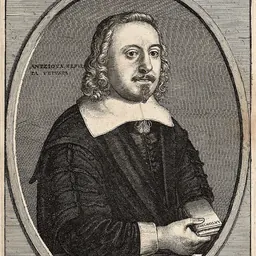
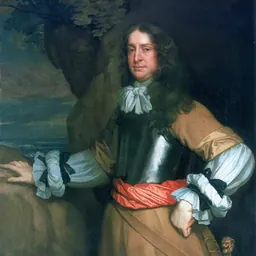

Related people
Same field, nearest in time
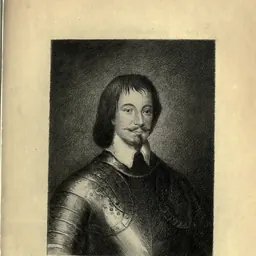

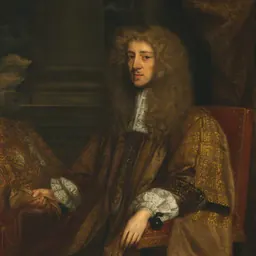
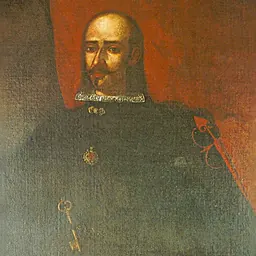
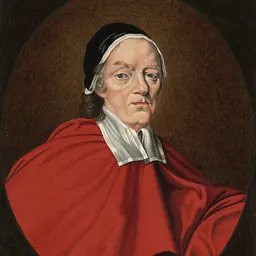
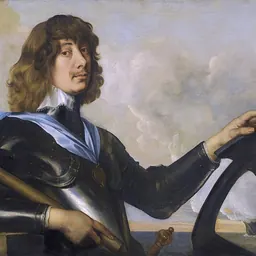
Contemporaries
People whose lives overlapped Edmund Scarborough's





Frequently asked questions
Who was Edmund Scarborough?
American politician
When was Edmund Scarborough born?
Edmund Scarborough was born in 1617 in England.
When did Edmund Scarborough die?
Edmund Scarborough died in 1671 in Virginia.
What was Edmund Scarborough's occupation?
Edmund Scarborough was a politician.
Sources & further reading
· Wikipedia: Edmund Scarborough
Cite this page
APA: Biography.guide. (2026). Edmund Scarborough. https://biography.guide/edmund-scarborough/
MLA: "Edmund Scarborough." Biography.guide, https://biography.guide/edmund-scarborough/.
Chicago: "Edmund Scarborough." Biography.guide. https://biography.guide/edmund-scarborough/.
Data last updated: 2026-09-20 · Spot an error? Report a correction.
Page generated 2026-09-27 05:11 UTC