
About Edmund Dummer
Lived 1651 – 1713 (aged 61–62). Edmund Dummer was an engineer, politician, naval engineer and shipbuilder.
Edmund Dummer (1651–1713) was an English naval engineer and shipbuilder who, as Surveyor of the Navy, designed and supervised the construction of the Royal Navy dockyard at Devonport, Plymouth and designed the extension of that at Portsmouth. His survey of 18 south coast ports is a valuable and well-known historic document. He also served Arundel as Member of Parliament for approximately ten years and founded the first packet service between Falmouth, Cornwall and the West Indies. He died a bankrupt in the Fleet debtors' prison.
In her account of Dummer, Celina Fox sums up his career thus:Using elements of mathematical calculation and meticulously honed standards of empirical observation, Dummer tried to introduce a more rational, planned approach to the task of building ships and dockyards, with the help of his extraordinary draughting skills. Operating on the margins of what was technically possible, meeting with opposition from vested interests and traditional work patterns, he struggled to succeed. Today he is little recognized outside the circle of naval historians and his grandest building projects were almost wholly destroyed by later dockyard developments or bombing.
Early career Dummer was baptised on 28 August 1651 at St. Nicolas' Church, North Stoneham, Hampshire, the eldest of four sons born to Thomas Dummer (1626–1710), gentleman farmer of Chickenhall, in the parish of North Stoneham near Southampton, and his wife, Joanne Newman. He joined the Royal Navy in 1668 and served his apprenticeship as a shipwright under Sir John Tippetts at Portsmouth naval dockyard. In his 1686 account of the state of the Navy, Samuel Pepys wrote that when Dummer was apprenticed to Tippetts, he was "mostly employed as his clerk in writing and drawing". By 1678, Dummer was employed as an "extra clerk" in the office of the Surveyor, "my patron and friend from my youth upward".
In 1677, Dummer and Tippetts assisted Sir Anthony Deane, who had been appointed Controller of the Victualling Accounts on the Navy Board, and given the responsibility for establishing for the first time standardised sets of dimensions of ships of the line to be applied to the "thirty new ships", the largest single shipbuilding programme hitherto undertaken. and include vertical sections through the ships showing the design and layout of the structure. These works constitute the earliest surviving example of Dummer's skills as a draughtsman, demonstrating a capacity to express an organised tectonic sensibility that was to mark his progress towards the surveyorship. Dummer was sent to Bristol until January 1680 when he was summoned to attend the Navy Board with his draughts. There he met Deane who had been released from prison though not yet discharged; Deane asked Dummer to make two draughts for him, a promise Dummer failed to keep, having been instructed by the Navy Board not to do so.
1682 voyage to the Mediterranean In July 1682, Dummer (now officially Master Carpenter on HMS Windsor Castle) was commissioned as a midshipman-extraordinary on HMS Woolwich and sent to the Mediterranean "in order to his collecting what useful observations should arise to him, in his enquiries through the several foreign ports there, relating either to the said art of ship-building, or the nature and order of the said ports, appearances of land, or ought else than might conduce to our service". Dummer had estimated that his expenses for about two years would be £95 4s 0d and it was agreed he was to be reimbursed for that sum by the Treasurer of the Navy.
On 3 August 1682, Dummer set out from Deal on the Woolwich, under the command of Captain William Holding, taking the Moorish Ambassador, who had been in England for six months, back to Tangier. Despite an attempted mutiny by the Ambassador's Moorish retainers while the ship was at anchor in Plymouth Sound, the Woolwich reached Tangiers on 31 August. After a change in command to Lieutenant Rigby (Holding had died and was buried at Tangiers), they sailed on east into the Mediterranean, south of Sardinia and Sicily, across the Ionian Sea to Cephalonia and Zante, then back through the Strait of Messina past the active volcano of Stromboli to Naples and Livorno, where Dummer disembarked, while the Woolwich started back to England on 24 November.
Dummer records that he then divided his time between Livorno and Pisa until 11 February 1683, when he received an answer from the Commissioners of the Admiralty "to whom I had given an account of my leaving the ship, and the reasons" for requesting extended shore leave.
Dummer reported that in Toulon, "all ships great & small are built on launches, and are careened when their occasions require it; for here are no docks, an obligation we are not tied to". He also made drawings of the new fortifications then under construction to the designs of Vauban.
In July 1683 Dummer sailed homewards from Livorno in the Swallow via the Balearic Islands, Málaga, Alicante, Gibraltar and Cádiz, where on 13 September he received orders to attend Lord Dartmouth in Tangier and stay until the English garrison was given up and destroyed, on 6 February 1684. By the end of the year his expenses, which amounted to £150 10s 6d – 50% more than his initial estimate – had been reimbursed.
Chatham While completing the fair copy of his journal, Dummer applied for positions as shipwright based in part on the strength of his skills as a draughtsman. In September 1685, on the recommendation of Pepys (now Secretary to the Admiralty Board), Dummer visited John Evelyn in Deptford. Evelyn was "so charmed with his ingenuity", he wrote to Pepys, "that I look on it as a new obligation to you; and if you find I cultivate it for my own sake a little; you will let him understand ... how much I wish him the improvement of your favours ..." (who was moved to become Master Shipwright at Sheerness) as First Assistant Master Shipwright at Chatham, under Robert Lee (the new Master Shipwright there), retaining this post until 1689. Writing at the time, Pepys considered Dummer "an ingenious young man, but said rarely to have handled a tool in his life, nor knows judiciously how to convert a piece of timber; has been much abroad indeed, but gained his present promotion upon the credit only of his designing and making of draught".
Surveyor of the Navy A Projection of a Dock Built with Stone: 1689 drawing by Edmund Dummer. On 20 April 1689 Dummer was appointed Assistant Surveyor of the Navy (under Sir John Tippetts) with a salary of £300 a year; on the death of Tippetts in August 1692, he succeeded him as Surveyor on 9 August at £500 a year, retaining the post until 22 September 1699.
As Surveyor, Dummer endeavoured to strengthen the Navy by extending the measure of uniformity in ship construction initiated by the thirty new ships project. Despite the Navy's desire for standardisation, even the thirty new ships differed in size and tonnage, as shipwrights took the dimensions specified as being minimum rather than absolute measures. To end these disparities, in 1692 Dummer wrote to the men appointed to survey and measure the ships then under construction, enclosing a small printed sketch, with measurement points keyed into letters, "to serve for one common rule of direction and information, whereby the parts necessary to be truly measure and known are at one view made intelligible to every man alike: and the numbers to be set down are to respect the letters in the manner following ..." His method of measurement was adopted as official practice in April 1696.
In 1699, Dummer reported to the Admiralty on Thomas Savery's patent designs for a system of paddle-wheels driven by a capstan – following Dummer's negative report, the idea was dismissed by the Admiralty. including estimates of the cost of building on each site, both in timber and stone. After some debate, the small inlet at Hamoaze was selected; the work was to be done in stone with a protective wet dock in front and, at the insistence of King Willam, the dry dock was made large enough to hold first-rate ships. At Devonport, Dummer was the designer of the first successful stepped stone dry dock in Europe.
1689 drawing by Dummer, comparing the profiles of a wooden (left) and stone (right) dock. Previously the Navy Board had relied upon timber as the major building material, which resulted in high maintenance costs and was also a fire risk. The docks Dummer designed were stronger with more secure foundations and stepped sides that allowed shorter timbers to be used for shoring and made it much easier for shipwrights to reach the underside of the vessel. These innovations also allowed rapid erection of staging and greater workforce mobility. He discarded the earlier three-sectioned hinged gate, which was labour-intensive in operation, and replaced it with the simpler and more mobile two-sectioned gate. He wished to ensure that naval dockyards were efficient working units that maximised available space, as evidenced by the simplicity of his design layout for Plymouth. He introduced a centralised storage area and a logical positioning of buildings, and his double rope-house combined the previously separate tasks of spinning and laying while allowing the upper floor to be used for the repair of sails.
By 16 September 1694, Dummer reported to the Admiralty, "Our docks here are finished and we purpose to take in the cleaning the mouth of the basin from the dam that stands before it, which will be done in a few days; a more particular account I will give you hereafter". His Account of the Generall Progress and Advancement of his Majestie's New Docks and Yard at Plymouth was presented to the Principal Officers and Commissioners of the Navy in December 1694. It clearly explains the logical thinking behind his planning of the works, influenced by his extensive travels. Typically, to the description of works undertaken he appended eight draughts: plans of the site, the yard and the dry dock, plans and elevations for the officers' dwelling houses, the great store house, hemp house, rope house and rope yard buildings, for "by representations and descriptions of works of this nature, when they are disposed in a manner most familiar and easy of the understanding, one finds at once both encouragement in the contemplation, and satisfaction in the judging of them". The drawings therefore served as a means of explanation and a form of advocacy, as well as evidence of and pride in his achievement.
Portsmouth In 1689, Parliament ordered one new dry dock and two new wet docks (or non-tidal basins) to be built at Portsmouth and work began in 1691 at an estimated cost of £15,890.
In November 1691 he oversaw the raising and repairing of the 54-gun fourth rate ship St David which had capsized and partially blocked Portsmouth harbour.
Survey of the South Coast In June 1698, under orders from the Lords of the Admiralty, Dummer undertook a plan to survey various harbours along the south coast of England, at a time when a new war with France was a real threat, and Portsmouth would have been a major target. In the survey, he was assisted by Captain Thomas Wiltshaw, a fellow Navy Board Commissioner and two Masters of Trinity House, Captain James Conaway and William Cruft, who were assisting the Navy because of their navigational experience. The surveying was completed in the months of July and August 1698, with eighteen harbours being visited – the resulting charts appear to be rushed; on close examination they appear to be incomplete as in most cases they show few soundings, only the high and low water lines, and few, if any, navigational features making it difficult for any large vessel to enter one of these so-called ports, but this was not the purpose of this undertaking. Dummer and Wiltshaw were looking for sites for new dockyards, and also to see if any of the existing smaller ports could be improved to accommodate larger vessels.
When all the surveys were completed and the critique written up, the work was addressed to the Principal Officers and Commissioners of His Majesty's Navy and sent to the Lords of the Admiralty some time after 19 November 1698, just over four months after it was started. It was suggested in this report that the only ports worth considering were the ones in the area around Portsmouth and the Isle of Wight and that no further yards should be built between Dover and Land's End. A copy of this report is held by the Hampshire County Council Museums Service.
Survey of the Royal Navy Dockyards In 1698, Dummer also produced his , which gave an account of the improvements which had been made at each of the royal dockyards since 1688, with full descriptions of the various buildings with their quantity and value, together with detailed descriptions of the new docks at Portsmouth and Plymouth.
Dummer's survey was part of a general effort on his part and that of a handful of colleagues on the Navy Board to get to grips with the management of the massive business under their charge. Dummer's draughts constitute an extraordinary feat of surveyorship. In the volume, each royal dockyard is treated separately and its description given in the same order, each of the four types of drawing being made to the same scale so that cross-comparisons can be made. The emphasis was on exact measurement, with Dummer combining geometrical precision with great artistry. The first type of drawing relating to each dockyard gives the general situation of the port and harbour; the second focuses on the situation of the yard; the third compares the plan of the yard at the Revolution with its development ten years on, showing the improvements or new buildings added; the fourth – the most extensive section – gives in plan and elevation every single building in each yard.
The Survey first covers each of the royal dockyards on the Thames and Medway – Chatham, Sheerness, Woolwich and Deptford – as well as the Navy Office, before dealing with the dockyards at Portsmouth and Plymouth. In total it was estimated that the value of His Majesty's Dockyards was £291,124, of which £166,799 had been spent in the previous ten years, more than doubling the original value. The greatest investment had been made at Plymouth of £67,095, followed by Portsmouth (£63,384), Deptford (£12,880), Chatham (£11,155), Woolwich (£10,477), Sheerness (£1,566) and finally the Navy Office (£239).
Dummer's achievements as Surveyor for the royal dockyards are highly regarded by present-day naval historians with the new docks at Plymouth and Portsmouth being "lasting monuments of his great skill".
Parliamentary career In November 1695, Dummer stood for election in Portsmouth. The candidates were Admiral Russell, Alderman Hedger, and Edmund Dummer. The inhabitants of Portsea, Portsmouth living within the jurisdiction of the borough and paying "Scot and lot", supported Dummer and insisted on their right to vote, but were prevented from doing so by measures adopted on behalf of Mr. Hedger. The gates of the town were shut against them, while threats and other unconstitutional measures were resorted to. Although a petition was lodged to have the election overturned, this was not followed up, with Dummer having been elected to represent Arundel in the neighbouring county.
Dummer was elected MP for Arundel three times as a supporter of the court, firstly in 1695 until 1698, when he did not stand for re-election. In January 1701 he was re-elected but this position lasted only ten months when he was replaced by Carew Weekes in November. Dummer returned to Parliament the following year and continued to represent the town for a further six years. In his Parliamentary career, he was a supporter of Robert Harley.
Greenwich Hospital Dummer was appointed as one of the Governors of the newly opened Greenwich Hospital in 1695, retaining this position until his death in 1713.
Fitch brought a case for payment against the Crown, with the Attorney General, Richard Haddock, and Dummer himself being named as defendants. The case was first heard in the Court of Exchequer on 23 November 1696 and referred to trial. On 27 April 1697, the Court ordered that the matter be referred for arbitration to four referees, two appointed on behalf of the plaintiff and two on behalf of the defendants, with an umpire to determine between them if they were unable to agree. The party arrived in Portsmouth on 2 June to examine the works and advise on repairs, accompanied by Sir Christopher Wren, in his capacity as Surveyor of the King's Works.
The Exchequer Court issued the final decree in late June or early July 1698, stating that Fitch should have been satisfied with the amounts already paid for the work done on the contract, £13,773 14s 6½d, and rejected his claims for payment on over work not included. It was also accepted that Fitch was still owed for further contract work completed before he was turned off site, valued at £8,757 1s 5d and £2,030 18s for materials.
Sowley Ironworks In 1700 he and his cousin and namesake, Edmund Dummer of South Stoneham (with whom he has been confused) helped to finance an ironworks at Sowley, near Beaulieu in Hampshire, leased from Ralph, Lord Montagu to Henry Corbett, ironmaster, who had manufactured the two-sectioned gate at Dummer's dry dock at Portsmouth. The works obtained many orders for iron wares from Portsmouth dockyard.
Henry Corbett died in 1708 and Dummer seized his property by writ of exchequer, claiming unpaid debts; Chancery ruled in 1711 that Dummer was the rightful holder of the lease on the ironworks and Corbett's naval contracts. Dummer continued the business until 1712 whilst his brother Thomas (an ex-navy purser) continued to supply the navy until 1716.
Packet service In 1694, when Dummer held the appointment of Surveyor of the Navy, he had supervised the construction of a number of exceptionally fast packet-boats (sloops) for the Post Office packet service from Harwich to the Low Countries. Dummer also operated a packet service between Falmouth, Corunna and Lisbon.
On the loss of his position as Surveyor of the Navy, Dummer devoted much of his energies to studying the problem of a regular packet service between England and the British Island Plantations in the West Indies. In a document dated 18 June 1702, he set out the Terms for settling a monthly intelligence between England and the Island Plantations in the West Indies. Dummer proposed a monthly service to be operated by four oceangoing packet-boats calling at Barbados, Antigua, Montserrat, Nevis and Jamaica. In nine years, Dummer had lost two packets at sea and had seven captured. His remaining seven packets were seized by creditors & the service lapsed.
In 1709 Dummer also designed and built at Rotherhithe the small Sixth rate HMS Swan by contract with the Navy Board, and in the same year they purchased from him a similar vessel which he was building there on speculation – the Sixth rate HMS Hind. French privateers captured Ferret in 1706, the Hind unfortunately stranded and wrecked off the Isle of Wight just two months after her launch in 1709, and the Weazle and Swan were sold in 1712.
South Stoneham House
In 1705, Dummer acquired the estate at South Stoneham, near Southampton from Giles Frampton and by 1708 South Stoneham House was completed, probably to the designs of the architect Nicholas Hawksmoor.
Bankruptcy and death Dummer was declared bankrupt in February 1711, and although he was released from the Fleet Prison soon afterwards he was recommitted to the Fleet in April 1712. He died there at the end of April 1713 and was buried at St Andrew's, Holborn on 8 May 1713.
After his death, the business at Sowley was bought from his creditor, the Duke of Montagu, by his brother, who ran the ironworks until 1716.
In December 1713, a petition from his widow, Sarah, and his unmarried daughter, Jane, who were close to destitution, was presented to the Navy Board. The petition was heard by Dummer's former political mentor, Robert Harley as Secretary to the Lord High Treasurer. In the light of Dummer's earlier services as a civil engineer, they were granted a pension of £150 per annum.
In August 1716, Dummer's estate, including South Stoneham manor and property at Shedfield and Curdridge, were eventually sold by Jane to meet the claims of his creditors. The manor passed to Edward Nicholas of Newton Valence.
Don’t just read it —
keep it.
Full-length biographies made to live with: read them, listen on the way to work, watch them tonight.
- E-book
- Audio
- Video
Instant download · yours to keep · every purchase keeps this site free
Important facts
People in Edmund Dummer's life
Named in this biography and alive at the same time
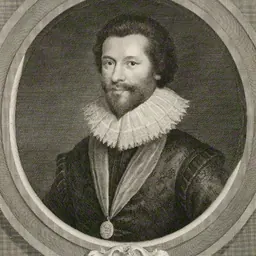


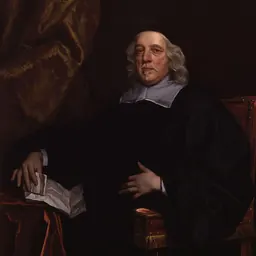



Related people
Same field, nearest in time

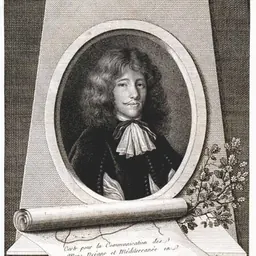


Contemporaries
People whose lives overlapped Edmund Dummer's




Frequently asked questions
Who was Edmund Dummer?
English politician and naval engineer
When was Edmund Dummer born?
Edmund Dummer was born in 1651.
When did Edmund Dummer die?
Edmund Dummer died in 1713 in Fleet Prison.
What was Edmund Dummer's occupation?
Edmund Dummer was an engineer, politician, naval engineer and shipbuilder.
Sources & further reading
· DBpedia: Edmund Dummer (naval engineer)
Cite this page
APA: Biography.guide. (2026). Edmund Dummer. https://biography.guide/edmund-dummer/
MLA: "Edmund Dummer." Biography.guide, https://biography.guide/edmund-dummer/.
Chicago: "Edmund Dummer." Biography.guide. https://biography.guide/edmund-dummer/.
Data last updated: 2026-09-20 · Spot an error? Report a correction.
Page generated 2026-09-27 05:08 UTC