
About Richard Haddock
Lived 1629 – 1715 (aged 85–86). Richard Haddock was a British military officer and politician.
Admiral Sir Richard Haddock (c. 1629 – 26 January 1715 Old Style) was an officer of the Royal Navy. He served during the Anglo-Dutch Wars, eventually rising to the rank of Admiral in August 1690.
Family and early life Haddock was born into a distinguished navy family. His grandfather, also Richard Haddock, had been rewarded by the government in 1652, having held commands under both Charles I and subsequently the Parliamentary regime; he commanded the Victory in 1642, the Antelope in 1643–44, the John in 1644 and the Unicorn in 1648. In 1652 he served as Vice-Admiral commanding the Vanguard. His father, William Haddock, also commanded trading vessels, and was appointed on 14 March 1651 to command the America, a ship hired by the Commonwealth of England Navy. During this period, he was given command of one of the companies involved in the attacks on Ulie and Schelling in August 1666. He relinquished command of the Portland on 9 November 1667.
Prior to the outbreak of the Third Anglo-Dutch War in 1672 Haddock became captain of the 100-gun on 18 January of that year; he was her captain at the Battle of Solebay on 28 May. Haddock was appointed Comptroller of the Navy on 2 February 1682, an appointment he retained until 17 April 1686. He also became commander of on 3 June 1682, but this last sea command only lasted 18 days, ending on 21 June.
Political life and later offices In 1683 he was appointed first Commissioner of the Victualling Office, a post he held until 1690. He entered politics in 1678, being elected to represent Aldeburgh. They remained in command until the winter when the fleet returned to Britain. They resigned their commissions and were replaced by Admiral Edward Russell. Haddock went into retirement from active service, dying in London on 26 January 1715. He was buried on 6 February in the churchyard of St Clement's Church, Leigh-on-Sea.
Relations Sir Richard married, firstly, Elizabeth (known as "Lydia") Wilkinson, daughter of Henry Wilkinson and Joan (or Jean) Cannon, on 13 February 1648 at St Katharine's by the Tower. They had three children, Jeane (married John Greene in 1672), John (who went to America), and Richard.
Sir Richard's third son, Nicholas, ended a distinguished naval career with the rank of Admiral of the Blue.
Hergé's Adventures of Tintin
In Hergé's Adventures of Tintin, Richard Haddock may have been an inspiration for Captain Haddock's 17th century ancestor, Sir Francis Haddock.
Don’t just read it —
keep it.
Full-length biographies made to live with: read them, listen on the way to work, watch them tonight.
- E-book
- Audio
- Video
Instant download · yours to keep · every purchase keeps this site free
Important facts
People in Richard Haddock's life
Named in this biography and alive at the same time
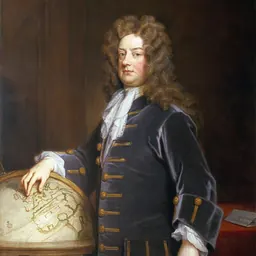

Related people
Same field, nearest in time

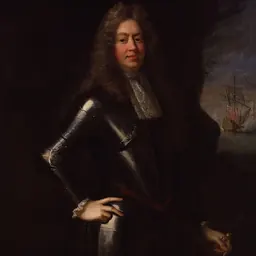

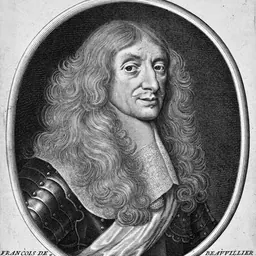

Contemporaries
People whose lives overlapped Richard Haddock's





Frequently asked questions
Who was Richard Haddock?
Officer of the British Royal Navy (1629-1715)
When was Richard Haddock born?
Richard Haddock was born in 1629 in Leigh-on-Sea.
When did Richard Haddock die?
Richard Haddock died on 26 January 1715 in London.
What was Richard Haddock's occupation?
Richard Haddock was a military officer and politician.
What nationality was Richard Haddock?
Richard Haddock was British.
Sources & further reading
Cite this page
APA: Biography.guide. (2026). Richard Haddock. https://biography.guide/richard-haddock/
MLA: "Richard Haddock." Biography.guide, https://biography.guide/richard-haddock/.
Chicago: "Richard Haddock." Biography.guide. https://biography.guide/richard-haddock/.
Data last updated: 2026-09-20 · Spot an error? Report a correction.
Page generated 2026-09-27 05:23 UTC