
About Edith Rigby
Lived 1872 – 1950 (aged 77). Edith Rigby was a British suffragette.
Edith Rigby (née Rayner) (18 October 1872 – 23 July 1950) was an English suffragette who used arson as a way to further the cause of women's suffrage. She founded a night school in Preston called St Peter's School, aimed at educating women and girls. Later she became a prominent activist, and was incarcerated seven times and committed several acts of arson. She was a contemporary of Christabel and Sylvia Pankhurst.
Biography Born Edith Rayner on St Luke's Day (18 October) in 1872 in Preston, Lancashire, she was one of seven children of Dr Alexander Clement Rayner and was educated at Penrhos College in North Wales.
She married Dr Charles Rigby and lived with him in Winckley Square in Preston. From an early age she questioned the differences between working-class and middle-class women and after she was married she worked hard to improve the lives of women and girls working in local mills. In 1899, she founded St Peter's School, which allowed these women to meet and continue their education which otherwise would have stopped at the age of 11. At home, she was critical of her neighbours' treatment of their servants. The Rigbys had servants themselves, but allowed them certain unconventional freedoms such as being able to eat in the dining-room and not having to wear uniforms.
Activism In 1907 she formed the Preston branch of the Women's Social and Political Union (WSPU). Rigby was a suffragette recruiter, gathering new members from among the local Independent Labour Party. A fellow member, Eleanor Higginson, became a lifelong friend.
When the 1911 census was enumerated, Rigby evaded by joining others at a house party in Manchester, possibly at the Dennison House party organised by Jessie Stephenson.
During later arrests and sentences, (seven in total) Rigby took part in hunger strikes and was subjected to force-feeding. and although it was later stated in court that ‘no great damage had been done by the explosion’, Mrs Rigby was found guilty and sentenced to nine months' imprisonment with hard labour. Rigby was awarded a Hunger Strike Medal 'for Valour' by WSPU.
She also claimed to have set fire to the bungalow of Sir William Lever, Bt (later Lord Leverhulme), on 7 July 1913. The property, near Rivington Pike on the West Pennine Moors, contained a number of valuable paintings and the attack resulted in damage costing £20,000.
Later life
Don’t just read it —
keep it.
Full-length biographies made to live with: read them, listen on the way to work, watch them tonight.
- E-book
- Audio
- Video
Instant download · yours to keep · every purchase keeps this site free
Important facts
People in Edith Rigby's life
Named in this biography and alive at the same time


Related people
Same field, nearest in time

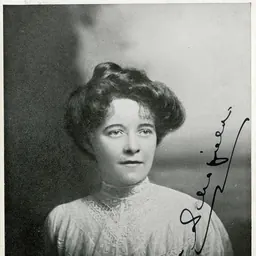
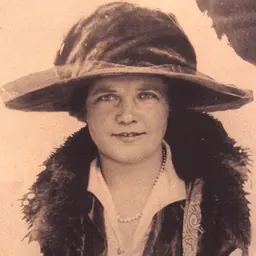
Contemporaries
People whose lives overlapped Edith Rigby's

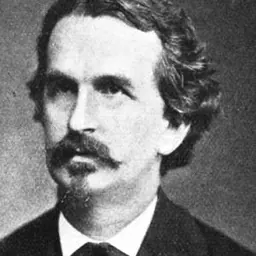
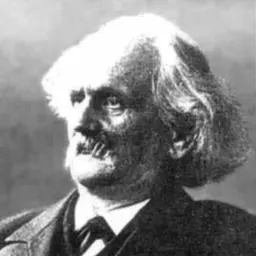

Frequently asked questions
Who was Edith Rigby?
English suffragette
When was Edith Rigby born?
Edith Rigby was born on 18 October 1872 in Preston.
When did Edith Rigby die?
Edith Rigby died on 23 July 1950 in Llanrhos.
What was Edith Rigby's occupation?
Edith Rigby was a suffragette.
What nationality was Edith Rigby?
Edith Rigby was British.
Sources & further reading
Cite this page
APA: Biography.guide. (2026). Edith Rigby. https://biography.guide/edith-rigby/
MLA: "Edith Rigby." Biography.guide, https://biography.guide/edith-rigby/.
Chicago: "Edith Rigby." Biography.guide. https://biography.guide/edith-rigby/.
Data last updated: 2026-09-20 · Spot an error? Report a correction.
Page generated 2026-09-27 05:33 UTC