
About Eberhard von Boremski
Lived 1914 – 1963 (aged 49). Eberhard von Boremski was a German flying ace.
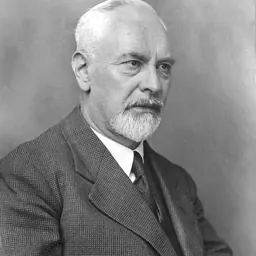
Eberhard von Boremski (24 September 1914 – 16 December 1963) was a fighter pilot in the Luftwaffe of Nazi Germany during World War II. A flying ace, he was credited with 104 aerial victories—that is, 104 aerial combat encounters resulting in the destruction of the enemy aircraft—claimed in roughly 630 combat missions. Boremski was a recipient of the Knight's Cross of the Iron Cross. He was killed in an accident in Hamburg on 16 December 1963.
Early life and career Boremski was born 24 September 1914 in Conow, present-day part of Malliß, near Ludwigslust in the Grand Duchy of Mecklenburg-Schwerin within the German Empire. He joined the Luftwaffe in 1935, and following flight training, initially served in 5. Staffel (5th squadron) of Trägergruppe 186, which became II. Gruppe (2nd group) of Jagdgeschwader 77 (JG 77—77th Fighter Wing). On 1 March 1940, holding the rank of Unteroffizier (corporal), he was transferred to the newly created 7. Staffel of Jagdgeschwader 3 (JG 3—3rd Fighter Wing), a squadron of III. Gruppe. On 1 March 1940, III. Gruppe of JG 3 was formed at Jena under the command of Hauptmann Walter Kienitz. 7. Staffel was headed by Oberleutnant Erwin Neuerburg, also a former member of JG 77. The Gruppe was initially equipped with the Messerschmitt Bf 109 E-1 and E-3 variant.
World War II World War II in Europe had begun on Friday 1 September 1939 when German forces invaded Poland. On 28 March 1940, III. Gruppe of JG 3 was considered operationally ready and transferred to Detmold Airfield where it was tasked with defending Germany's western border during the "Phoney War". On 10 April, the Gruppe relocated to Hopsten Airfield. In preparation for the Battle of France, III. Gruppe was subordinated to Luftflotte 2, supporting Army Group Bs attack into the Netherlands. Boremski claimed his first aerial victory on 29 May during the Battle of Dunkirk when he shot down a Royal Air Force (RAF) Supermarine Spitfire fighter on an early evening mission to the combat area. On 5 June, German forced launched Fall Rot (Case Red), the second phase of the conquest of France. Two days later, III. Gruppe fought in the vicinity of Beauvais where Boremski claimed a French Bréguet 693 ground-attack aircraft shot down. Following the Armistice of 22 June 1940, III. Gruppe was ordered to Dieppe on 29 June where the unit was tasked with patrolling the French coast at the English Channel.
On 30 June, III. Gruppe flew two fighter intercept missions against RAF forces attacking various targets near Lille. Defending against these attacks, Boremski, flying with 7. Staffel, claimed a Hawker Hurricane fighter shot down which was not confirmed. On 1 September, during the Battle of Britain, command of III. Gruppe was transferred to Hauptmann Wilhelm Balthasar when the former commander Kienitz had fallen ill. Boremski shot down the Bristol Blenheim bomber T1794 of No. 139 Squadron RAF on 24 September 1940. The Blenheim was on a mission against E-boats and fell into the English Channel. Squadron Leader M. F. Hendry, Sergeant P. M. Davidson and Sergeant V. Arrowsmith were killed in action. On 15 February 1941, III. Gruppe was ordered to Gütersloh Airfield in Germany for a period of rest and replenishment. At Gütersloh, the Gruppe received a full complement of the then new Bf 109 F-2 variant. On 3 May, III. Gruppe moved back to the English Channel front where it was based at Lillers. There, Boremski claimed his last aerial victory over the RAF on 25 May 1941. On 9 June, III. Gruppe was withdrawn from the west and ordered to transfer to Breslau-Gandau, now known as 'Wrocław Airport' in Poland.
War against the Soviet Union On 18 June, III. Gruppe relocated to Moderówka in south-eastern Poland. On 22 June, German forces launched Operation Barbarossa, the German invasion of the Soviet Union. At the start of the campaign, JG 3 was subordinated to the V. Fliegerkorps (5th Air Corps), under command of General der Flieger Robert Ritter von Greim, which was part of Luftflotte 4 (4th Air Fleet), under command of Generaloberst Alexander Löhr. These air elements supported Generalfeldmarschall Gerd von Rundstedt's Heeresgruppe Süd (Army Group South), with the objective of capturing Ukraine and its capital Kiev. Boremski, who was now assigned to 9. Staffel under command of Oberleutnant Viktor Bauer, claimed his first aerial victories on the Eastern Front on 25 June. Operating from Moderówka, he had filed claim for two Potez 63 bombers which were misidentified Petlyakov Pe-2 bombers. On 26 June, III. Gruppe relocated to Hostynne.
On 6 November, III. Gruppe was withdrawn from the Eastern Front and sent to Mannheim-Sandhofen Airfield for a period of rest and replenishment. The first elements of the Gruppe arrived by train in Mannheim on 8 December, the transfer was completed a week later. There, the personnel was sent on home leave. Following the death of Generaloberst Ernst Udet, Reichsmarschall Hermann Göring ordered JG 3 to be given the honorary name "Udet" on 1 December. The Gruppe received a full complement of 41 Bf 109 F-4 aircraft and on 6 January 1942 was ordered to relocated to Sicily. On 13 January, 7. Staffel and elements of 8. and 9. Staffel boarded a train to Bari in southern Italy while the rest of III. Gruppe headed for Sciacca, Sicily. The relocation progressed until 26 January when new orders were received, ordering the Gruppe to return to Germany. At Jesau near Königsberg, present-day Kaliningrad in Russia, III. Gruppe began preparations for redeployment to the Eastern Front.
Supporting German forces fighting in the Demyansk Pocket on 18 February 1942, Boremski claimed a Mikoyan-Gurevich MiG-3 fighter shot down, which may have been misidentified Lavochkin-Gorbunov-Gudkov LaGG-3 fighters. On 3 May 1942, he was awarded the Knight's Cross of the Iron Cross for achieving 43 victories. After serving as an instructor with Ergänzungsgruppe Süd in mid 1942, he returned to JG 3. In February 1943, he was made Staffelkapitän (squadron leader) of 7. Staffel of JG 3. On 7 March, his 7. Staffel was ordered to Dnipropetrovsk where they formed the Deutsch-Königlich Rumänischen Jagdverband (German Royal Romanian Fighter Unit) of Luftflotte 4, in collaboration with the Royal Romanian Air Force. Boremski was placed in command of this unit. Boremski served in these roles until 30 May 1943, when he was wounded on account of his Bf 109 G-2 (Werknummer 14808—factory number) suffering engine failure resulting in a forced landing southeast of Kamianske. Consequently, he was succeeded by Hauptmann Karl-Heinz Langer as commander of 7. Staffel.
Later war service On 7 August 1943 following his convalescence, Boremski was posted to Ergänzungs-Jagdgruppe Ost (EJGr Ost—Supplementary Fighter Group, East), a specialized training unit for new fighter pilots destined for the Eastern Front, where he served as a fighter pilot instructor. Here, he was awarded the German Cross in Gold on 23 August.
On 24 February 1944, Oberleutnant Herbert Kutscha, the commander of 12. Staffel of JG 3 was wounded in combat. In consequence, Boremski took command of the Staffel the following day. On 11 April, Boremski flying Bf 109 G-6 (Werknummer 162585) was wounded following a mid-air collision west of Anklam with Gefreiter Horst Witzler from 10. Staffel. Although both pilots bailed out, command of 12. Staffel was transferred to Leutnant Hans Rachner.
From September 1944 to November 1944, Boremski led 1. Staffel of Jagdgruppe Ost and then 9. Staffel of Ergänzungs-Jagdgeschwader 1 (EJG 1—1st Supplementary Fighter Wing). In January 1945, Boremski was credited with his 100th aerial victory. He was the 97th Luftwaffe pilot to achieve the century mark.
Later life After the German surrender, Boremski was handed over by U.S. troops in Czechoslovakia to the Soviet armed forces, and he remained a prisoner of war until 1955. He died in an accident in Hamburg on 16 December 1963.
Summary of career Aerial victory claims According to US historian David T. Zabecki, Boremski was credited with 104 aerial victories. Obermaier also lists Boremski with 104 aerial victories claimed on 630 combat missions. This figure includes 100 claims on the Eastern Front, and four on the Western Front. Author Spick lists him with 90 aerial victories and a mission-to-claim ratio of 7.00. Mathews and Foreman, authors of Luftwaffe Aces — Biographies and Victory Claims, researched the German Federal Archives and state that he claimed at least 88 aerial victories, plus two unconfirmed claims. Four of his aerial victories were claimed on the Western Front, the others on the Eastern Front. The authors indicate that he probably claimed further aerial victories with EJG 1 which cannot be verified through the archives.
Victory claims were logged to a map-reference (PQ = Planquadrat), for example "PQ 4932". The Luftwaffe grid map covered all of Europe, western Russia and North Africa and was composed of rectangles measuring 15 minutes of latitude by 30 minutes of longitude, an area of about . These sectors were then subdivided into 36 smaller units to give a location area in size.
Chronicle of aerial victories Claim Date Time Type Location Claim Date Time Type Location – 9. Staffel of Jagdgeschwader 3 –Battle of France — 10 May – 25 June 1940 1 29 May 1940 18:45 Spitfire Dunkirk 2 7 June 1940 12:05 Bréguet 693 Poix/Auraines – 7. Staffel of Jagdgeschwader 3 –At the Channel and over England — June 1940 30 June 1940 Hurricane – 9. Staffel of Jagdgeschwader 3 –At the Channel and over England — September 1940 – 9 June 1941 3 24 September 1940 14:05 Blenheim 4 25 May 1941 07:55? Hurricane west of Calais – 9. Staffel of Jagdgeschwader 3 –Operation Barbarossa — 22 June – 6 November 1941 5 25 June 1941 07:40 Potez 63 16 12 July 1941 10:28 DB-3 6 25 June 1941 07:45 Potez 63 17 13 July 1941 11:12 DB-3 7 29 June 1941 17:40 PZL.37 18 13 July 1941 11:13 DB-3 8 30 June 1941 12:10 TsKB-19? east of Ostroh 19 14 July 1941 07:05 I-16 9 30 June 1941 12:15 TsKB-19? east of Ostroh 20 2 August 1941 17:25 TsKB-19? 10 1 July 1941 14:20 V-11 (Il-2) east of Rivne 21 11 August 1941 12:04 SB-3 11 10 July 1941 17:00 I-15 22 11 August 1941 12:05 SB-3 12 10 July 1941 17:05 V-11 (Il-2) 23 11 August 1941 12:06 SB-3 13 11 July 1941 15:50 I-16 southeast of Makariv 24 20 August 1941 16:42 DB-3 14 11 July 1941 15:52 I-16 southeast of Makariv 25? 18 September 1941 14:40 R-5 15 12 July 1941 10:25 DB-3 – 9. Staffel of Jagdgeschwader 3 "Udet" –Eastern Front — 10 February – 14 April 1942 26 15 February 1942 10:55 R-5 35 17 March 1942 10:30 I-301 (LaGG-3) 27 18 February 1942 14:50 I-61 (MiG-3) 36 17 March 1942 14:05 I-301 (LaGG-3) 28 19 February 1942 10:00 Pe-2 37 20 March 1942 11:55? I-301 (LaGG-3) 29 3 March 1942 10:20 U-2 38? 22 March 1942 11:55 Il-2 30 7 March 1942 09:50 I-61 (MiG-3) 39 22 March 1942 13:15 Il-2 31 7 March 1942 15:10 I-61 (MiG-3) 40 28 March 1942 12:10 I-61 (MiG-3) 32 13 March 1942 11:35 R-10 (Seversky) 41 28 March 1942 16:25 I-61 (MiG-3) 33 15 March 1942 16:15 I-301 (LaGG-3) 42 1 April 1942 10:30 I-61 (MiG-3) 34 16 March 1942 10:00 I-301 (LaGG-3) 43 1 April 1942 15:12 Il-2 southeast of Staraya Russa – 9. Staffel of Jagdgeschwader 3 "Udet" –Eastern Front — 19 May – July 1942 44 19 May 1942 10:03 DB-3 59 30 June 1942 06:52 Il-2 south of Kshen 45 20 May 1942 04:55 I-61 (MiG-3) 60 30 June 1942 06:53 Il-2 east of Kshen 46 20 May 1942 09:30 I-61 (MiG-3) 61 1 July 1942 19:11 Il-2 north of Kshen 47 20 May 1942 11:55 Il-2 northeast of Kharkov 62 9 July 1942 11:15 Il-2 Voronezh 48 21 May 1942 17:25 I-61 (MiG-3) 63 9 July 1942 11:16 Il-2 Voronezh 21 May 1942 I-61 (MiG-3) 64 10 July 1942 04:00 MiG-1 Voronezh 49 22 May 1942 09:40 I-61 (MiG-3) east of Stary Saltov 65 10 July 1942 04:10 MiG-1 Voronezh 50 22 May 1942 17:00 Il-2 66 14 July 1942 07:55 MiG-1 Millerovo 51 23 May 1942 05:25 Il-2 east of Ternowaja 67 16 July 1942 18:16 P-40 Tischkina 52 26 May 1942 18:55 Il-2 east of Balakliia 68 16 July 1942 18:35 P-40 Ignatow 53 27 May 1942 15:50 Pe-2 southeast of Balakliia 69 22 July 1942 05:55 LaGG-3 Korskaja 54 27 May 1942 16:00 MiG-1 southeast of Savyntsi 70 22 July 1942 05:58 LaGG-3 Korskaja 55 27 May 1942 16:02 MiG-1 southeast of Savyntsi 71 24 July 1942 10:50 Il-2 southeast of Popow 56 10 June 1942 12:50 Il-2 72 24 July 1942 10:52 Il-2 southeast of Popow 57 14 June 1942 14:15 LaGG-3 73 24 July 1942 10:54 Il-2 southeast of Popow 58 30 June 1942 06:50 Il-2 74 25 July 1942 10:51 Hurricane southeast of Kalach – Stab II. Gruppe of Jagdgeschwader 3 "Udet" –Eastern Front — December 1942 – 3 February 1943 75 2 December 1942 10:03 Il-2 PQ 4932south of Borodajewka 79 8 December 1942 10:15 P-40 PQ 3937 76 2 December 1942 10:10 MiG 3 PQ 4933south of Borodajewka 80 11 December 1942 13:50 LaGG-3 north of Chir train station 77 8 December 1942 09:57 P-40 PQ 3959 81 12 December 1942 10:26 LaGG-3 PQ 2943 78 8 December 1942 10:03? P-40 PQ 3935 – 7. Staffel of Jagdgeschwader 3 "Udet" –Eastern Front — 4 February – 31 May 1943 82 11 February 1943 12:30 Boston northeast of Artemivsk 86 22 April 1943 17:10 Il-2 m.H. 83 24 February 1943 14:50 LaGG-3 west of Krischtepovka 87 22 April 1943 17:45 La-5 84 5 April 1943 08:05 LaGG-3 north of Izium 88 24 April 1943 09:05 R-5 south of Pesski 85 22 April 1943 17:05 Il-2 m.H.
Awards Iron Cross (1939) 2nd and 1st Class Knight's Cross of the Iron Cross on 3 May 1942 as Oberfeldwebel and pilot in the 7./Jagdgeschwader 3 "Udet" German Cross in Gold on 12 July 1943 as Oberleutnant in the III./Jagdgeschwader 3
Don’t just read it —
keep it.
Full-length biographies made to live with: read them, listen on the way to work, watch them tonight.
- E-book
- Audio
- Video
Instant download · yours to keep · every purchase keeps this site free
Important facts
People in Eberhard von Boremski's life
Named in this biography and alive at the same time


Related people
Same field, nearest in time

Contemporaries
People whose lives overlapped Eberhard von Boremski's



Frequently asked questions
Who was Eberhard von Boremski?
German World War II fighter pilot
When was Eberhard von Boremski born?
Eberhard von Boremski was born on 24 September 1914 in Ludwigslust.
When did Eberhard von Boremski die?
Eberhard von Boremski died on 16 December 1963 in Hamburg-Altona station.
What was Eberhard von Boremski's occupation?
Eberhard von Boremski was a flying ace.
What nationality was Eberhard von Boremski?
Eberhard von Boremski was German.
Sources & further reading
· Wikipedia: Eberhard von Boremski
· DBpedia: Eberhard von Boremski
Cite this page
APA: Biography.guide. (2026). Eberhard von Boremski. https://biography.guide/eberhard-von-boremski/
MLA: "Eberhard von Boremski." Biography.guide, https://biography.guide/eberhard-von-boremski/.
Chicago: "Eberhard von Boremski." Biography.guide. https://biography.guide/eberhard-von-boremski/.
Data last updated: 2026-09-20 · Spot an error? Report a correction.
Page generated 2026-09-27 05:12 UTC