
About Ebenezer Picken
Lived 1769 – 1816 (aged 46–47). Ebenezer Picken was a British poet.
Ebenezer Picken (January 1769 – 1816) was a Scottish poet and songwriter known as "The Poet of Paisley." He wrote poetry in English and Scots and produced a dictionary of Scottish words which was published posthumously.
Biography
Early life Ebenezer Picken was born on Wellmeadow Street in Paisley, Renfrewshire in 1769. His father was a weaver who had come to Paisley from Ayrshire due to the success in handloom weaving in Paisley. Picken was an only son, and his father gave him a good education at the Paisley Grammar School, with the intention he would enter the priesthood and join a body of Presbyterian Dissenters that he himself belonged to. He was close friends with poet and ornithologist Alexander Wilson, a fellow Paisley resident of his generation. Wilson's first published poems, in 1790, included an epistle to Picken. Both Picken and Wilson travelled to a meeting at the Edinburgh Pantheon on 14 April 1791, where they competed in a disputation on Scottish poetry. Picken argued that Allan Ramsay had done the most honour to Scottish poetry while Wilson argued for Robert Fergusson. Neither man won the competition, with the prize going to one Mr. Cumming who alleged obtained it "by false means." Picken and Wilson published their pieces together in a pamphlet entitled "The Laurel Disputed" before leaving Edinburgh.
In 1791 Picken opened and taught at a school in Falkirk. By the end of 1791, he was appointed teacher at an endowed school in Carron, Stirlingshire where he taught for five years, struggling with poverty.
Later life and death Picken and his family lived in near poverty in Edinburgh, with his language tutoring and selling subscriptions to his poetry unable to generate sufficient income. His health gradually failed and he died of tuberculosis in 1816, leaving his widow Robina, three sons, and two daughters. Both women attempted to establish a boarding school in Musselburgh, Midlothian but had little success due to Joanna Picken's uncomplimentary satire of locals. Jamieson's work was the first complete dictionary of the Scots language and the first work in both English and Scottish lexicography to take an historical approach. Pickens' own dictionary, containing 5,000 words, was published posthumously and anonymously in 1818 by Edinburgh bookseller James Sawers, and it was through Jamieson's work that he was referenced as producing the definitions.
Works of satire, descriptive pieces, and songs had earned Picken local popularity in his lifetime, and some of his songs remained popular in Scotland well into the 1890s. George Eyre-Todd notes that it was these works that reflect Picken's writing, and that his verse, and especially epistolary poetry, were mere echoes of Robert Burns.
Don’t just read it —
keep it.
Full-length biographies made to live with: read them, listen on the way to work, watch them tonight.
- E-book
- Audio
- Video
Instant download · yours to keep · every purchase keeps this site free
Important facts
People in Ebenezer Picken's life
Named in this biography and alive at the same time
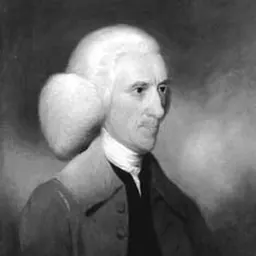
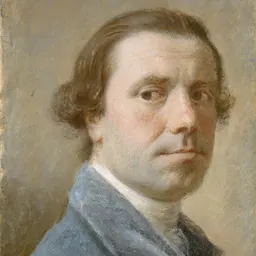


Related people
Same field, nearest in time
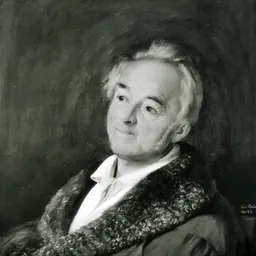
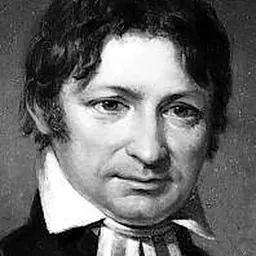

Contemporaries
People whose lives overlapped Ebenezer Picken's




Frequently asked questions
Who was Ebenezer Picken?
Scottish poet
When was Ebenezer Picken born?
Ebenezer Picken was born in 1769 in Paisley.
When did Ebenezer Picken die?
Ebenezer Picken died in 1816 in Edinburgh, Scotland.
What was Ebenezer Picken's occupation?
Ebenezer Picken was a poet.
What nationality was Ebenezer Picken?
Ebenezer Picken was British.
Sources & further reading
Cite this page
APA: Biography.guide. (2026). Ebenezer Picken. https://biography.guide/ebenezer-picken/
MLA: "Ebenezer Picken." Biography.guide, https://biography.guide/ebenezer-picken/.
Chicago: "Ebenezer Picken." Biography.guide. https://biography.guide/ebenezer-picken/.
Data last updated: 2026-09-20 · Spot an error? Report a correction.
Page generated 2026-09-27 04:57 UTC