
About E. J. Pratt
Lived 1882 – 1964 (aged 82). E. J. Pratt was a Canadian poet.
Edwin John Dove Pratt (February 4, 1882 – April 26, 1964), Originally from Newfoundland, Pratt lived most of his life in Toronto, Ontario. A three-time winner of the country's Governor General's Award for poetry, he has been called "the foremost Canadian poet of the first half of the century."
Early life
EJ Pratt or fully known as Edwin John Dove Pratt was born in Western Bay, Newfoundland, on February 4, 1882. He was brought up in a variety of Newfoundland communities as his father John Pratt was posted around the colony as a Methodist minister. John Pratt was originally a lead miner from Old Gang mines in Gunnerside – a village in North Yorkshire, England. In the 1850s he became a Methodist pastor and immigrated to Newfoundland and settled down with Fanny Knight, a daughter of Capt. William Chancey Knight. EJ Pratt and his seven siblings were under strict control of their father, who had high expectations of all of them. While John was strict and stern father, who had firm authority with which he ruled his family, Edwin and his siblings got a bit of a break when his father was gone on pastoral rounds, since their mother was very different in temperament from her husband. "Fanny Pratt was easy-going and unpunctilious where John was careful and exacting, lenient and forbearing where he was strict and inflexible, soft hearted where he was hard-headed – she inevitably had a closer, more comradely relationship with the children. Raised in a less rigoristic household than he, she was prepared to take her children for what they were, make allowances for their fallen natures, and generally overlook their innocent iniquities" E.J. Pratt's brother, Calvert Pratt, became a Canadian Senator.
E.J. Pratt graduated from Newfoundland's Methodist College in St. John's in 1901. Like his father he became a candidate for the Methodist ministry, in 1904, and served a three-year probation before entering Victoria College of the University of Toronto. He studied psychology and theology, receiving his BA in 1911 and his Bachelor of Divinity in 1913.
Writing
Pratt's first published poem was "A Poem on the May examinations," printed in Acta Victoriana in 1909 when he was a student. In 1917 he privately published a long poem, Rachel: A Sea Story of Newfoundland.
It was only in 1923 that Pratt's first commercial poetry collection, Newfoundland Verse, was released. "Recognition came with the narrative poems The Witches' Brew (1925), Titans (1926), and The Roosevelt and the Antinoe (1930), and though he published a substantial body of lyric verse, it is as a narrative poet that Pratt is remembered."
"Pratt's poetry frequently reflects his Newfoundland background, though specific references to it appear in relatively few poems, mostly in Newfoundland Verse," says The Canadian Encyclopedia. "But the sea and maritime life are central to many of his poems, both short (e.g., "Erosion," "Sea-Gulls," "Silences" ) and long, such as "The Cachalot" (1926), describing duels between a whale and its foes, a giant squid and a whaling ship and crew; The Roosevelt and the Antinoe (1930), recounting the heroic rescue of the crew of a sinking freighter in a winter hurricane; The Titanic (1935), an ironic retelling of a well-known marine tragedy; and Behind the Log (1947), the dramatic story of the North Atlantic convoys during World War II." He added that evolution provided Pratt "the solid framework within which he could achieve an epic style," and also "gave him the themes for his best lyrics" (such as his much-anthologized "From Stone to Steel," from 1932's Many Moods.)
Pratt founded Canadian Poetry Magazine in 1935, and served as its first editor until 1943. He published 10 poems in the 1936 "milestone selection of modernist verse," New Provinces, edited by F. R. Scott.
Expounding on that theme in 1943, in a review essay of A.J.M. Smith's anthology The Book of Canadian Poetry, Frye stated that, in Canadian poetry:
The unconscious horror of nature and the subconscious horrors of the mind thus coincide: this amalgamation is the basis of symbolism on which nearly all Pratt's poetry is founded. The fumbling and clumsy monsters of his "Pliocene Armageddon," who are simply incarnate wills to mutual destruction, are the same monsters that beget Nazism and inspire The Fable of the Goats; and in the fine "Silences,"
By the time Brébeuf was published the war had begun; and "in his next four volumes, Pratt returned to themes of patriotism and violence. Sea poetry merges with war poetry in Dunkirk (1941), which recounts the epic rescue of British forces while also emphasizing its democratic nature.... Language plays a pivotal role as Churchill's call inspires the miraculous deliverance. The title poem in Still Life and Other Verse (1943) satirizes poets who ignore the destruction, the still life, all about them in wartime.... Other poems include 'The Radio in the Ivory Tower,' which shows isolation from world events to be impossible... 'The Submarine,' which highlights the atavism of modern warfare by treating the submarine as a shark; and 'Come Away, Death,' which personifies death to show its new horrors in modern times." which Frye later called "the greatest poem in Canadian literature."
Pratt's next book, "They are Returning (1945) celebrates the anticipated end of the war, but also introduces one of the first treatments in literature of the concentration camps. And retrospectively, Behind the Log (1947) commemorates the wartime role of the Royal Canadian Navy and the merchant marine." In that year Pratt published Towards the Last Spike, his final epic, on the building of Canada's first transcontinental railroad, the Canadian Pacific Railway. "Presenting an anglo/central-Canadian perspective, the poem interweaves the political battles between Sir John A. Macdonald and Edward Blake with the labourers' physical battles against mountains, mud, and the Laurentian Shield. In a metaphorical method typical of his style, Pratt characterizes the Shield as a prehistoric lizard rudely aroused from its sleep by the railroad builders' dynamite."
Pratt's reputation as a major poet rests on his longer narrative poems, "many of which show him as a mythologizer of the Canadian male experience; but a number of shorter philosophical works also command recognition. 'From stone to steel'
He was designated a Person of National Historic Significance in 1975.
The University of Toronto's Victoria University library currently bears his name, as do the University's E.J. Pratt Medal and Prize for poetry. Winners of the award include Margaret Atwood in 1961 and Michael Ondaatje in 1966.
The E. J. Pratt Chair in Canadian Literature was created in his name by the University of Toronto in 2003. The chair has been held since its founding by George Elliot Clarke.
The E.J. Pratt commemorative stamp was released in 1983.
Publications
Poetry Rachel: a sea story of Newfoundland, private, 1917 Newfoundland Verse, Toronto: Ryerson, 1923. illus. Frederick Varley. The Witches' Brew, Toronto: Macmillan, 1925. illus. John Austin. Titans ("The Cachalot, The Great Feud"), Toronto: Macmillan, 1926. illus. John Austin. The Iron Door: An Ode, Toronto: Macmillan, 1927. illus. Thoreau Macdonald. The Roosevelt and the Antinoe, Toronto: Macmillan, 1930 Verses of the Sea, Toronto: Macmillan, 1930. intr. by Charles G.D. Roberts. Many Moods, Toronto: Macmillan, 1932. The Titanic, Toronto: Macmillan, 1935. New Provinces: Poems of Several Authors, Toronto: Macmillan, 1936 (eight poems). The Fable of the Goats and Other Poems, Toronto: Macmillan, 1937 GGLA Brebeuf and his Brethren, Toronto: Macmillan, 1940. Detroit: Basilian Press, 1942. GGLA Dunkirk, Toronto: Macmillan, 1941 Still Life and Other Verse, Toronto: Macmillan, 1943 Collected Poems of E. J. Pratt, Toronto: Macmillan, 1944. New York: Alfred A. Knopf, 1946. They Are Returning, Toronto: Macmillan, 1945 Behind the Log, Toronto: Macmillan, 1947 Ten Selected Poems, Toronto: Macmillan, 1947 Towards the Last Spike, Toronto: Macmillan, 1952. GGLA "Magic in Everything" [Christmas card]. Toronto: Macmillan, 1956. Collected Poems of E. J. Pratt (2nd edition), Toronto: Macmillan, 1958. intr. by Northrop Frye. The Royal Visit: 1959, Toronto: CBC Information Services, 1959. Here the Tides Flow, Toronto: Macmillan, 1962. intr. by D.G. Pitt. Selected Poems of E. J. Pratt, Peter Buitenhuis ed., Toronto: Macmillan, 1968. E. J. Pratt: Complete Poems (two volumes), Toronto: Macmillan, 1989 Selected Poems of E.J. Pratt, Sandra Djwa, W.J. Keith, and Zailig Pollock ed. Toronto: University of Toronto Press, 1998).
Prose Studies in Pauline Eschatology. Toronto: William Briggs, 1917. "Canadian Poetry – Past and Present," University of Toronto Quarterly, VIII:1 (Oct. 1938), 1-10.
Edited Thomas Hardy, Under the Greenwood Tree. Toronto, Macmillan, 1937. Heroic Tales in Verse. Toronto, Macmillan, 1941, 1977.
Except where noted, pre-1970 information is from Selected Poems of E.J. Pratt (1968)
Don’t just read it —
keep it.
Full-length biographies made to live with: read them, listen on the way to work, watch them tonight.
- E-book
- Audio
- Video
Instant download · yours to keep · every purchase keeps this site free
Important facts
People in E. J. Pratt's life
Named in this biography and alive at the same time





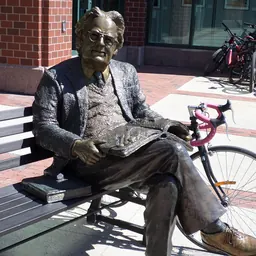
Related people
Same field, nearest in time
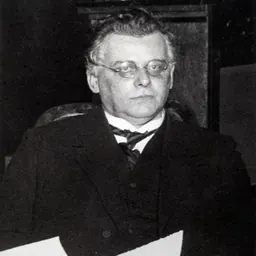
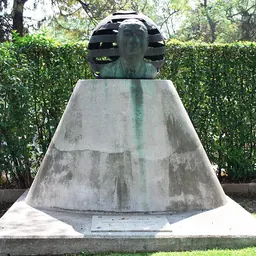

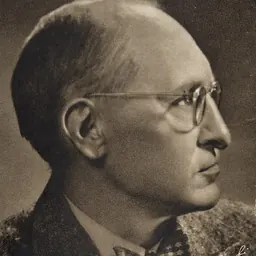
Contemporaries
People whose lives overlapped E. J. Pratt's



Frequently asked questions
Who was E. J. Pratt?
Canadian poet (1882–1964)
When was E. J. Pratt born?
E. J. Pratt was born on 4 February 1882 in Newfoundland and Labrador.
When did E. J. Pratt die?
E. J. Pratt died on 26 April 1964 in Toronto.
What was E. J. Pratt's occupation?
E. J. Pratt was a poet.
What nationality was E. J. Pratt?
E. J. Pratt was Canadian.
Sources & further reading
Cite this page
APA: Biography.guide. (2026). E. J. Pratt. https://biography.guide/e-j-pratt/
MLA: "E. J. Pratt." Biography.guide, https://biography.guide/e-j-pratt/.
Chicago: "E. J. Pratt." Biography.guide. https://biography.guide/e-j-pratt/.
Data last updated: 2026-09-20 · Spot an error? Report a correction.
Page generated 2026-09-27 05:24 UTC