
About Duncan Sayre MacInnes
Lived 1860 – 1918 (aged 58). Duncan Sayre MacInnes was a British military personnel.
Brigadier-General Duncan Sayre MacInnes (21 February 1860 – 23 May 1918) was a Canadian soldier and engineer who served in South Africa before, during and after the Second Boer War. Before and during World War I, MacInnes played a key role in the establishment and development of the Royal Flying Corps. He was accidentally killed while visiting the front on 23 May 1918.
Education Duncan Sayre MacInnes entered the Royal Military College of Canada at Kingston, Ontario in 1887, cadet # 236. He graduated with distinction in 1891
Family His father was Senator Donald MacInnes from Hamilton, Ontario, and his mother was the fourth daughter of Sir John Robinson, 1st Baronet, of Toronto. Duncan Sayre MacInnes married May Millicent Wolferstan Thomas, the daughter of a prominent Montreal banker, Francis Wolferstan Thomas, and his first wife, Harriet, daughter of The Hon. George Jervis Goodhue on 22 October 1902. They had one daughter and one son.
Following the end of the war in May 1902, he served as assistant director of works to the South African Constabulary in the Cape Colony. In 1904, he and other Canadians celebrated Dominion Day at a banquet in Johannesburg, South Africa. He served as deputy assistant quartermaster general at Halifax, Nova Scotia in 1906, turning over the fortress and garrison to Canada. From September 1907 he was deputy assistant adjutant-general, Maritime provinces. On 31 March 1908, he went to England where he attended the British Army Staff College. In 1910, he was gazetted a general staff officer in the Directorate of Military Training at the War Office. Early in 1912 he became secretary and one of the three main contributors to an advisory committee on military aviation of the Committee of Imperial Defence whose recommendations led to the establishment of the Royal Flying Corps.
World War I In 1913, he was posted to the staff at Camberley, where he remained until the outbreak of World War I in August 1914. He was in command of the 54th field company of Royal Engineers, part of the 7th Division, participated in the retreat from Mons, and in late November received a wound which permanently restricted the use of fingers on his right hand. Promoted Brevet Lieutenant-Colonel on 29 November 1915, he went back to the War Office as assistant director of military aeronautics. In 1916, he was appointed director of aircraft equipment, in charge of design, supply, and maintenance, and subsequently made a temporary brigadier-general. Faced with extraordinary demands for more and better aircraft, an overwhelmed system of procurement, and malicious attacks from superiors, an overworked MacInnes suffered a breakdown in the fall of 1916 and he left the directorate in early 1917.
Retiring by nature and uninterested in honours, he was rewarded with a Companion of the Order of St Michael and St George on 1 January 1917. He went back to the Western Front to become commanding Royal Engineer to the 42nd Division, in the substantive rank of Lieutenant-Colonel. During the war he was mentioned in Despatches twice. He was awarded the Russian Order of St Stanislaus, with the French Legion of Honour (Croix d'Officier) in 1917.
In January 1918 he was appointed inspector of mines at general headquarters in Montreuil, France, and restored to the rank of Brigadier General. MacInnes was accidentally killed while visiting the front on 23 May 1918, possibly as a result of his work with mines, and he was buried at Étaples, France on 25 May 1918.
Don’t just read it —
keep it.
Full-length biographies made to live with: read them, listen on the way to work, watch them tonight.
- E-book
- Audio
- Video
Instant download · yours to keep · every purchase keeps this site free
Important facts
People in Duncan Sayre MacInnes's life
Named in this biography and alive at the same time

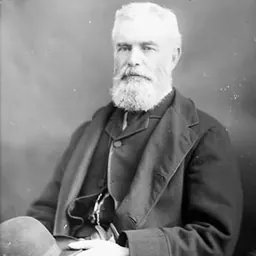


Related people
Same field, nearest in time


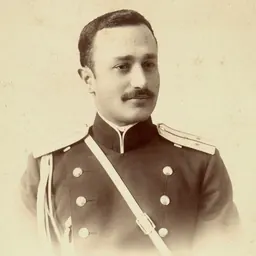

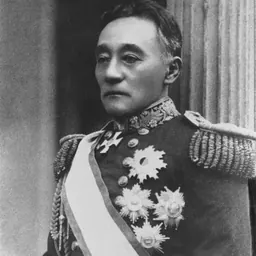
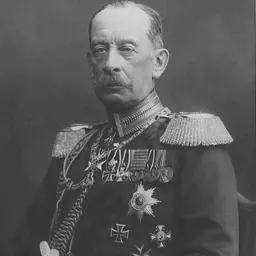
Contemporaries
People whose lives overlapped Duncan Sayre MacInnes's


Frequently asked questions
Who was Duncan Sayre MacInnes?
British Army general
When was Duncan Sayre MacInnes born?
Duncan Sayre MacInnes was born on 21 February 1860 in Brantford.
When did Duncan Sayre MacInnes die?
Duncan Sayre MacInnes died on 23 May 1918 in Étaples.
What was Duncan Sayre MacInnes's occupation?
Duncan Sayre MacInnes was a military personnel.
What nationality was Duncan Sayre MacInnes?
Duncan Sayre MacInnes was British.
Sources & further reading
· Wikipedia: Duncan Sayre MacInnes
· DBpedia: Duncan Sayre MacInnes
Cite this page
APA: Biography.guide. (2026). Duncan Sayre MacInnes. https://biography.guide/duncan-sayre-macinnes/
MLA: "Duncan Sayre MacInnes." Biography.guide, https://biography.guide/duncan-sayre-macinnes/.
Chicago: "Duncan Sayre MacInnes." Biography.guide. https://biography.guide/duncan-sayre-macinnes/.
Data last updated: 2026-09-20 · Spot an error? Report a correction.
Page generated 2026-09-27 05:27 UTC