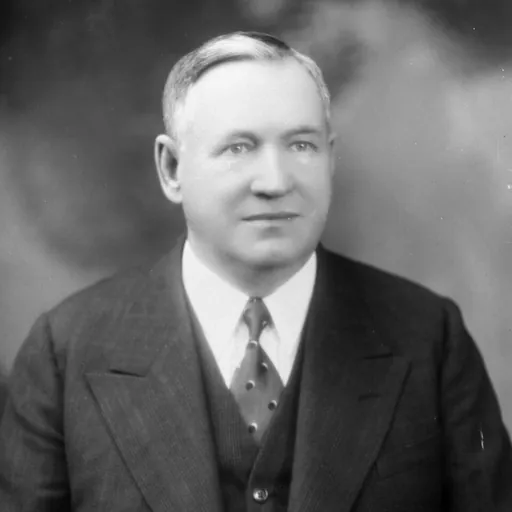
About Duncan Marshall
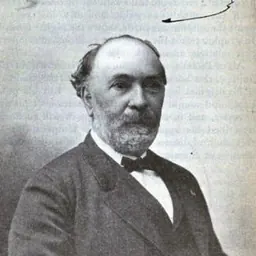
Lived 1872 – 1946 (aged 73). Duncan Marshall was a Canadian politician, newspaper proprietor, journalist, publisher and cattle rancher.
Duncan McLean Marshall (September 24, 1872 – January 16, 1946) was a Canadian journalist, publisher, rancher and politician in the provinces of Ontario and Alberta.
Marshall represented the electoral district of Olds in the Legislative Assembly of Alberta, and served in the Cabinets of Premiers Alexander Cameron Rutherford, Arthur Sifton, and Charles Stuart as Alberta's second Minister of Agriculture from 1909 to 1921. Marshall later served as an Ontario Member of Provincial Parliament in Ontario for the electoral district of Peel, and was appointed to the Cabinet of Premier Mitchell Hepburn, serving as the Ontario's Minister of Agriculture from 1934 to 1937. Marshall was then appointed to the Senate of Canada in 1938, serving as a Senator from Ontario until his death in 1946.
Early life Marshall was born on September 24, 1872, in Elderslie Township, Ontario, to John Marshall and Margaret McMurchy. Marshall attended Walkerton High School and the Owen Sound Collegiate and Vocational Institute. He owned The Olds Gazette, a weekly newspaper in Olds, Alberta.
Alberta politics Marshall was an organizer for the Liberal Party of Alberta during Alberta's first provincial election in 1905. The Conservative leaning Calgary Herald wrote a scathing article on his political history during the run-up to the election, describing Marshall as a carpet-bagger. Marshall was elected to the Legislative Assembly of Alberta for the first time in the 1909 Alberta general election to the new Olds electoral district. He won the new district easily over Conservative candidate George McDonald.
Marshall was appointed to cabinet by Premier Alexander Cameron Rutherford to serve as the new Minister of Agriculture and Provincial Secretary November 1, 1909, following the resignation of William Finlay due to his poor health. Marshall survived a ministerial by-election held on November 23, 1909.
Shortly after the 1909 election, Rutherford's government came under intense scrutiny when it was accused of giving loan guarantees to private interests for the construction of the Alberta and Great Waterways (A&GW) Railway that substantially exceeded the cost of construction and which paid interest considerably above the market rate. It was also accused of exercising insufficient oversight over the railway's operations. The Alberta and Great Waterways Railway scandal became a crisis when Attorney General Charles Wilson Cross suddenly resigned from cabinet on March 9, 1910. The next day unsubstantiated rumors circulated that Marshall and Minister without Portfolio Prosper-Edmond Lessard had also resigned, though these proved false. Rutherford held his silence until March 11, when he told the Legislature that he had not accepted any resignations. He said that the only vacant cabinet post was the ministry of Public Works previously held by Cushing, and that he hoped to fill it soon. A commission of inquiry was called, and Premier Rutherford stepped down on May 26, 1909.
Marshall was re-appointed Minister of Agriculture under the new government of Arthur Lewis Sifton on June 1, 1910, but his provincial secretary position was given to Archibald J. McLean. Marshall was the only member of Rutherford's cabinet to carry on in the new Sifton cabinet.
One of his most notable achievements as Minister of Agriculture was the creation and setup of Demonstration Farms around the province in 1911. These farms later evolved into Agriculture training schools. The most notable of these schools are still in operation today as Lakeland College and Olds College. Duncan Marshall Place, the main administrative building at Olds College, is named after him.
Marshall ran for re-election in the 1913 Alberta general election. In that election he defeated Conservative challenger George Cloakey by just 54 votes.
Marshall ran against Cloakley again in the 1917 Alberta general election and again triumphed, substantially widening his plurality and winning comfortably.
The 1921 Alberta general election proved to be the end of the Liberal government and Marshall's political career in Alberta. Many candidates of the Charles Stewart led Liberals were defeated by United Farmers of Alberta candidates, and Liberals lost control of the legislature. Marshall lost his seat to United Farmers candidate Nelson S. Smith, who received a clear majority of votes (61 per cent of the vote). Historian Lewis Thomas credits the collapse of the Liberal Party and rise of the United Farmers to the sudden collapse of agricultural prices, the post-war economy and the organizational superiority of the United Farmers.
After Marshall's defeat in the provincial election, he ran for the Liberal Party of Canada in the 1921 Canadian federal election in East Calgary. He was defeated by Labour candidate William Irvine and finished the race a distant third, behind the Conservative candidate.
Ontario legislature Marshall was elected to the Legislative Assembly of Ontario for the Ontario Liberal Party in the 1934 Ontario general election for the Peel electoral district. In that election, he defeated longtime incumbent Conservative Thomas Kennedy. He was appointed Minister of Agriculture from July 10, 1934, to October 12, 1937, serving one term in the legislature. Upon his appointment to the cabinet, he became one of the few in Canadian history to hold the same ministerial portfolio in two different provinces.
Marshall and Kennedy would face each other again in the 1937 Ontario general election; this time, the results would be reversed, with Kennedy defeating Marshall.
Senate appointment Marshall was appointed to the Senate of Canada on January 20, 1938, by William Lyon Mackenzie King. He served in the Senate representing the Liberal Party of Canada until his death on January 16, 1946.
Don’t just read it —
keep it.
Full-length biographies made to live with: read them, listen on the way to work, watch them tonight.
- E-book
- Audio
- Video
Instant download · yours to keep · every purchase keeps this site free
Important facts
People in Duncan Marshall's life
Named in this biography and alive at the same time




Related people
Same field, nearest in time



Contemporaries
People whose lives overlapped Duncan Marshall's

Frequently asked questions
Who was Duncan Marshall?
Canadian politician (1872–1946)
When was Duncan Marshall born?
Duncan Marshall was born on 24 September 1872 in Arran–Elderslie.
When did Duncan Marshall die?
Duncan Marshall died on 16 January 1946.
What was Duncan Marshall's occupation?
Duncan Marshall was a politician, newspaper proprietor, journalist, publisher and cattle rancher.
What nationality was Duncan Marshall?
Duncan Marshall was Canadian.
Sources & further reading
Cite this page
APA: Biography.guide. (2026). Duncan Marshall. https://biography.guide/duncan-marshall/
MLA: "Duncan Marshall." Biography.guide, https://biography.guide/duncan-marshall/.
Chicago: "Duncan Marshall." Biography.guide. https://biography.guide/duncan-marshall/.
Data last updated: 2026-09-21 · Spot an error? Report a correction.
Portrait: Wikimedia Commons · author & licence
Page generated 2026-09-27 05:01 UTC