
Alexander Cameron
Australian businessman
About Alexander Cameron
Lived 1864 – 1940 (aged 75). Alexander Cameron was an Australian.
Alexander Cameron (5 August 1864 – 23 February 1940) was a lawyer, local councillor, and tramways administrator. Following university education he established a legal practice, and later ran for, and won, election on Town of Malvern council. In this position he advocated for the establishment of a local tramway system, and became the inaugural chairman of the Prahran & Malvern Tramways Trust. In 1919 he was appointed as the inaugural chairman of the newly established Melbourne & Metropolitan Tramways Board and presided in that capacity until 1935, creating a unified tram network from the disparate systems that were hitherto operating in Melbourne. He was recognised as a transport expert from his years of experience managing and expanding tramways of Melbourne.
Early life Alexander Cameron was born on 5 August 1864, along with a twin brother, on a sheep station near Hamilton, Victoria to John Cameron and his wife Barbara Winifred (née Taylor). He attended Hamilton College and then studied law at the University of Melbourne. In 1881 he was articled to Charles James Cresswell in Hamilton, and from 1885 to David Houston Herald in Melbourne, being admitted as a barrister and solicitor on 1 September 1886. Following overseas travel, Cameron established a legal practice with Samuel Crisp in Melbourne in 1889. a position he subsequently won on 28 August 1902. Following election, he was appointed Malvern's delegate to the Melbourne and Metropolitan Board of Works; an appointment which was consistent with his interests in building regulations. He advocated for electric trams, but was opposed by the Victorian Railways which feared the tramways would reduce their patronage. To become chairman he resigned his seat on Malvern council. Cameron's tenure was extended by unanimous vote of the PMTT's municipalities in February 1914.
Construction was authorised in July 1908, and began on the first two routes on 20 October 1909, with both lines opening to the public on 30 May 1910, operated by 13 trams.
Melbourne and Metropolitan Tramways Board In 1919 the Victorian Government formed the MMTB to take control of the Cable Tramway Board and the Royal Park Horse Tramway, with the intention of amalgamating Melbourne's tram systems (except the Victorian Railways' trams) into a single entity. Cameron was appointed the inaugural Chairman of the MMTB in July 1919, He was thanked for his service with the gift of a leather smokeroom chair, and HS Dix was selected to serve the remainder of Cameron's term.
The MMTB was enlarged on 2 February 1920 when it absorbed the PMTT, Hawthorn Tramway Trust, Melbourne, Brunswick and Coburg Tramways Trust, Northcote Municipality Cable Tramways, and the Fitzroy, Northcote & Preston Tramways Trust and Footscray Tramway Trust which were both under construction, but not yet operational. He returned the next year, steadfast in his belief that trams were superior to buses and that overhead wires were more cost effective than conduit electric collection systems; Under Cameron's direction, the MMTB also created a General Scheme for the future development of Melbourne's trams, including new lines, extensions to existing lines, and the abandonment or conversion to electric traction of the cable tram system. Collins Street churches, and town planning groups, who complained that electric trams were noisy, would hold up traffic, and that the electric wires and poles were an eyesore. Conversion of the cable tram system was started in 1924, Administratively, the entire tram system was running as a single entity by 1925. Cameron also fostered development of Wattle Park, which had been inherited from Hawthorn Tramways Trust, expanding the park's facilities.
Cameron's tenacity and leadership capabilities saw the MMTB massively expand, while remaining financially profitable. Twenty routes were either opened or extended under Cameron, and he is credited with building tram lines in largely unpopulated areas where future development was anticipated, creating a network that "thickly populated" Melbourne's suburbs. He vertically integrated the MMTB, bringing tramcar construction and maintenance, and tramway construction in-house. and feelings that buses could not provide the same level of service as trams, he still saw them as useful for cross city routes and connecting to existing tram termini and the MMTB commenced operation of bus services on 3 January 1925. Buses were also used as replacements for cable trams while they were being converted to electric traction, with the fleet quickly growing to 56 buses by mid-1926.
Cameron's five-year term as chairman of the MMTB was repeatedly extended, postponing a review of the boards structure.
Legacy Cameron has been praised for his involvement in both the PMTT and MMTB, and in tramway development in Melbourne more generally. Following his appointment to the chair of the MMTB, he was reported in 1920 to have had "special knowledge and great abilities" which made him "the only one man in sight" for appointment as chair of the PMTT, and that for the position of MMTB Chair "there was no hesitation in appointing Mr Cameron. It was his right by the qualities of administration he had shown." Cameron has been referred to as "the Board's first chairman who was regarded as the father of the electric tramways in Melbourne" the Melbourne Scots, the Rotary Club, and the Yorick Club. His associates knew him as "a golfer, fisherman, 'bridge-maestro', raconteur and philosopher." He was also "known for his friendliness, and his enthusiastic dedication to his work" and was "well read in the works of Virgil, Horace, Washington Irving, Emerson and others." Cameron died in South Yarra on 23 February 1940 from cancer and was survived by his wife, Mary Wright.
Don’t just read it —
keep it.
Full-length biographies made to live with: read them, listen on the way to work, watch them tonight.
- E-book
- Audio
- Video
Instant download · yours to keep · every purchase keeps this site free
Important facts
People in Alexander Cameron's life
Named in this biography and alive at the same time



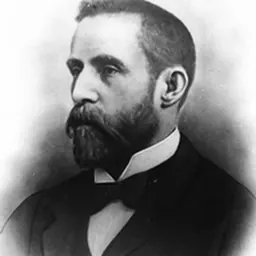

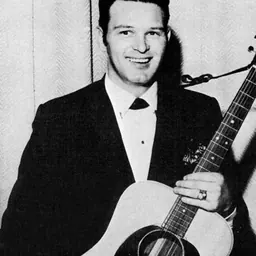


Contemporaries
People whose lives overlapped Alexander Cameron's

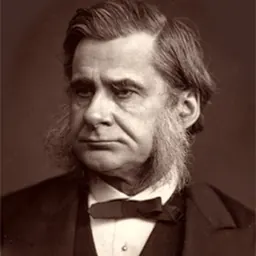

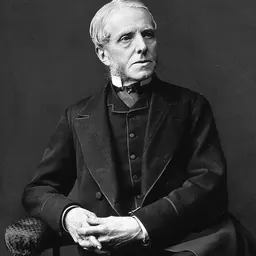

Frequently asked questions
Who was Alexander Cameron?
Australian businessman (1864–1940)
When was Alexander Cameron born?
Alexander Cameron was born on 5 August 1864 in Hamilton.
When did Alexander Cameron die?
Alexander Cameron died on 23 February 1940 in South Yarra.
What nationality was Alexander Cameron?
Alexander Cameron was Australian.
Sources & further reading
· Wikipedia: Alexander Cameron
· DBpedia: Alexander Cameron (tramways administrator)
Cite this page
APA: Biography.guide. (2026). Alexander Cameron. https://biography.guide/alexander-cameron/
MLA: "Alexander Cameron." Biography.guide, https://biography.guide/alexander-cameron/.
Chicago: "Alexander Cameron." Biography.guide. https://biography.guide/alexander-cameron/.
Data last updated: 2026-09-22 · Spot an error? Report a correction.
Page generated 2026-09-27 05:22 UTC