
About Dulcie Gray
Lived 1915 – 2011 (aged 95). Dulcie Gray was a British and Malaysian stage actor, film actor, writer, novelist and actor.
Dulcie Winifred Catherine Savage Denison (née Bailey; 20 November 1915 – 15 November 2011), known professionally as Dulcie Gray, was a British actress, mystery writer and lepidopterist.
While at drama school in the late 1930s she met a fellow student, Michael Denison. They married in 1939 and were together for 59 years before his death in 1998. The couple's professional careers were intertwined; in their early years they appeared in several films together and throughout their careers they frequently acted on stage together. Although she was well known for her starring roles in films of the late 1940s and early 1950s, most of Gray's career was in the theatre. Her range was extensive, and she appeared in Shakespeare, farce, thrillers, classics by Sheridan, Wilde, Chekhov, Shaw and Coward, absurdist drama, and numerous new plays. In the 1980s she became well known to British television viewers when she starred in a long-running soap opera, Howards' Way.
Alongside her acting career Gray was a prolific author, writing more than twenty books, mostly crime stories, but also non-crime novels, a volume of memoirs, a biography of J. B. Priestley and an award-winning book about butterflies, a lifelong interest of hers.
Life and career Early years Gray was born in Kuala Lumpur, British Malaya (now Malaysia) in 1915, the younger daughter and youngest of three children of Arnold Savage Bailey (1881–1935), lawyer and member of the federal council of the Federated Malay States, and his wife, Kate Edith née Clulow Gray (1887–1942). From the age of three years and three months she attended boarding schools in Wallingford, Wokingham and Swanage. At the age of fifteen she returned to Malaya, becoming a teacher and journalist. After her father's death in an accident she moved back to Britain. She won a scholarship to an art school, but transferred to the Webber Douglas Academy of Dramatic Art, where, in 1937, she met her future husband Michael Denison. The couple appeared there together in plays including Coward's Hay Fever and The Young Idea, Shaw's Arms and the Man, Priestley's Dangerous Corner and Gerald Savory's George and Margaret. In March 1940 Denison and Gray joined the H. M. Tennent Players, appearing in repertory in Edinburgh and Glasgow. She began broadcasting for the BBC in 1941, making 395 broadcasts in the radio soap opera Front Line Family. Her first London appearances were at the Regent's Park Open Air Theatre in 1942, playing Maria in Twelfth Night, Bianca in The Taming of the Shrew and Hermia in A Midsummer Night's Dream. At the Piccadilly Theatre later in the year she appeared as Alexandra in The Little Foxes alongside Fay Compton and Richard Attenborough. Also in 1942 she made her first film appearance in an uncredited bit part in Banana Ridge. The reviewer in Punch considered that it was her "skilful and moving performance" that held the piece together. Her success in the role led to a contract with Gainsborough Pictures, for whom she made five films before the end of the war in 1945 and with them, and later other studios, she became established as a star. Among the films in which she made her name were Madonna of the Seven Moons (1945), Wanted for Murder (1946) and A Man About the House (1947).
After Denison was demobilised in 1946 Gray used her influence with the film studios to help him relaunch his acting career, and they co-starred in the 1947 film My Brother Jonathan. They co-starred again in The Glass Mountain in 1948. When the stage version of Brighton Rock was adapted for a 1948 film, Gray was considered too old, at 32, to play the 15-year-old Rose on screen, and the part went to a younger actress. (Carol Marsh was cast as Rose.) Their next West End production together, the farce Queen Elizabeth Slept Here, pleased the critics less but the public more and it ran for 349 performances.
1950s After a seven-week pre-London tour, beginning in August 1950, Gray and Denison opened at the Ambassadors Theatre as Michael and Agnes in The Fourposter, a two-hander, charting the married life of a couple. A Broadway transfer was proposed, but the stars' commitments in Britain prevented it, and their roles were filled in the New York production by American performers. For the cinema Gray and Denison starred in The Franchise Affair (1951), and in December 1951 they headed the cast in a BBC television adaptation of Arnold Bennett and Edward Knoblock's play Milestones. Their penultimate film together in the 1950s was Angels One Five (1952).
At the St James's Theatre in December 1952 Gray and Denison co-starred as Robina and Clive Jevons in Sweet Peril. In Alice Through the Looking Glass at the Prince's Theatre in February 1954 Gray played the White Queen and Denison appeared as the White Knight, Tweedledee and Humpty Dumpty. They reprised these roles the following year. Its author fared better as a novelist than as a playwright: her first novel, a crime mystery, Murder on the Stairs, was published in the same year. It received good notices and sold well. She followed it with Murder in Melbourne (1958) and Baby Face (1959).
In 1956–57 Gray toured South Africa and Australia as Lady Shotter in Coward's South Sea Bubble and Laura Reynolds in Robert Anderson's Tea and Sympathy − the latter regarded as daring in its day. In 1958 Gray and Denison toured Britain in a two-hander thriller, Double Cross, but his heavy schedule of television work (starring in the series Boyd QC) prevented him from appearing in the piece when it opened in the West End, and Gray played opposite Terence Morgan. Her last stage role of the 1950s was the Duchess of Hampshire, with Denison as the Duke, in a revival of Frederick Lonsdale's Let Them Eat Cake at the Cambridge Theatre in May 1959. In the West End they headed the cast in a 1963 adaptation of E. M. Forster's Where Angels Fear to Tread, which ran for 262 performances. From April to July 1964 the couple toured England and Continental Europe in a Shakespeare programme called Merely Players. Without Denison, Gray guested at the Birmingham Repertory Theatre in 1964 as Arkadina in The Seagull. The critic J. C. Trewin wrote, "The study is precise in line and technique. Here are Arkadina's consuming vanity and possessiveness … a fine Chekhovian portrait".
In London Denison and Gray appeared in Wilde's An Ideal Husband at the Strand (December 1965) as Sir Robert and Lady Chiltern.
Between stage appearances Gray continued to write: Epitaph for a Bad Actor (1960), Murder on a Saturday (1961), Murder in Mind (1962), The Devil Wore Scarlet (1963), No Quarter for a Star (1964), The Murder of Love (1967), Died in the Red (1968) and Murder on Honeymoon (1969). The Stage commented: blockindent|All Miss Gray's books are murder stories. Some are Whodunnits, others are Howdunnits. Sometimes the reader has to try and discover who did the murder; at other times he is told and has to guess how the murderer will be discovered. In every instance, Miss Gray starts off by setting the scene and she often chooses an ugly environment because she is convinced our surroundings have a tremendous effect upon us and ugliness is capable of inspiring the deepest and vilest emotions. The following year they toured in two classic comedies – The Clandestine Marriage and The School for Scandal – as well as The Wild Duck. In 1972 Gray toured in Coward's Hay Fever. The Stage commented that audiences "were treated to a beautifully-timed and polished portrayal of Judith Bliss from Dulcie Gray".
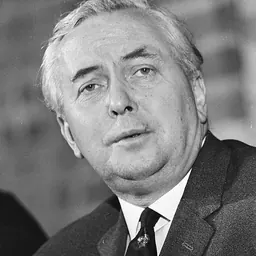
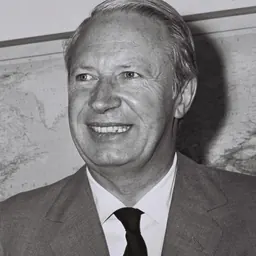
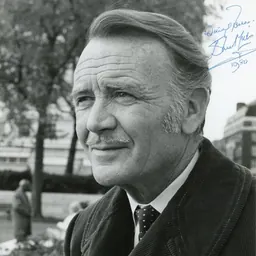
Together with John Mills the couple starred in William Douglas-Home's Downing Street comedy At the End of the Day at the Savoy Theatre in 1973. Gray played a thinly-disguised Mary Wilson to the equally fictitious versions of Harold Wilson and Edward Heath of Mills and Denison. It ran well into 1974; Gray and Denison then appeared in a comedy, The Sack Race, in 1974. Nor did the couple appear on stage together in 1976, although Denison directed a production of Priestley's Time and the Conways in which Gray starred as Mrs Conway. On tour she appeared with Derek Nimmo in Carry On, Jeeves, adapted from stories by P. G. Wodehouse, and in Ladies in Retirement, with Evelyn Laye.
Gray had been interested in butterflies since her childhood, and during the 1970s she researched the subject with a view to writing a book about it. Her researches took her overseas, and she became recognised as an expert on the topic. Her book Butterflies on My Mind (1978), won a Times Educational Supplement award.
1980s In the 1980s Gray and Denison toured extensively. They starred in a British tour of Douglas-Home's The Kingfisher (1980–81), and made a Middle- and Far-East tour in Ayckbourn's Relatively Speaking in 1981. Their other productions beyond the West End included The Cherry Orchard (1980) and The School for Scandal (several tours between 1982 and 1984, co-starring in one tour with Donald Sinden), in which Gray switched roles from Lady Sneerwell to Mrs Candour overnight. That production was given not only in Britain but in a ten-week tour for the British Council playing in 16 cities in nine countries. Both Gray and her husband were made CBE in 1983. They toured in Enid Bagnold's The Chalk Garden (1989).
Without Denison, Gray toured in Douglas-Home's comedy Lloyd George Knew My Father, co-starring with Marius Goring. The Stage commented:
With her husband, Gray toured the Middle East in 1985 in Ray Cooney and John Chapman's comedy There Goes the Bride. On her return to England, Gray began filming for her first regular role in a television series. She had made one-off television appearances in every decade from the 1940s onwards, with and without Denison, but the role of Kate Harvey in the BBC series Howards' Way brought her regularly to the notice of television viewers from 1985 to 1990.
Later years, 1990–2011 In 1990 and 1991, Gray and Denison toured with Frank Thornton in Hugh Whitemore's The Best of Friends, depicting the friendship between the nun Laurentia McLachlan (Gray), the antiquarian Sydney Cockerell (Denison), and the playwright Bernard Shaw (Thornton). Later in 1991 Gray played the matriarch, Madame Pernelle, in Peter Hall's production of Tartuffe in the West End. On tour with Denison in The Importance of Being Earnest; she played Miss Prism and he doubled the roles of Lane and Dr Chasuble. They again appeared together in a tour of Bedroom Farce in 1992, and in the same year she published her memoirs, Looking Forward, Looking Back.
Gray's last stage tour alongside her husband was in 1995, with Eric Sykes in Two of a Kind, a comedy by Hugh Janes, set in a retirement home. Their final joint appearances on stage were in March and April 1998 in Curtain Up – An Evening with Michael Denison and Dulcie Gray at the Jermyn Street Theatre. The following year she toured as Madame de Rosemonde in Christopher Hampton's version of Les Liaisons dangereuses and Miss Froy in a stage adaptation of the 1938 film The Lady Vanishes. Shortly before Denison's death he had begun writing a biography of Priestley, which Gray completed; it was published in 2000. Gray made her final television appearance in 2000 in an episode of the BBC medical drama series Doctors. Her last stage appearances were in a tour of Chekhov's Three Sisters in 2002.
In her last years Gray lived at the actors' residential care home, Denville Hall, in west London, where she died on 15 November 2011 of bronchial pneumonia, aged 95.
Cinema and television Film
Television
Don’t just read it —
keep it.
Full-length biographies made to live with: read them, listen on the way to work, watch them tonight.
- E-book
- Audio
- Video
Instant download · yours to keep · every purchase keeps this site free
Important facts
Family & relationships
People in Dulcie Gray's life
Named in this biography and alive at the same time




Related people
Same field, nearest in time


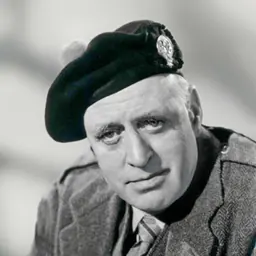


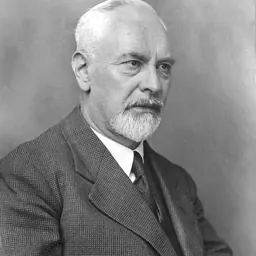
Contemporaries
People whose lives overlapped Dulcie Gray's



Frequently asked questions
Who was Dulcie Gray?
Actress, singer, writer (1915-2011)
When was Dulcie Gray born?
Dulcie Gray was born on 20 November 1915 in Kuala Lumpur.
When did Dulcie Gray die?
Dulcie Gray died on 15 November 2011 in Northwood.
What was Dulcie Gray's occupation?
Dulcie Gray was a stage actor, film actor, writer, novelist and actor.
What nationality was Dulcie Gray?
Dulcie Gray was British and Malaysian.
Sources & further reading
Cite this page
APA: Biography.guide. (2026). Dulcie Gray. https://biography.guide/dulcie-gray/
MLA: "Dulcie Gray." Biography.guide, https://biography.guide/dulcie-gray/.
Chicago: "Dulcie Gray." Biography.guide. https://biography.guide/dulcie-gray/.
Data last updated: 2026-09-22 · Spot an error? Report a correction.
Page generated 2026-09-27 05:33 UTC