
About Dudley Randall
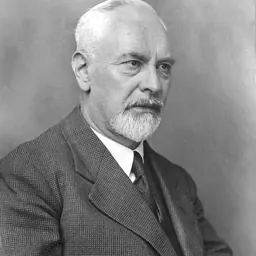
Lived 1914 – 2000 (aged 86). Dudley Randall was an American librarian, poet and editing staff.
Dudley Randall (January 14, 1914 – August 5, 2000) was an African-American poet and poetry publisher from Detroit, Michigan. He founded a pioneering publishing company called Broadside Press in 1965, which published many leading African-American writers, among them Melvin Tolson, Sonia Sanchez, Randall's poetry is characterized by simplicity, realism, and what one critic has called the "liberation aesthetic." Other well-known poems of his include "A Poet is not a Jukebox", "Booker T. and W.E.B.", and "The Profile on the Pillow".
Life Dudley Randall was born on January 14, 1914, in Washington, D.C., the son of Arthur George Clyde (a Congregational Minister) and Ada Viola (Bradley) Randall (a teacher). Randall was the third of five children, including James, Arthur, Esther, and Phillip. His family moved to Detroit in 1920, and he married his first wife Ruby Hands in 1935, and soon after had a daughter, Phyllis Ada. This marriage dissolved, and Randall married Mildred Pinckney in 1942, but this marriage did not last either. In 1957, he married Vivian Spencer.
Randall developed an interest in poetry at a young age. In 1927, at the age of 13, his first published poem, a sonnet, appeared in the Detroit Free Press. The sonnet won the first prize of one dollar on the "Young Poets Page." Early inspiration stemmed from Randall's father taking him and his brothers to hear prominent African-American writers and artists speak, including W. E. B. Du Bois, Walter Francis White, James Weldon Johnson, and others. he worked in a foundry of the Ford Motor Company in Dearborn, Michigan, from 1932 to 1937. Randall's next publication was Cities Burning (1968), a group of thirteen poems, in response to a riot in Detroit. Another fourteen poems appeared in Love You (1970), followed by More to Remember (1971) and After the Killing (1973).
Naomi Long Madgett writes: "His interest in Russia, apparent in his translations of poems by Aleksander Pushkin ("I Loved You Once", in After the Killing) and Konstantin Simonov ("My Native Land" and "Wait for Me" in A Litany of Friends), was heightened by a visit to the Soviet Union in 1966. His identification with Africa, enhanced by his association with poet Margaret Esse Danner from 1962 to 1964 and study in Ghana in 1970, is evident in such poems as "African Suite" (After the Killing)."
Randall received many awards throughout his career, including:
1962 and 1966: the Wayne State Tompkins Award for poetry and for poetry and fiction 1973: Kuumba Liberation Award 1975: Plaque as Distinguished Alumnus from the University of Michigan 1977: International Black Writers' Conference Award 1981: Creative Artist Award in Literature, Michigan Council for the Arts
In 1981, Randall was named Poet Laureate of the City of Detroit by Mayor Coleman Young.
Broadside Press Randall was the publisher of Broadside Press from 1965 until 1977 when he sold the press to the Alexander Crummell Memorial Center, although he continued to serve as a consultant. The press began because Randall wanted to establish copyright on two poems that Jerry Moore was setting to music, "Ballad of Birmingham" and "Dressed All in Pink."
Broadside Press took off in 1965 when, during the Writer's Conference at Fisk University, Randall saw Margaret Walker practicing her recitation of a poem about Malcolm X she was going to perform. When Randall commented on the number of poems being published about Malcolm, Margaret Burroughs suggested the idea of an anthology. Randall and Burroughs communicated their intentions to edit a book of poetry on Malcolm X at the conference, and their fellow poets and publishers responded enthusiastically, some even refusing to be paid for their work.
In 1966, Randall and Margaret Danner, fellow poet and founder of Boone House, published their work Poem Counterpoem through Broadside Press. In May of the same year, Randall attended a conference where he received permission to publish work from Robert Hayden, Melvin B. Tolson, and Margaret Walker in a Broadside series. Randall also received permission from Gwendolyn Brooks to publish her poem "We Real Cool".
Connection to the Black Arts Movement As editor of the Broadside Press, Randall was an important part of the Black Arts Movement (BAM). The aesthetic counterpart of the political drive inherent in the Black Power movement, BAM rejected assimilation in favor of artistic and political freedom. Part of the movements doctrine was a belief in the necessity of militant armed self-defense and the beauty and goodness of Blackness.
The movement's origin is usually traced to March 1965 when, two months after the assassination of Malcolm X, LeRoi Jones (who later changed his name to Amiri Baraka) moved to Harlem. It was Baraka who coined the phrase "Black Arts". The movement had three major forces: the Revolutionary Action Movement (RAM), the Nation of Islam, and the US organization (the "us" used in opposition to "them").
Don’t just read it —
keep it.
Full-length biographies made to live with: read them, listen on the way to work, watch them tonight.
- E-book
- Audio
- Video
Instant download · yours to keep · every purchase keeps this site free
Important facts
People in Dudley Randall's life
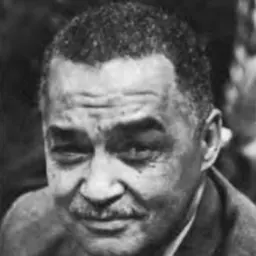
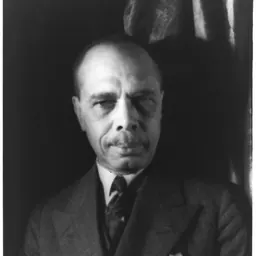
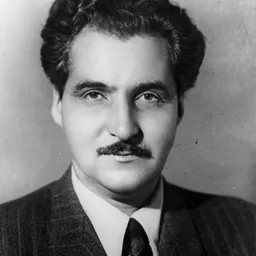
Named in this biography and alive at the same time





Related people
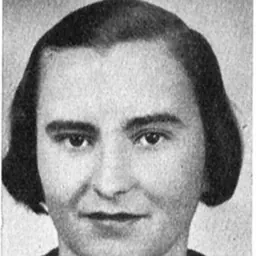
Same field, nearest in time


Contemporaries
People whose lives overlapped Dudley Randall's


Frequently asked questions
Who was Dudley Randall?
American poet (1914– 2000)
When was Dudley Randall born?
Dudley Randall was born on 14 January 1914 in Washington, D.C..
When did Dudley Randall die?
Dudley Randall died on 5 August 2000 in Southfield.
What was Dudley Randall's occupation?
Dudley Randall was a librarian, poet and editing staff.
What nationality was Dudley Randall?
Dudley Randall was American.
Sources & further reading
Cite this page
APA: Biography.guide. (2026). Dudley Randall. https://biography.guide/dudley-randall/
MLA: "Dudley Randall." Biography.guide, https://biography.guide/dudley-randall/.
Chicago: "Dudley Randall." Biography.guide. https://biography.guide/dudley-randall/.
Data last updated: 2026-09-20 · Spot an error? Report a correction.
Page generated 2026-09-27 05:24 UTC