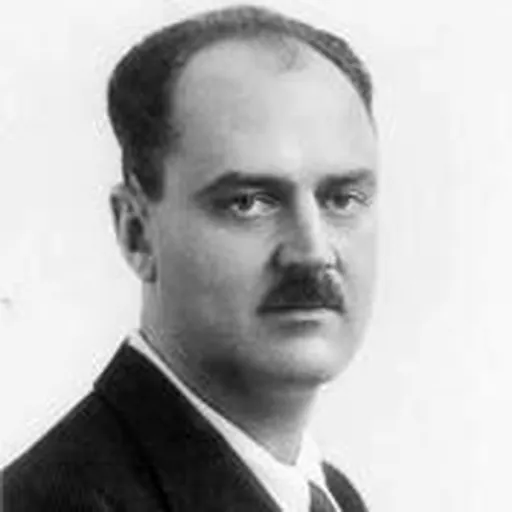
About Duccio Galimberti
Lived 1906 – 1944 (aged 38). Duccio Galimberti was an Italian lawyer, politician, partisan and partisan (military).
Tancredi Achille Giuseppe Olimpio "Duccio" Galimberti (30 April 1906 – 3 December 1944) was an Italian lawyer who became a committed anti-fascist and war-time partisan. He was an important figure – according to some sources the most important figure – in the Piedmontese anti-fascist resistance, and was a posthumous recipient both of the Gold Medal of Military Valor and of the Gold Medal of the Resistance. During the closing months of the war, he was proclaimed a national hero by the National Liberation Committee for Northern Italy.
Biography Provenance Tancredi Achille Giuseppe Olimpio Galimberti was the younger by two years of his parents' two sons. He was born and spent a contented childhood in Centallo, a small Piedmontese town a short distance to the north of the province capital, Cuneo, positioned between the cities of Genoa to the south and Turin to the north. His father, Lorenzo Tancredi Galimberti (1856–1939), was a lawyer-politician who served as Minister for Postal and Telegraphic communications in the Zanardelli government between 1901 and 1903 and was later, in 1929, appointed to the senate. His mother, born Alice Schanzer, came originally from Vienna: she is frequently identified in Italian language sources not by her married name but simply by her birth name, which is at least in part a tribute to her own eminence as a poet and literary scholar. Despite the impressive quartet of given names with which he was provided at baptism, Galimberti was almost universally known both throughout his life and after his death by the affectionate diminutive "Duccio". An exception was the name by which anti-fascist resistance comrades identified him during the 1940s. Partisan pseudonyms were commonly used to confuse the fascist authorities, and sources dealing with that part of Duccio Galimberti's life may also refer to him as "Professor Garnera". The essay consists of a careful in-depth analysis of Mazzini's entire political doctrine, in the course of which the writer does not omit to draw attention to the elements of uncertainty and utopianism in Mazzini's concept of the state. dealt with "Levels of danger as a determinant of Criminal Sanctions" .
Not a fascist Following graduation, Galimberti was called up for an initial period of military service. University graduates normally embarked on their military service with the rank of an army officer, but that would have involved enrolling in a special course which might have been construed as some form of personal endorsement of the Mussolini government. It might have meant becoming a party member. Slightly unusually, given his background, Duccio Galimberti undertook his military service in 1926 as a simple "private" conscript. ("Progetto di costituzione confederale europea ed interna".) The work was published only posthumously, in 1946.
The fall of Fascism In Rome the Grand Council of Fascism held its final meeting on 24 July 1943. Tunis had fallen. There were clear indications that Anglo-American forces, fresh from their African desert victory and already advancing across Sicily, were preparing to invade mainland Italy from the south. The Grand Council meeting in Rome was a crisis meeting, which ran through the night, and culminated in an overwhelming vote of no confidence in the leader. In the morning the king met the leader and informed him that Marshal Badoglio would take over as leader of the government. Mussolini's arrest followed, as he left the meeting. The fall of fascism was followed by a rapid further transformation in Duccio Galimberti's approach. On the morning of 26 July 1943 he appeared on the first floor balcony of his studio-office, which overlooked the main "Piazza Vittorio" (square) in Cuneo and addressed a crowd made jubilant by news of the dictator's fall.
To the mountains Overnight on 11 / 12 September 1943 Duccio Galimberti, Dante Livio Bianco and ten other friends made their way up into the mountains of the Valle Gesso, directly to the south of Cuneo. A week later the recently dismissed was installed as the leader of the Italian Social Republic German puppet state in northern Italy, the territorial extent of which was progressively reduced, from the south. Piedmont, which included the Cuneo region in which the "Justice and Freedom brigades" operated, was therefore part of the fought over puppet state.
Meanwhile, Galimberti's group soon moved on from their chapel base to Paralup near Rittana and then on again to the San Matteo in the mountains above the Valle Grana, where they set up what became a more permanent partisan base during November 1943. Towards the end of 1943 Galimberti engaged in the careful but vital work of connecting and unifying the various little partisan bands that had responded to his call and to the needs of the moment. By the end of 1943 the "Justice and Freedom brigades" had become a reality in the Cuneo region. He took care to be involved personally in the recruitment of new fighters and in very critically scrutinizing the "moral worth" of new arrivals. There was a continuing risk that there would be fascist informers among them. He was taken to "Le Nuove", Turin's imposing nineteenth century prison complex.
There followed frantic attempts by resistance comrades to negotiate his release in return for German prisoners, of whom by this stage the partisans had captured a considerable number, but the attempts proved unproductive. From the point of view of his captors, it seemed, Duccio Galimberti was beyond price.
Murder Early in the morning of 3 December 1944, following a second night of brutal interrogation, Galimberti was taken in the back of a truck along the main road to the north (SS20), apparently back to Turin. Less than ten kilometers north of Cuneo the truck stopped, however, and Galimberti was pushed out, landing across or in the ditch by the road. By the lane leading to the hamlet of Tetto Croce, he was shot in the back with one or more machine-gun bursts. His dead body was left where it fell.
Don’t just read it —
keep it.
Full-length biographies made to live with: read them, listen on the way to work, watch them tonight.
- E-book
- Audio
- Video
Instant download · yours to keep · every purchase keeps this site free
Important facts
People in Duccio Galimberti's life
Named in this biography and alive at the same time


Related people
Same field, nearest in time


Contemporaries
People whose lives overlapped Duccio Galimberti's

Frequently asked questions
Who was Duccio Galimberti?
Italian lawyer and politician (1906–1944)
When was Duccio Galimberti born?
Duccio Galimberti was born on 30 April 1906 in Cuneo.
When did Duccio Galimberti die?
Duccio Galimberti died on 4 December 1944 in Centallo.
What was Duccio Galimberti's occupation?
Duccio Galimberti was a lawyer, politician, partisan and partisan (military).
What nationality was Duccio Galimberti?
Duccio Galimberti was Italian.
Sources & further reading
· Wikipedia: Duccio Galimberti
Cite this page
APA: Biography.guide. (2026). Duccio Galimberti. https://biography.guide/duccio-galimberti/
MLA: "Duccio Galimberti." Biography.guide, https://biography.guide/duccio-galimberti/.
Chicago: "Duccio Galimberti." Biography.guide. https://biography.guide/duccio-galimberti/.
Data last updated: 2026-09-22 · Spot an error? Report a correction.
Portrait: Wikimedia Commons · author & licence
Page generated 2026-09-27 05:02 UTC