
About Tancredi Galimberti
Lived 1856 – 1939 (aged 83). Tancredi Galimberti was an Italian politician and senate of the Kingdom of Italy.
Tancredi Galimberti (25 July 1856 – 1 August 1939) was an Italian politician during the first part of the twentieth century. He served as Minister for Postal and Telegraphic communications in the Zanardelli government between 1901 and 1903. In 1929, despite being openly equivocal about the leader's post-democratic approach to politics, he was appointed to the senate.
Biography Provenance and early years Tancredi Galimberti was born in Cuneo, a midsized town and important regional capital in the hills south of Turin. He was the eleventh of his parents' fourteen recorded children. His father, Bartolomeo Galimberti, was a typographer by trade and something of a "self-made man" by temperament. Bartolomeo Galimberti grew prosperous and became in 1861 the proprietor of "Sentinella delle Alpi". Family control of this politically pro-liberal and openly pro-masonic newspaper would be helpful in his future political career.
Galimberti received a classical college education from the Scolopi ("Piarist") fathers in nearby Savona and then progressed to university, studying first at Rome where he became involved with republican groups. He moved on to the University of Turin, emerging in 1880 with a degree in Jurisprudence. Galimberti even took a lead in defending Giolitti before the High Court.
Throughout his time as a member of parliament, Galimberti prioritised the interests of voters in Cuneo. Many of his parliamentary interventions were in favour of public investment in infrastructure and other "public works and services" in the Province of Cuneo, and of any other measures that might improve the living conditions of Cuneo residents. An enduring case in point was the railway line linking Cuneo to Ventimiglia (and thereby to Nice), along with a fine new main station at Cuneo-Altipiano (the station building was subsequently replaced by a more bombastic edifice in 1937). It should nevertheless be stressed that his commitment to his local electors did nothing to diminish the extent and thoughtfulness of his parliamentary contributions on the major national issues of the day.
While Rudinì remained in power Galimberti remained broadly supportive of the government. It can be misleading to apply terms from Anglo-American party politics to Italian national politics during this period, but subject to the caveat that Italian politics were less rigidly structured according to party-political branding, it is not unreasonable to see Rudinì as a figure of the moderate right. The 1897 Italian grain harvest was a poor one at a time when world prices for American grain were surging because of the Spanish–American War. Tariff reductions in January 1898 were widely seen as "too little too late": the Rudini government fell in response to a rapid crescendo in street disturbances not just in the south, but also in the north of Italy. General Pelloux took over, with another new government in June 1898 following a violent police response in Milan to food riots, whereby several thousand were injured and approximately 80 people were killed. Pelloux restored order without recourse to an overt system of full-blown martial law, helped by a better harvest, and demonstrating considerable political dexterity. His government coalition included members from the moderate left, but it also contained other military men, and is widely judged by historians to have been a conservative and militarist "law and order" administration. In parliament Tancredi Galimberti opposed the Pelloux government, arguing powerfully that it was the paucity of "social legislation" that was feeding socialist propaganda in the cities and clerical hostility to the government across the country. At this stage he was still being identified in sources as one of the "Giolittiani".
The Italian government in power between 1901 and 1903 is known as the Zanardelli government, but in many ways it was a government with two leaders. One was Giuseppe Zanardelli, who was terminally ill. Giovanni Giolitti, serving as the Interior Minister was the other one. In June 1903 Giolitti resigned from the government. He may have been impatient to take over from Giuseppe Zanardelli as President of the Council of Ministers As a leading member of the "Giolittiani", Galimberti was evidently expected to follow Giolitti's example promptly. He did not do so. As matters turned out Giolitti, suffered the indignity of having to await the death of the incumbent before the king invited him to form a new government. Zanardelli died on 3 November 1903. At the Ministry for Posts and Telecommunications Tancredi Galimberti was succeeded (albeit only briefly) by the poet-politician Enrico Stelluti Scala. Galimberti would never again hold ministerial office. and Tancredi Galimberti (always known as "Duccio"), a lawyer, a consistent anti-fascist and, after 1940, a partisan, were born respectively in 1904 and 1906.
Don’t just read it —
keep it.
Full-length biographies made to live with: read them, listen on the way to work, watch them tonight.
- E-book
- Audio
- Video
Instant download · yours to keep · every purchase keeps this site free
Important facts
Family & relationships
People in Tancredi Galimberti's life
Named in this biography and alive at the same time
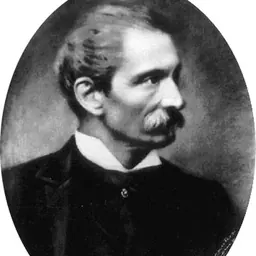

Related people
Same field, nearest in time
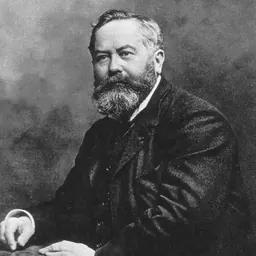




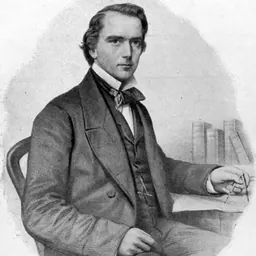
Contemporaries
People whose lives overlapped Tancredi Galimberti's
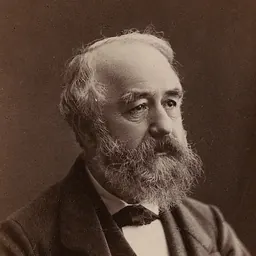





Frequently asked questions
Who was Tancredi Galimberti?
Italian politician (1856–1939)
When was Tancredi Galimberti born?
Tancredi Galimberti was born on 25 July 1856 in Cuneo.
When did Tancredi Galimberti die?
Tancredi Galimberti died on 1 August 1939 in Cuneo.
What was Tancredi Galimberti's occupation?
Tancredi Galimberti was a politician and senate of the Kingdom of Italy.
What nationality was Tancredi Galimberti?
Tancredi Galimberti was Italian.
Sources & further reading
· Wikipedia: Tancredi Galimberti
· DBpedia: Tancredi Galimberti
Cite this page
APA: Biography.guide. (2026). Tancredi Galimberti. https://biography.guide/tancredi-galimberti/
MLA: "Tancredi Galimberti." Biography.guide, https://biography.guide/tancredi-galimberti/.
Chicago: "Tancredi Galimberti." Biography.guide. https://biography.guide/tancredi-galimberti/.
Data last updated: 2026-09-25 · Spot an error? Report a correction.
Page generated 2026-09-27 05:12 UTC