
About Dante Livio Bianco
Lived 1909 – 1953 (aged 44). Dante Livio Bianco was an Italian lawyer, politician, mountaineer, partisan and civil law (legal system).
Dante Livio Bianco (19 May 1909 – 12 July 1953) achieved early distinction among legal professionals as an exceptionally able Italian civil lawyer, and then came to wider prominence as a wartime partisan leader. He was awarded the Silver Medal of Military Valor twice. He survived the war but nevertheless died at a relatively young age due to a climbing accident.
Biography Provenance and early years Dante Livio Marcel Angelo Nikin Robert André Bianco was born at Cannes on the southern coast of France, a short distance to the west of Nice. He was the first-born of his parents’ three recorded children, but in 1914 his sister Lydia died in infancy through suffocating on a bean, so that from 1914 until the birth of his brother Alberto in 1917 (1917–1997) he was his parents’ only child. Cannes had grown rapidly in extent and wealth during the final decades of the nineteenth century, largely on account of the European tourism boom triggered by industrialisation and the resulting increase in leisure spending. Gioachino Bianco (1859–1918), his father, had moved to Cannes from the family's home base at Valdieri, a small town set in the mountains on the western edge of Piedmont. Like many of his family Gioachino Bianco was skilled in the craft of tailoring, and he arrived in Cannes equipped both with his tailoring skills and with significant entrepreneurial flair, which would enable him to become a leading member of the town's business community and the proprietor of several retail outlets. Livio's mother, Prospera "Rina" Sartore (1885–1969), is celebrated by admirers for the fortitude she displayed in bringing up her sons after she was widowed in 1918. In material terms, she was left well provided for, and there were also a number of supportive relatives in Italy. Two decades earlier Gioachino Bianco had arranged for the construction of a large villa in his home town of Valdieri, to which Rina Sartore now moved with her sons, and it was here that Livio Bianco spent the second half of his childhood and attended elementary school. When the time came to move on to secondary school he was sent to a boarding school in Cuneo. The boarding arrangement soon gave way to an arrangement that involved living during school days with the family of Giovanni Quaranta, who had been a friend of his father's and who in 1908 had married Domenica Sartore, who was sister to Livio's mother. The Quaranta sons, who attended the same school as Livio Bianco, were therefore first cousins to the Bianco brothers. Mussolini had taken power when Livio Bianco was 13, and during his teenage years in the 1920s the institutionalised brutality of Fascist tyranny had become progressively more apparent. At the Law faculty in Turin he was taught and powerfully influenced by men such as Francesco Ruffini, Luigi Einaudi and Gioele Solari. Long before he received his degree in 1930 Bianco had, like many of his student contemporaries at Turin, become committed to the Gobetti legacy and thereby a staunch antifascist.
Lawyer After graduating under the tutorial supervision of Gioele Solari, Livio Bianco embarked on a legal career, working initially in Cuneo. From 1932/33, having evidently completed any necessary apprenticeship qualification, he worked and exercised his advocacy skills in the district at Turin, while employed at the legal practice run by the youthful Manlio Brosio. Brosio would subsequently make a considerable mark in the world international politics, notably as Secretary General of NATO between 1964 and 1971. He had also been a close friend of Piero Gobetti, a government opponent whose death in 1926 following a fascist beating had been widely reported at the time. The spirit of the firm, and indeed across much of the Turin middle class establishment, was antifascist.
Wartime resistance
In a frequently referenced speech which he delivered during 1948 in the presence of President Einaudi, Livio Bianco sought to summarize, in the rhetorical style of his profession and of the postwar optimism of those times, how the spirit of antifascist resistance had underpinned partisan opposition to fascism and, after 1943, to German occupation between 1943 and 1945. ’Mr.President, through your own intimate knowledge of the history of Piedmont you will recall the defiant reply that King Victor Amadeo gave when emissaries from [the French king] Louis XIV who tried to persuade him that the state of his army would deprive him of any chance of resisting the powerful [French] armies from beyond the Alps. ”I will need only to stamp my foot on the soil, and soldiers of every class will appear”. So it was on 8 September and the days that followed in Cuneo and the surrounding district, just like that: soldiers, that is to say partisan fighters, appeared from every side, because someone or something had stamped with a foot on then soil. But this was not the foot of any ruler, king or prince: rather a higher and more potent force was on play. I refer to what can be termed civil conscience, the national call, and the sense of higher values: in short, I mean that sense of supreme virtues which may linger underground and invisible for a long time, but still breaks through at decisive moments, and propel an entire people into not falling short when the hour of historical duty arrives.'
"Signor Presidente, Lei che tanto bene conosce la storia del Piemonte, ricorderà la fiera risposta data da Vittorio Amedeo II agli emissari di Luigi XIV i quali gli spiegavano come le condizioni del suo esercito gli togliessero ogni possibilità di resistere alle potenti armate d'oltralpe: «Batterò col piede la terra, e n'usciran soldati d'ogni banda». Ebbene, l'8 settembre, e in seguito, a Cuneo e intorno a Cuneo avvenne proprio così: i soldati, cioè i partigiani uscivano da ogni parte, perché qualcuno aveva battuto col piede la terra; ma non era stato un sovrano, re o principe che fosse, bensì una forza più alta e maestosa, quella che si chiama la coscienza civile, la vocazione nazionale, il senso dei valori supremi, quella essenziale virtù insomma, che, magari sotterranea ed invisibile per lungo volgere di anni, erompe nei momenti decisivi, e spinge un popolo a non mancare nell'ora del dovere storico."
From the launch of the operation, Livio Bianco stood out as one of the principal drivers and organisers of the expanding network of Alpine partisans units. Despite a total absence of previous military experience, after m1945 he was commended by admirers for the formidable military efficiency he was able to instil and the passionate regional loyalties which he was able to access and enhance from then ingrained instincts of comrades. Among those under his command he also acquired a reputation as an uncompromising disciplinarian, determined that adventurers and profiteers should not be numbered among his men. There are reports that he did not hesitate to order the shooting of any thieves who might otherwise compromise the reputational integrity of the partisan brigades.
Livio Bianco was also among those taking a lead in pushing for contacts between antifascist partisan fighters in Italy and Résistance groups across the border in France. These culminated in a meeting between representatives of the two organisations at Barcelonette on 22 May 1944 at which Livio Bianco and Galimberto led the Italian delegation: Livio Bianco led the negotiations. The French side was led by Jacques Lécuyer. The process culminated in the signing on 30/31 May 1944 of the Saretto Agreements (“Patti di Saretto"), committing the parties to support continuing solidarity between the French and Italian people, politically and in the fight against Nazism.
In December 1944, following the betrayal and killing of Duccio Galimberti, Livio Bianco came down from the mountains and replaced his dead comrade as regional commander of the “Justice and Liberty” brigade for the entire Piedmontese region. a main street in Valdierei was renamed in celebration of his life, and in Turin, close to the city's iconic Fiat factory a wide avenue with a shopping parade on one side and ample space for car parking was renamed “Piazza Dante Livio Bianco”. The body was returned to Valdieri where it was buried with appropriate quiet pomp in the local cemetery: Ferruccio Parri delivered a eulogy on behalf of his partisan comrades, many of whom attended the ceremony.
After his death, Livio Bianco's Turin legal practice was taken over by Carlo Galante Garrone, the younger brother of Livio Bianco's friend and, back in the 1920s, student contemporary.
Don’t just read it —
keep it.
Full-length biographies made to live with: read them, listen on the way to work, watch them tonight.
- E-book
- Audio
- Video
Instant download · yours to keep · every purchase keeps this site free
Important facts
People in Dante Livio Bianco's life
Named in this biography and alive at the same time
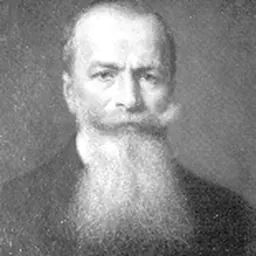
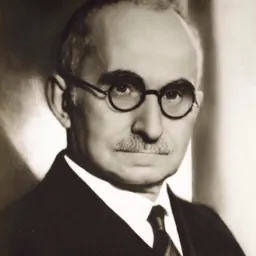
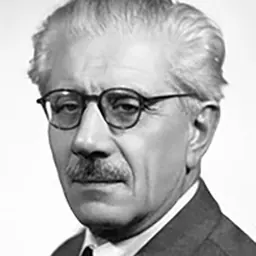
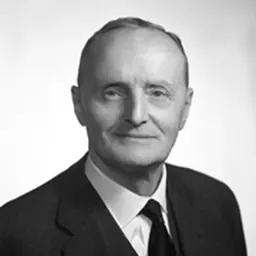
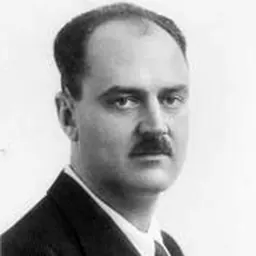


Related people
Same field, nearest in time

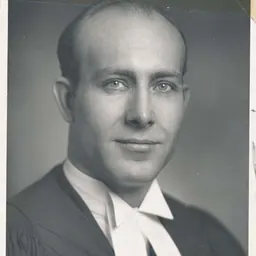

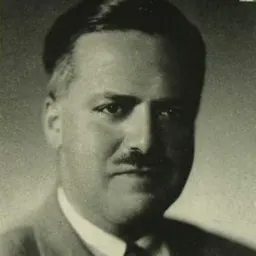

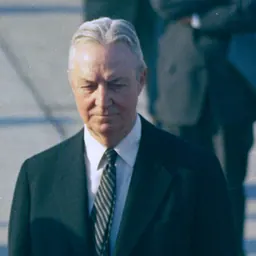
Contemporaries
People whose lives overlapped Dante Livio Bianco's


Frequently asked questions
Who was Dante Livio Bianco?
Italian partisan and lawyer (1909–1953)
When was Dante Livio Bianco born?
Dante Livio Bianco was born on 19 May 1909 in Cannes.
When did Dante Livio Bianco die?
Dante Livio Bianco died on 2 July 1953 in Valle Gesso.
What was Dante Livio Bianco's occupation?
Dante Livio Bianco was a lawyer, politician, mountaineer, partisan and civil law (legal system).
What nationality was Dante Livio Bianco?
Dante Livio Bianco was Italian.
Sources & further reading
· Wikipedia: Dante Livio Bianco
Cite this page
APA: Biography.guide. (2026). Dante Livio Bianco. https://biography.guide/dante-livio-bianco/
MLA: "Dante Livio Bianco." Biography.guide, https://biography.guide/dante-livio-bianco/.
Chicago: "Dante Livio Bianco." Biography.guide. https://biography.guide/dante-livio-bianco/.
Data last updated: 2026-09-22 · Spot an error? Report a correction.
Page generated 2026-09-27 05:30 UTC