
About Dorothy Macardle
Lived 1889 – 1958 (aged 69). Dorothy Macardle was an Irish historian, playwright, journalist and writer.
Dorothy Macardle (7 March 1889 – 23 December 1958) was an Irish writer, novelist, playwright, journalist and non-academic historian. Associated throughout her life with Irish republicanism, she was a founding member of Fianna Fáil in 1926 and was considered to be closely aligned with Éamon de Valera until her death, although she was vocal critic of how women were represented in the 1937 constitution created by Fianna Fáil. She was also unable to respect de Valera's attitudes adopted during World War II. Her book, The Irish Republic, is one of the more frequently cited narrative accounts of the Irish War of Independence and its aftermath, particularly for its exposition of the anti-treaty viewpoint.
Early life Dorothea Margaret Callan Macardle was born in Dundalk, County Louth on 7 March 1889 into a wealthy brewing family famous for producing Macardle's Ale. Macardle's father, Sir Thomas Callan Macardle, was a Catholic who supported John Redmond and the Irish Home Rule movement, while her mother, Lucy "Minnie" Macardle, came from an English Anglican background and was politically a unionist; Lucy had converted to Catholicism upon her marriage to Thomas. Macardle and her siblings were raised as Catholics, but Lucy, who was politically isolated in Ireland, "inculcated in her children an idealised view of England and an enthusiasm for the British empire".
Between 1914 and 1916, Macardle lived and worked in Stratford-upon-Avon in Warwickshire, England. There, her encounters with upper-class English people who expressed anti-Irish sentiment and supported keeping Ireland in the British Empire by force further weakened her Anglophilia. while another brother, Major John Ross Macardle, survived the war and earned the Military Cross. It was during this trip that Macardle came into contact with Charlotte Despard, sister of the Viceroy of Ireland Lord French. Despard had taken the pro-Irish side in the war and returned with Macardle to Dublin. In 1939 she admitted: "I am a propagandist, unrepentant and unashamed". Macardle spent seven years writing the book in a cottage in Delgany in Wicklow and it is a day-by-day account of the history of the events in Ireland from 1919 to 1923 recorded in painstaking detail together with voluminous source material.
Critic and Anti-fascist In 1937, De Valera's Fianna Fáil government was able to create a new Constitution of Ireland following a successful referendum. However, there was widespread criticism of this new constitution from women, particularly republican women, as the language of the new constitution emphasised that a woman's place should be in the home. Macardle was amongst them, deploring what she saw as the reduced status of women in this new Constitution . Furthermore, she noted that the new Constitution dropped the commitment of the 1916 Proclamation to guarantee equal rights and opportunities "without distinction of sex" and wrote to de Valera questioning how anyone "with advanced views on the rights of women" could support it. De Valera also found her criticising compulsory Irish language teaching in schools.
The entire matter of the new constitution led Macardle to join Hanna Sheehy-Skeffington's Women's Social and Progressive League. She was accorded a state funeral, with De Valera giving the oration, and is buried in Sutton.
Published works Tragedies of Kerry, 1922–23 Earthbound: Nine Stories of Ireland, 1924 The Irish Republic (published 1937, 1938, 1951, 1968 and subsequently) Uneasy Freehold (1941, basis for the 1944 movie The Uninvited), published in the US as The Uninvited (1942) The Unforeseen (1946) (novel set in Ireland) American title of Fantastic Summer (1946) Without Fanfares: Some Reflections on the Republic of Ireland (1947) Children of Europe: a study of the children of liberated countries; their war-time experiences, their reactions, and their needs, with a note on Germany (1949) The Dark Enchantment (1953) (a novel set in Provence) Shakespeare, Man and Boy (published posthumously in 1961)
Don’t just read it —
keep it.
Full-length biographies made to live with: read them, listen on the way to work, watch them tonight.
- E-book
- Audio
- Video
Instant download · yours to keep · every purchase keeps this site free
Important facts
People in Dorothy Macardle's life
Named in this biography and alive at the same time

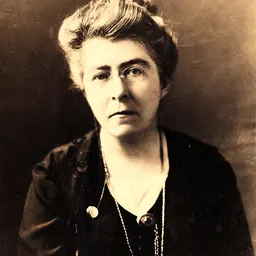
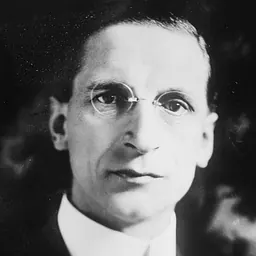
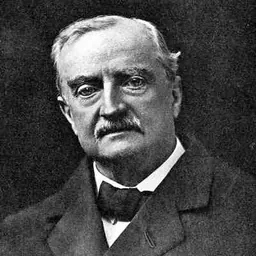


Related people
Same field, nearest in time
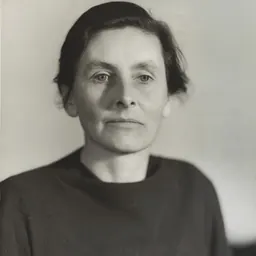

Contemporaries
People whose lives overlapped Dorothy Macardle's


Frequently asked questions
Who was Dorothy Macardle?
Irish writer and historian (1889–1958)
When was Dorothy Macardle born?
Dorothy Macardle was born on 2 February 1889 in Dundalk.
When did Dorothy Macardle die?
Dorothy Macardle died on 23 December 1958 in Drogheda.
What was Dorothy Macardle's occupation?
Dorothy Macardle was a historian, playwright, journalist and writer.
What nationality was Dorothy Macardle?
Dorothy Macardle was Irish.
Sources & further reading
Cite this page
APA: Biography.guide. (2026). Dorothy Macardle. https://biography.guide/dorothy-macardle/
MLA: "Dorothy Macardle." Biography.guide, https://biography.guide/dorothy-macardle/.
Chicago: "Dorothy Macardle." Biography.guide. https://biography.guide/dorothy-macardle/.
Data last updated: 2026-09-20 · Spot an error? Report a correction.
Page generated 2026-09-27 05:18 UTC