
About Charlotte Despard
Lived 1844 – 1939 (aged 95). Charlotte Despard was a British politician, novelist, activist, suffragist, social reformer and writer, known for Irish republicanism and Pacifism.
Charlotte Despard (née French; 15 June 1844 – 10 November 1939) was an Anglo-Irish suffragist, socialist, pacifist, Sinn Féin activist, and novelist. She was a founding member of the Women's Freedom League, the Women's Peace Crusade, and the Irish Women's Franchise League, and an activist in a wide range of political organizations over the course of her life, including among others the Women's Social and Political Union, Humanitarian League, Labour Party, Cumann na mBan, and the Communist Party of Great Britain.
Despard was imprisoned four times for her suffragette activism, and she continued campaigning for women's rights, poverty relief and world peace into her 90s. She was educated by a series of governesses and intermittently at private school, but complained in later life that her schooling was 'slipshod' and 'inferior'. Despard was always dubious of authority and ran away from home at the age of 10, getting a train to London "to become a servant". She had five sisters; one, Katherine Harley, also a suffragist, served in the Scottish Women's Hospital during World War I in France. He died at sea in 1890; they had no children.
Despard was a Freemason as a member of Universal Co-Freemasonry, acting as Assistant Deacon in the Co-Masonic procession of September 1911.
Novels Despard's first novel, Chaste as Ice, Pure as Snow was published in 1874. Over the next sixteen years, she wrote ten novels, three of which were never published. Despard lived above one of her welfare shops in one of the poorest areas of Nine Elms during the week. She converted to Roman Catholicism.
Politics Despard became good friends with Eleanor Marx and was a delegate to the Second International, including to the fourth congress in London in 1896. She campaigned against the Boer War as a "wicked war of this Capitalistic government" and she toured the United Kingdom speaking against the use of conscription in the First World War, forming a pacifist organisation called the Women's Peace Crusade to oppose all war. Despard and Anne Cobden-Sanderson outside No. 10 Downing St prior to being arrested on 19 August 1909
Women's suffrage Despard was a vocal supporter of the Social Democratic Federation and the Independent Labour Party. In 1906 she joined the National Union of Women's Suffrage Societies and later was imprisoned four times for activism on women's franchise,
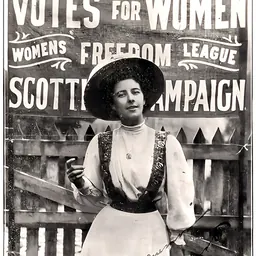
In 1907, Despard was one of the women who formed the Women's Freedom League (WFL) whose motto was 'Dare to be Free ', after disagreements over the autocratic way in which the WSPU was run.
She was an active Catholic and on Ash Wednesday in 1907, she went with others to the House of Commons and got arrested. In establishing WFL, Despard was joined by Teresa Billington-Greig, Bessie Drysdale, Edith How-Martyn, Alice Abadam, Marion Coates-Hansen, among others, as signatories to a letter to Emmeline Pankhurst explaining their disquiet on 14 September 1907. In 1911, when first imprisoned with Nina Boyle, Despard was furious when someone paid the fines, allowing them to be released right away; Boyle remarked upon her 'complete and absolute fearlessness'. along with Virginia Crawford, as she realised that the women's movement groups had to work together at times as well. She led the delegation at the Women's Coronation Procession (1911).
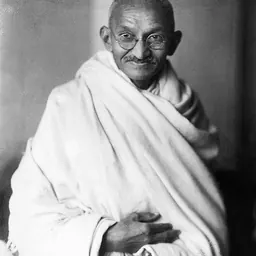
In 1909, she met Mahatma Gandhi in London, in her role in the Women's Freedom League. The following September, she was with Agnes Husband again on the platform at Regent's Park.
In 1914, she spoke along with Anna Munro and Georgiana Solomon at the WFL Hampstead branch 'at home', hosted by Myra Sadd Brown, raising funds for the Women's Suffrage National Aid Corps. which Despard had founded.
From 1915 onward, she worked with Agnes Harben and others to maintain international women's movements representation in Britain. In 1919, she was one of twenty British delegates to the Women's International League Congress in Zurich (12–17 May). She is pictured next to Helen Crawfurd from Glasgow. She kept in communication with other suffragists, such as Daisy Solomon.
In 1928, Despard was one of the suffrage movement leaders at the celebratory breakfast for the passing of the Equal Franchise Bill. Kate Harvey converted her house, Brackenhill, in Highland Road, Bromley, to a thirty-one-bed hospital, intended for wounded soldiers in World War I. However, refugee women and children were sent there instead. Despard and Harvey bought a 12-acre tract in Upper Hartfield, which they also called 'Brackenhill'. Harvey had become involved in Theosophyas did Despardand the children from Bromley were transferred to The Cloisters, an open-air school dedicated to that cause in Letchworth. The School in Hartfield became an Open Air School, which closed in 1939.
Later life Unlike other suffragists, Despard refused as a pacifist to become involved in the British Army's recruitment campaign during World War I, a stance different from that of her family: her brother, Field Marshal John French, was Chief of the Imperial General Staff of the British Army and commander of the British Expeditionary Force sent to Europe in August 1914, and their sister Katherine Harley served in the Scottish Women's Hospital in France.
She was a vegetarian and anti-vivisectionist. She was associated with London Vegetarian Society, becoming president in 1918 and vice-president in 1931, In 1918, Despard provided a forward to her dissection of the evolving relationship between the sexes,The Feminine in Fiction.
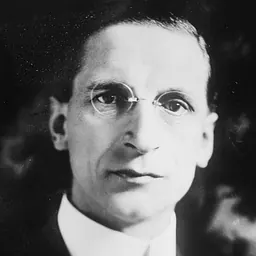
After World War I, she settled in Dublin and was a supporter of Éamon de Valera, but they were later reconciled. She was classed as a dangerous subversive under the 1927 Public Safety Act by the Irish Free State government for her opposition to the Anglo-Irish Treaty and her house was occasionally raided by the authorities.
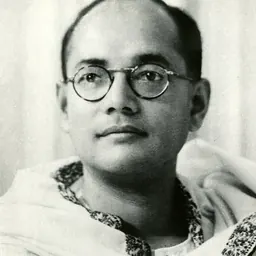
In 1930, Despard toured the Soviet Union to look at workers' conditions there. Impressed with what she saw, she joined the Communist Party of Great Britain. She met and was photographed with the Indian independence leader Subhas Chandra Bose when he visited Ireland in 1936.
She remained actively political well into her 80s and 90s, giving anti-fascist speeches in the likes of Trafalgar Square in the 1930s.
She died, aged 95, after a fall at her new house, Nead-na-Gaoithe, Whitehead, County Antrim, near Belfast in November 1939. She was buried in the Republican Plot at Glasnevin Cemetery in Dublin. Millicent Fawcett statue, Parliament Square London. Despard's name and picture appear on the plinth
Publications Chaste as Ice, Pure as Snow. Vol. I; Vol. II; Vol. III (Philadelphia: Porter and Coates, 1874) Jonas Sylvester (London: Sonnenschein and Co., 1886) The Rajah's Heir. A Novel. Vol. I; Vol. II (London: Smith, Elder & Co., 1890) A Voice from the Dim Millions; Being the True History of a Working Woman (1891) Economic Aspects of Woman's Suffrage (London: King, 1908) Collins, Mabel and Despard, Charlotte, Outlawed: A Novel on the Suffrage Question (London: Drame, 1908) Theosophy and the Women's Movement (London: Theosophical Society, 1913)
Don’t just read it —
keep it.
Full-length biographies made to live with: read them, listen on the way to work, watch them tonight.
- E-book
- Audio
- Video
Instant download · yours to keep · every purchase keeps this site free
Important facts
People in Charlotte Despard's life
Named in this biography and alive at the same time


Related people
Same field, nearest in time






Contemporaries
People whose lives overlapped Charlotte Despard's

Frequently asked questions
Who was Charlotte Despard?
British suffragist (1844-1939)
When was Charlotte Despard born?
Charlotte Despard was born on 15 June 1844 in Ripple.
When did Charlotte Despard die?
Charlotte Despard died on 10 November 1939 in Whitehead.
What was Charlotte Despard's occupation?
Charlotte Despard was a politician, novelist, activist, suffragist, social reformer and writer.
What was Charlotte Despard known for?
Charlotte Despard was known for Irish republicanism and Pacifism.
What nationality was Charlotte Despard?
Charlotte Despard was British.
Sources & further reading
· Wikipedia: Charlotte Despard
Cite this page
APA: Biography.guide. (2026). Charlotte Despard. https://biography.guide/charlotte-despard/
MLA: "Charlotte Despard." Biography.guide, https://biography.guide/charlotte-despard/.
Chicago: "Charlotte Despard." Biography.guide. https://biography.guide/charlotte-despard/.
Data last updated: 2026-09-20 · Spot an error? Report a correction.
Page generated 2026-09-27 05:31 UTC