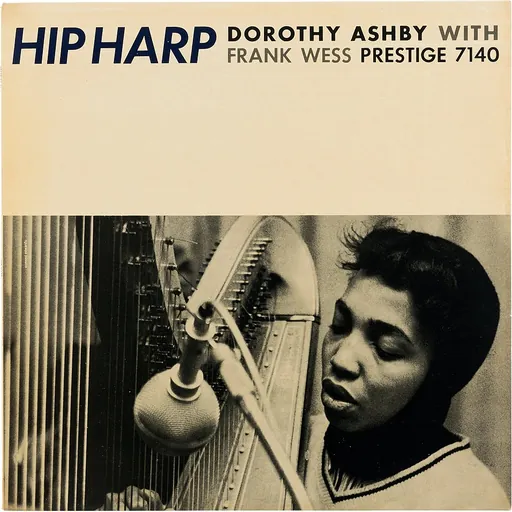
About Dorothy Ashby
Lived 1932 – 1986 (aged 53). Dorothy Ashby was an American composer, songwriter, jazz musician, harpist and musician.
Dorothy Jeanne Thompson (August 6, 1932 – April 13, 1986), better known as Dorothy Ashby, was an American jazz harpist, singer and composer. Hailed as one of the most "unjustly under loved jazz greats of the 1950s" and the "most accomplished modern jazz harpist," Ashby established the harp as an improvising jazz instrument, beyond earlier use as a novelty or background orchestral instrument, proving the harp could play bebop as adeptly as the instruments commonly associated with jazz, such as the saxophone or piano.
Ashby had to overcome many obstacles during the pursuit of her career. As an African-American female musician in a male-dominated industry, she was at a disadvantage. In a 1983 interview with W. Royal Stokes for his book Living the Jazz Life, she remarked of her career: "It's been maybe a triple burden in that not a lot of women are becoming known as jazz players. There is also the connection with Black women. The audiences I was trying to reach were not interested in the harp, period—classical or otherwise—and they were certainly not interested in seeing a Black woman playing the harp." Ashby successfully navigated these disadvantages, and subsequently aided in the expansion of who was listening to harp music and what the harp was deemed capable of producing as an instrument.
Ashby's albums were of the jazz genre, but often moved into R&B, world music, and other styles, especially her 1970 album The Rubaiyat of Dorothy Ashby, where she demonstrates her talents on another instrument, the Japanese koto, successfully integrating it into jazz.
Early life and education Ashby was born Dorothy Jeanne Thompson and grew up in the Paradise Valley/Black Bottom Community in Detroit, Michigan, where her father, Wiley Thompson, a self-taught jazz guitarist, often brought home fellow jazz musicians. where fellow students included such future musical talents and jazz greats as Donald Byrd, Gerald Wilson, and Kenny Burrell. While in high school, she tried her hand at a number of instruments including the saxophone and string bass before, influenced by her father and piano teacher, coming upon the harp. Instructed by Velma Froude, Ashby learned the strict classical style of harp playing influenced by French harpist Carlos Salzedo. At first, her fellow jazz musicians were resistant to the idea of adding the harp, which they perceived as an instrument of classical music and somewhat ethereal in sound in jazz performances. Ashby overcame their initial resistance and built support for the harp as a jazz instrument by organizing free shows and playing at dances and weddings with her trio. During the 1960s, she also had her own radio show in Detroit where she would occasionally perform live shows with her husband, and talk.
Ashby partially contributed to the spread of unstereotypical music education in Detroit during 1967. Robert H. Klotman, a divisional director of music education was inspired by her and Cass Technical Highschool's harp and vocal ensemble, placing 10 Troubadour harps in five inner-city schools.
Ashby's trio, including her husband, John Ashby, on drums, regularly toured the country, recording albums for several record labels.
The Ashby Players and theatre work In the 1960s, Ashby, together with her husband, formed a theatrical group to produce plays that would be relevant to the African-American community of Detroit. This production group went by several names depending on the theater production.
They created a series of theatrical musical plays that Dorothy and John Ashby produced together as this theatrical company, the Ashby Players of Detroit. In the case of most of the plays, John Ashby wrote the scripts and Ashby wrote the scores. Her body was cremated, and her ashes were scattered over Santa Monica Bay after a memorial service.
Influence In the 1990s, Pete Rock, Rahzel and Ugly Duckling sampled Ashby's harp music for their own works.
Throughout the 2000s and 2010s, multiple high profile artists continued to sample Ashby's work, including Jay-Z, Mac Miller, J Dilla, Madlib, and many more.
In 2018, Drake included a sample of Ashby's rendition of "The Windmills of Your Mind" in his song "Final Fantasy" from the album Scorpion.
Discography
As leader 1957: The Jazz Harpist (Regent) – with Frank Wess 1958: Hip Harp (Prestige) – with Frank Wess 1958: In a Minor Groove (New Jazz) – with Frank Wess 1961: Soft Winds (Jazzland) 1962: Dorothy Ashby (Argo) 1965: The Fantastic Jazz Harp of Dorothy Ashby (Atlantic) 1966: The Sounds of Christmas (Tab) – with Jimmy Clark and Tom Montgomery 1968: Afro-Harping (Cadet) 1969: Dorothy's Harp (Cadet) 1970: The Rubaiyat of Dorothy Ashby (Cadet) 1984: Django/Misty (Philips) 1984: Concierto de Aranjuez (Philips)
As sidewoman With Bill Withers +'Justments (Columbia, 1974) With Bobbi Humphrey Fancy Dancer (Blue Note, 1975) With Minnie Riperton Adventures in Paradise (Epic, 1975) With Wade Marcus Metamorphosis (ABC/Impulse!, 1976) With Stanley Turrentine Everybody Come On Out (Fantasy, 1976) With Stevie Wonder Songs in the Key of Life (Motown, 1976) With Sonny Criss Warm & Sonny (Impulse!, 1977) With Gene Harris Tone Tantrum (Blue Note, 1977) With Freddie Hubbard Bundle of Joy (Columbia, 1977) With Billy Preston Late at Night (Motown, 1979) With Bobby Womack The Poet (Beverly Glenn, 1981) The Poet II (Beverly Glenn, 1984) With Osamu Kitajima The Source (1984)
Don’t just read it —
keep it.
Full-length biographies made to live with: read them, listen on the way to work, watch them tonight.
- E-book
- Audio
- Video
Instant download · yours to keep · every purchase keeps this site free
Important facts
People in Dorothy Ashby's life
Named in this biography and alive at the same time





Related people
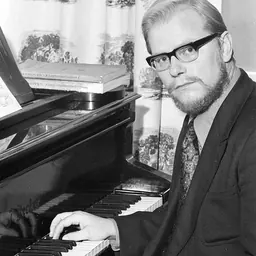
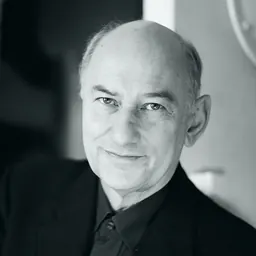
Same field, nearest in time


Contemporaries
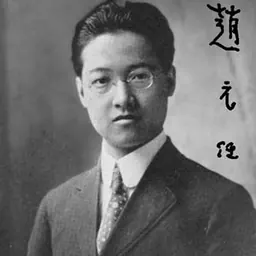
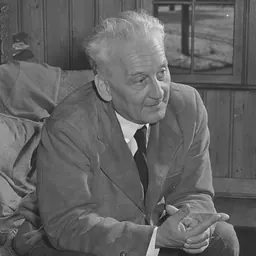
People whose lives overlapped Dorothy Ashby's


Frequently asked questions
Who was Dorothy Ashby?
American jazz harpist (1932-1986)
When was Dorothy Ashby born?
Dorothy Ashby was born on 6 August 1932 in Detroit.
When did Dorothy Ashby die?
Dorothy Ashby died on 13 April 1986 in Santa Monica.
What was Dorothy Ashby's occupation?
Dorothy Ashby was a composer, songwriter, jazz musician, harpist and musician.
What nationality was Dorothy Ashby?
Dorothy Ashby was American.
Sources & further reading
Cite this page
APA: Biography.guide. (2026). Dorothy Ashby. https://biography.guide/dorothy-ashby/
MLA: "Dorothy Ashby." Biography.guide, https://biography.guide/dorothy-ashby/.
Chicago: "Dorothy Ashby." Biography.guide. https://biography.guide/dorothy-ashby/.
Data last updated: 2026-09-22 · Spot an error? Report a correction.
Portrait: Wikimedia Commons · author & licence
Page generated 2026-09-27 05:01 UTC