
About Donald Davidson
Lived 1917 – 2003 (aged 86). Donald Davidson was an American philosopher and university teacher.
Donald Herbert Davidson (March 6, 1917 – August 30, 2003) was an American philosopher and the Slusser Professor of Philosophy at the University of California, Berkeley (1981–2003), having previously held teaching appointments at Stanford University, Rockefeller University, Princeton University, and the University of Chicago. Davidson was known for his charismatic personality and difficult writing style, as well as the systematic nature of his philosophy. His work exerted considerable influence in many areas of philosophy from the 1960s onward, particularly in philosophy of mind, philosophy of language, and action theory. Most of Davidson's influence was on analytic philosophy, his tradition, but his work has attracted attention in continental philosophy (and particularly in literary theory and related areas).
Early life and education Donald Herbert Davidson was born on March 6, 1917, in Springfield, Massachusetts to Grace Cordelia (née Anthony) and Clarence "Davie" Herbert Davidson. His family moved around frequently during his childhood; they lived in the Philippines until he was four, and then in various cities in the Northeastern United States before finally settling in Staten Island when he was nine. He briefly attended a public school in Staten Island before receiving a scholarship to study at Staten Island Academy. The theory is twofold and states that mental events are identical with physical events, and that the mental is anomalous, i.e. under their mental descriptions, causal relations between these mental events are not describable by strict physical laws. Hence, Davidson proposes an identity theory of mind without the reductive bridge laws associated with the type-identity theory.
Since in this theory every mental event is some physical event or other, the idea is that someone's thinking at a certain time, for example, that snow is white, is a certain pattern of neural firing in their brain at that time, an event which can be characterized as both a thinking that snow is white (a type of mental event) and a pattern of neural firing (a type of physical event). There is just one event that can be characterized both in mental terms and in physical terms. If mental events are physical events, they can at least in principle be explained and predicted, like all physical events, on the basis of laws of physical science. However, according to anomalous monism, events cannot be so explained or predicted as described in mental terms (such as "thinking", "desiring", etc.), but only as described in physical terms: this is the distinctive feature of the thesis as a brand of physicalism.
Davidson's argument for anomalous monism relies on the following three principles:
The principle of causal interaction: there exist both mental-to-physical as well as physical-to-mental causal interactions. The principle of the nomological character of causality: all events are causally related through strict laws. The principle of the anomalism of the mental: there are no strict psychophysical or psychological laws that can causally relate mental events with physical events or mental events with other mental events.
See the main article for an explanation of his argument as well as objections.
Third dogma of empiricism In his 1974 essay "On the Very Idea of a Conceptual Scheme", Davidson critiques what he calls the "third dogma of empiricism". The term is a reference to the famous 1951 essay "Two Dogmas of Empiricism" by his graduate teacher, W. V. O. Quine, in which he critiques two central tenets, or "dogmas", of logical positivism: the analytic–synthetic distinction and reductionism. Davidson identifies an additional third dogma present in logical positivism and even in Quine's own work, as well as the work of Thomas Kuhn, Benjamin Lee Whorf, and others, and he argues that it is as untenable as the first two dogmas.
Davidson's third dogma refers to scheme–content dualism , which is the idea that all knowledge is the result of one's conceptual scheme being put to work on raw data from the world. The content is objective because it is what is given by the world, whereas the scheme is subjective because it is the contribution of one's mind or language to knowledge. One consequence of scheme–content dualism is conceptual relativism, which is the idea that two different people or communities could have radically different, incommensurable (Kuhn's term for untranslatable) ways of making sense of the world. On this view, truth is relative to a conceptual scheme rather than objective. Rorty in particular uses Davidson's work to lend support to his neopragmatism.
Swampman Swampman is the subject of a thought experiment introduced by Davidson in his 1987 paper "Knowing One's Own Mind". In the experiment, Davidson is struck by lightning in a swamp and disintegrated, but at the same exact moment, an identical copy of Davidson, the Swampman, is made from a nearby tree and proceeds through life exactly as Davidson would have, indistinguishable from him. The experiment is used by Davidson to claim that thought and meaning cannot exist in a vacuum but are dependent on their interconnections to the world. Therefore, despite being physically identical to himself, Davidson states that the Swampman does not have thoughts nor meaningful language, as it has no causal history to base them on.
The experiment runs as follows:
This experiment is nearly identical to the central plot of Alan Moore's earlier 1980s comic series Swamp Thing.
Personal life and death Davidson was married three times. He married his first wife, artist Virginia Bolton, in 1941 and had his only child with her, Elizabeth Boyer (née Davidson). Following his divorce from Bolton, he married for the second time to Nancy Hirschberg, Professor of Psychology at the University of Illinois at Urbana-Champaign and later at Chicago Circle. She died in 1979. In 1984, Davidson married for the third and last time to philosopher and psychoanalyst Marcia Cavell. He corresponded with Catholic nun, literary critic and poet M. Bernetta Quinn.
Davidson was a lifelong atheist who believed that many of the claims made by religions are not even truth-apt.
On August 27, 2003, Davidson underwent knee replacement surgery at Alta Bates Summit Medical Center in Oakland, California, but he went into cardiac arrest shortly after the operation. He died three days later on August 30, 2003 at the age of 86.
Awards Hegel Prize (1991) Jean Nicod Prize (1995)
Don’t just read it —
keep it.
Full-length biographies made to live with: read them, listen on the way to work, watch them tonight.
- E-book
- Audio
- Video
Instant download · yours to keep · every purchase keeps this site free
Important facts
People in Donald Davidson's life
Named in this biography and alive at the same time

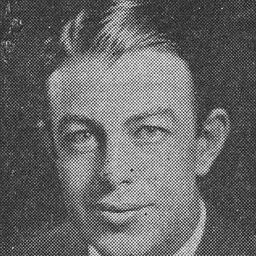






Related people
Same field, nearest in time
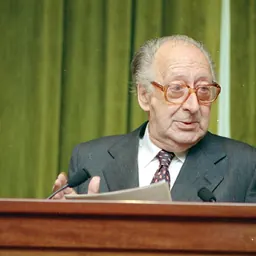

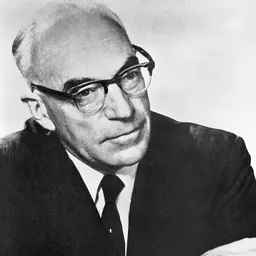
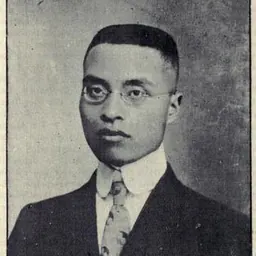
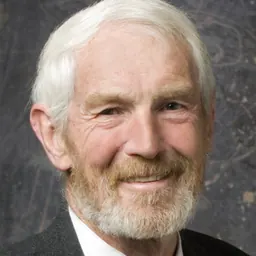
Contemporaries
People whose lives overlapped Donald Davidson's

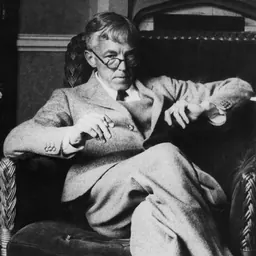
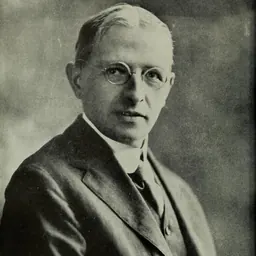
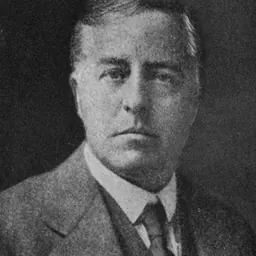
Frequently asked questions
Who was Donald Davidson?
American philosopher (1917–2003)
When was Donald Davidson born?
Donald Davidson was born on 6 March 1917 in Springfield.
When did Donald Davidson die?
Donald Davidson died on 30 August 2003 in Berkeley.
What was Donald Davidson's occupation?
Donald Davidson was a philosopher and university teacher.
What nationality was Donald Davidson?
Donald Davidson was American.
Sources & further reading
· DBpedia: Donald Davidson (philosopher)
Cite this page
APA: Biography.guide. (2026). Donald Davidson. https://biography.guide/donald-davidson/
MLA: "Donald Davidson." Biography.guide, https://biography.guide/donald-davidson/.
Chicago: "Donald Davidson." Biography.guide. https://biography.guide/donald-davidson/.
Data last updated: 2026-09-20 · Spot an error? Report a correction.
Page generated 2026-09-27 05:16 UTC