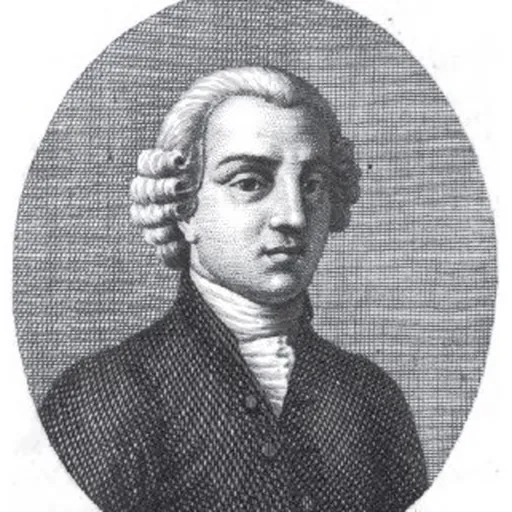
About Domenico Lalli
Lived 1679 – 1741 (aged 62). Domenico Lalli was an Italian librettist, writer, poet and cashier.
Sebastiano Biancardi (27 March 1679 – 9 October 1741), known by the pseudonym Domenico Lalli, was an Italian poet and librettist. Amongst the many libretti he produced, largely for the opera houses of Venice, were those for Vivaldi's Ottone in villa and Alessandro Scarlatti's Tigrane. A member of the Accademia degli Arcadi, he also wrote under his arcadian name "Ortanio". Lalli was born and raised in Naples as the adopted son of Fulvio Caracciolo but fled the city after being implicated in a bank fraud. After two years wandering about Italy in the company of Emanuele d'Astorga, he settled in Venice in 1710 and worked as the "house poet" of the Grimani family's theatres for the rest of his career. In addition to his stage works, Lalli published several volumes of poetry and a collection of biographies of the kings of Naples. He died in Venice at the age of 62.
Biography
Early life Modern accounts of Lalli's life prior to arriving in Venice are largely based on a biography included in a book of poetry which he published in 1732. The biography was written by the Venetian poet Giovanni Boldini who collaborated with Lalli on several of his libretti. A further biography of Lalli by Andrea Mazzarella was published in 1818 in Biografia degli uomini illustri del Regno di Napoli.
Sebastiano Biancardi, as he was then known, was born in Naples to Caterina (née Amendola) and Michele Biancardi. His father's family were originally merchants from Milan who had moved to Naples in the Middle Ages. At the age of 11 months, he was adopted by Fulvio Caracciolo, a member of a Neapolitan noble family and the second son of the Duke of Martina. Under Caracciolo he was educated in law and literature and was exposed to many prominent Neapolitan intellectuals, such as Giambattista Vico, who frequented the house. His adoptive father died in 1692, leaving Biancardi as his sole heir. At the age of 18, with both his natural and adoptive parents dead, he married Giustina Baroni. According to a late 18th-century biography of Lalli by Eustachio D'Afflitto, she was the sister of the Bishop of Calvi. By 1700, Biancardi had gone through most of his inheritance and with an ever-growing family to support took up a post as chief cashier at the bank of the Santissima Annunziata.
Flight from Naples In 1706 a large amount of money was found to be missing from the Santissima Annunziata's funds, and Biancardi was eventually suspected of embezzlement. Leaving his wife and 13 children behind, he fled Naples for Rome.
On their way to Venice, they were arrested and imprisoned for not having passports and passing themselves off as Romans. They were only freed after Lalli wrote a letter to the Governor of Milan, recounting the robbery by their servant and their subsequent misfortunes. They arrived in Venice in 1709 and made the acquaintance of the influential poet and librettist Apostolo Zeno. This was accomplished by d'Astorga writing a fake letter to Zeno purporting to be from Baron d'Astorga in Palermo and recommending to him two young men in need of patronage—"Giuseppe del Chiaro, maestro di cappella", and "Domenico Lalli, professor of literature and lute player". Lalli and d'Astorga then spent some time in Mantua under their new identities, but remained in constant fear that visitors from Rome would recognize them. D'Astorga left for Barcelona when he was offered a post at the court of Charles III, and Lalli returned to Venice.
Lalli's first original opera libretto, L'amor tirannico ("Tyrannical Love") was performed with music by Francesco Gasparini in 1710 at the Teatro San Cassiano in Venice. L'amor tirranico had considerable success and was also performed in Milan in 1713 and again in Venice in 1722. His comic opera Elisa with music by Giovanni Maria Ruggieri followed in 1711. According to Giovanni Carlo Bonlini, it was the first opera buffa to be presented in Venice. In the ensuing years he went on to produce the libretti for numerous opere serie, including at least five for Vivaldi, three for Albinoni and two for Alessandro Scarlatti. Writing in 1811, Pietro Napoli-Signorelli described Tigrane, the first libretto Lalli wrote for Scarlatti, as "full of oddities and fantasy" and displaying "great inventiveness in its design". He wrote numerous poems and several libretti for royal celebrations in Bavaria, including I veri amici with music by Albinoni for the wedding celebrations of Carl Albert to Maria Amalia of Austria in 1722. The opera was performed again in Venice the following year, in a slightly revised version. Lalli's Italian translation of Rousset de Missy's history of Russia during the reign of Catherine the Great, Memorie del regno di Catterina imperadrice e sovrana di tutta la Russia, was published in 1730.
Final years
By the mid-1730s, Lalli's career as a librettist was waning, and he was eventually replaced by Goldoni as the director of the Grimani theatres. After the death of his first wife, he had married a Venetian woman, Barbara Pazini, who provided him with many more children to support. He eked out a living writing dedications to illustrious theatre patrons on re-worked libretti, brought out collections of Biblical proverbs and parables translated into verse, and with the help of his close friend and fellow Neapolitan exile Pietro Giannone wrote a collection of biographies of the kings of Naples which he published in 1737. Goldoni's contemporary, Gasparo Gozzi, lamented that Lalli's financial predicament was commonplace for those working in the arts in 18th-century Venice and described him as a man "who was born rich and died a poet". Lalli himself alluded to these problems in several poems in his 1732 Rime berniesche. Lalli's own libretti were often reworked to a greater or lesser extent by other librettists, including his Amor tirranico originally set by Francesco Gasparini in 1710 and reworked with minor changes by Nicola Haym for Handel's Radamisto. Others were set by multiple composers under different titles. His libretto, Il gran Mogol, was set by 5 different composers (including Vivaldi) between 1714 and 1733.
Opera L'amor tirranico, music attributed to Francesco Gasparini, Teatro San Cassiano, Venice, 1710 Il gran Mogol, music by Francesco Mancini, Teatro San Bartolomeo, Naples, December 1713. Re-set as Argippo by Giovanni Porta, Teatro San Cassiano, Venice, autumn 1717. Pasticcio, Argippo, RV Anh. 137: Vivaldi's setting of some of the text based on Lalli's libretto has been preserved. Pisistrato, music by Leonardo Leo, Teatro San Bartolomeo, Naples, 1714 (According to Strohm, the libretto for Pisistrato was first printed in Venice in 1711 for a performance at the Teatro al Dolo, composer unknown.) L'amor di figlio non conosciuto, music by Tomaso Albinoni, Teatro San'Angelo, Venice, 1716 Filippo re di Macedonia, music by Antonio Vivaldi, Teatro Sant'Angelo, Venice, 1720 Il Farasmane, music by Giuseppe Maria Orlandini, Teatro Formagliari, Bologna, 1720 Gli eccessi della gelosia, music by Tomaso Albinoni, Teatro Sant'Angelo, Venice, 1722 Damiro e Pitia, music by Nicola Porpora, court theatre, Munich, 1724 (commissioned to celebrate the name day of Maximilian Emanuel, Elector of Bavaria) Ulisse, music by Giovanni Porta, Teatro Sant'Angelo, Venice 1725 Nicomede, music by Pietro Torri, court theatre, Munich, 1728 (commissioned to celebrate the arrival of Count Palatine Francis Louis of Neuburg in Munich) Dalisa (after Nicolò Minato), music by Johann Adolf Hasse, Teatro San Samuele, Venice, 1730
Other genres Title page of Lalli's 1726 cantata Il ritratto dell' eroe (The Portrait of the Hero). The music was composed by Giovanni Porta. Calisto in orsa (serenata for four voices), composer unknown, Venice 1714 Scherza di fronda (cantata), music by Antonio Vivaldi, Venice, circa 1721 La senna festeggiante (serenata for three voices), music by Antonio Vivaldi, Venice, 1726 (According to Vivaldi scholar Michael Talbot, the context of the performance is unclear—either in honour of the name day of the King of France in August, or the arrival in Venice of the French ambassador, Jacques-Vincent Languet in November.) La Fenice (cantata for three voices), music by Giovanni Battista Costanzi, Venice 1726 L' Abramo (azione sacra), composer unknown, Venice 1733 Il peccato originale (azione sacra), composer unknown, Venice 1736 L' Abel (azione sacra), composer unknown, Venice, 1738 Decreto del fato (serenata for 4 voices), music by Domenico Paradies, Spanish Embassy, Venice, 1740 (performed in celebration of the marriage of Prince Philip of Spain)
Don’t just read it —
keep it.
Full-length biographies made to live with: read them, listen on the way to work, watch them tonight.
- E-book
- Audio
- Video
Instant download · yours to keep · every purchase keeps this site free
Important facts
People in Domenico Lalli's life
Named in this biography and alive at the same time





Related people
Same field, nearest in time


Contemporaries
People whose lives overlapped Domenico Lalli's



Frequently asked questions
Who was Domenico Lalli?
Italian librettist and poet (1679-1741)
When was Domenico Lalli born?
Domenico Lalli was born on 27 March 1679 in Naples.
When did Domenico Lalli die?
Domenico Lalli died on 9 October 1741 in Venice.
What was Domenico Lalli's occupation?
Domenico Lalli was a librettist, writer, poet and cashier.
What nationality was Domenico Lalli?
Domenico Lalli was Italian.
Sources & further reading
Cite this page
APA: Biography.guide. (2026). Domenico Lalli. https://biography.guide/domenico-lalli/
MLA: "Domenico Lalli." Biography.guide, https://biography.guide/domenico-lalli/.
Chicago: "Domenico Lalli." Biography.guide. https://biography.guide/domenico-lalli/.
Data last updated: 2026-09-23 · Spot an error? Report a correction.
Portrait: Wikimedia Commons · author & licence
Page generated 2026-09-27 05:06 UTC