
Dohasan
19th century Kiowa chief and calendar-keeper
About Dohasan
Lived 1790 – 1866 (aged 75–76). Dohasan was an American painter, traditional leader or chief and tribal chief.
Dohäsan (late 1780s to early 1790s – 1866 ) was a prominent Native American. He was War Chief of the Kata or Arikara band of the Kiowa Indians, and then Principal Chief of the entire Kiowa Tribe, a position he held for an extraordinary 33 years. He is best remembered as the last undisputed Principal Chief of the Kiowa people before the Reservation Era, and the battlefield leader of the Plains Tribes in the largest battle ever fought between the Plains tribes and the United States.
Name Dohäsan's name, which was hereditary, has been variously translated as Little Mountain, Little Bluff, or Top-of-the-Mountain. The name is difficult because /tòhɔ́ː/ denotes 'the concavity in a bluff rather than the bluff itself. /sân/ indicates 'small'. He was the son of a chief named Dohá (Bluff). Because his name, and the Chieftainship of his band, was hereditary, (though not necessarily father to son) – Dohäsan himself was succeeded by his nephew, rather than one of his sons, and though his father was a chief, it was his uncle who was the hereditary war chief from whom he got his name.
Life before becoming Principal Chief The Arikara band was so named because of their close trading relationship with the Arikaras in the upper Missouri valley during the tribe's early recorded history. Because of their trading relationships with traders from the US, Spain, and the French, the Kiowa, and the Arikara in particular, were well known to European-Americans. Dohäsan was known to traders as early as the late 1820s. He gained a reputation as a fierce, but tricky, warrior and successful war chief. Dohäsan was a member of the elite warrior society, the Koitsenko.
Although his position as Chief of the Arikara band was hereditary, the Principal Chief of the entire Kiowa people was not a hereditary position. The elders of all the bands met together and elected the Principal Chief, and he generally held that position the rest of his life. Dohäsan became principal chief of the Kiowas in the spring of 1833, after the tribe elders and sub-chiefs deposed then-Principal Chief A'date (Kiowa: Àu:d̶áude).
The first battle of Adobe Walls occurred on November 26, 1864, in the vicinity of Adobe Walls, the ruins of William Bent's abandoned adobe trading post and saloon near the Canadian River in Hutchinson County, Texas. The battle was one of the largest engagements in terms of numbers between European-Americans and Indians on the Great Plains, and the largest engagement ever between the Comanche and Kiowa and their allies, against the non-Natives. It came about because Gen. James H. Carleton, commander of the military district of New Mexico, decided to punish Comanche and Kiowa attacks on Santa Fe wagon trains. The Indians saw the wagon trains as trespassers who killed buffalo and other game the Indians needed to survive. Whatever their numbers, Carson saw he was outnumbered by the warriors pouring forward to engage him in battle, a much greater force than he had expected.
Dohäsan, assisted by Satank (Sitting Bear), Guipago (Lone Wolf) and Satanta (White Bear), led the Kiowas in the first attack. Fierce fighting developed as the Kiowa, Kiowa Apache, and Comanche warriors repeatedly attacked Carson's position. Reportedly, Satanta replied to Carson's bugler with his own bugle calls. Carson succeeded in repelling the attacks only through his clever use of supporting fire from the twin howitzers. After six to eight hours of fairly continuous fighting, Carson realized he was beginning to run low on shells for the howitzers, and ammunition in general, and ordered his forces to withdraw. The angry Indians tried to block his retreat by setting fire to the grass and brush down near the river. The wily Carson, however, set back-fires and retreated to higher ground, where the twin howitzers continued to hold off the Indians. When twilight came, Carson ordered a group of his scouts to burn the lodges of the first village, which also resulted in the death of the Kiowa-Apache chief, Iron Shirt, when he refused to leave his tepee.
Despite the fact that Carson was forced to retreat in the face of much more opposition than he had expected, the United States Army declared the First Battle of Adobe Walls a victory. Carson was probably outnumbered 10-1, and his clever use of backfires and the howitzers prevented his being overrun. As it was, Carson lost 6 dead, 25 wounded, to approximately 50-60 killed among the Indians. Nothing could obscure the fact however that the Kiowa and their allies had driven the American army from the field. Dohäsan, probably in his 70s, had commanded the largest force of Plains Indians ever massed against the army, and compelled a force armed with howitzers to retreat and yield the day. The younger Dohäsan took part in the remaining battles as the Kiowa struggled to remain a free people. But time was running out, and he was part of the delegation to Washington in 1872, which appealed to the government to allow the Kiowa to remain free. He added many innovations to Kiowa pictorial art. In his winter count, he added an image for each year's summer Sun Dance. To painted tipi designs, Dohäsan introduced images of counting coup. When he died, his nephew Agiati became a calendar keeper, followed in turn by Agiati's son, Háuñ:gùñ: or Silver Horn (1860–1940), one of the most prolific of all Kiowa artists. In 1892 the young Dohäsan gave his annual family calendar history, begun by his uncle, the last great principal chief of the Kiowa, to Capt. Hugh L. Scott, who in turn donated it to the Smithsonian Institution.
Dohasan's descendants included his granddaughter, Betty Nixon, who co-founded the Mid-America All-Indian Center in Wichita, Kansas, in 1976.
Don’t just read it —
keep it.
Full-length biographies made to live with: read them, listen on the way to work, watch them tonight.
- E-book
- Audio
- Video
Instant download · yours to keep · every purchase keeps this site free
Important facts
more
Top of the Mountain, Touhason, Doha, Tohasan, Aonote, DohosanPeople in Dohasan's life
Named in this biography and alive at the same time
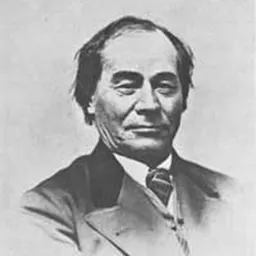

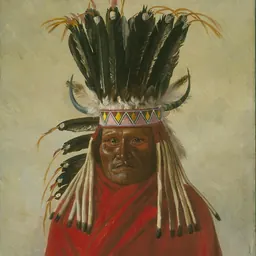
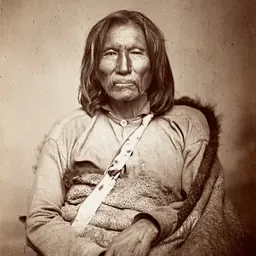
Related people
Same field, nearest in time



Contemporaries
People whose lives overlapped Dohasan's



Frequently asked questions
Who was Dohasan?
19th century Kiowa chief and calendar-keeper (c.1790-1866)
When was Dohasan born?
Dohasan was born in 1790 in Oklahoma.
When did Dohasan die?
Dohasan died in 1866.
What was Dohasan's occupation?
Dohasan was a painter, traditional leader or chief and tribal chief.
What nationality was Dohasan?
Dohasan was American.
Sources & further reading
Cite this page
APA: Biography.guide. (2026). Dohasan. https://biography.guide/dohasan/
MLA: "Dohasan." Biography.guide, https://biography.guide/dohasan/.
Chicago: "Dohasan." Biography.guide. https://biography.guide/dohasan/.
Data last updated: 2026-09-26 · Spot an error? Report a correction.
Page generated 2026-09-27 05:14 UTC