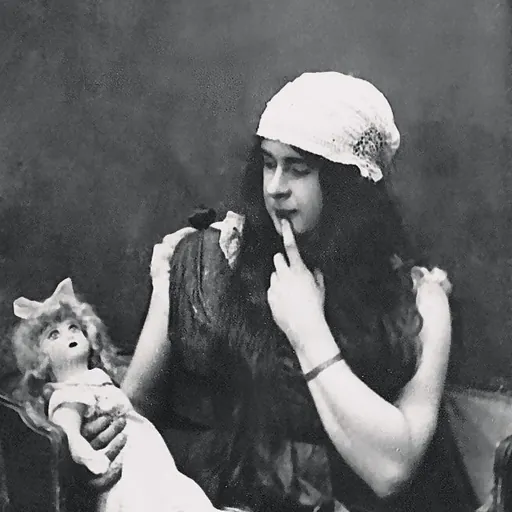
Dmitry Schultz
Russian religious figure and sect leader
About Dmitry Schultz
Lived 1893 – 1930 (aged 36–37). Dmitry Schultz was a Russian.
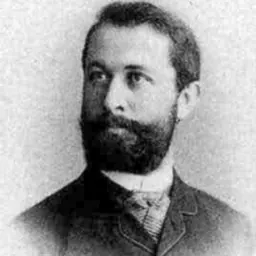
Dmitry Ivanovich Shultz (1893 (?), Nizhny Novgorod, Russian Empire – April 2, 1930, Moscow, USSR) was a religious figure, creator, and leader of the sect United Temple, which operated in the 1920s. Dmitry Shultz developed both the theoretical basis of the sect's activities and thoroughly elaborated its rituals. Dmitry Shultz was born into an intelligent family and showed a talent for writing and theater as a child. He graduated from the Nizhny Novgorod Count Arakcheev Cadet Corps and studied at the Moscow Commercial Institute, where he attended lectures by the theologian Sergei Bulgakov. In the 1920s, he created a community of mystically inclined young people who were initially drawn to the ideas of spiritualism and later to the creation of a new syncretic religion. Over time, elements of sadism, masochism, and sexual perversion began to emerge within this community, which eventually transformed into a totalitarian religious sect with openly anti-Soviet views.
In March 1930, following a trial widely covered by the central press, Dmitry Shultz was sentenced to capital punishment under Article 58-10 of the RSFSR Criminal Code ("for propaganda calling for the undermining or weakening of Soviet power, using religious prejudices") and was executed by firing squad. Ilya Braude, a lawyer and participant in open political trials, was involved in the trial. The forensic psychiatric examination was conducted by prominent scientists and doctors of medicine: Pyotr Gannushkin, Wolf Vnukov, and Yevgeny Krasnushkin. Doctor of Historical Sciences Vladimir Bonch-Bruyevich also participated as an expert on religious studies.
Biography
Childhood and adolescence Dmitry Shultz's date of birth is unknown. He was 37 years old at the time of his trial in 1930. His mother was a German noblewoman, descended from an ancient family of Baltic barons. She was fond of mysticism, read the works of Russian philosophers Vladimir Solovyov, Sergei Bulgakov, and writer Dmitry Merezhkovsky, and participated in spiritual séances. Dmitry Shultz entered the Moscow Commercial Institute. During his studies, he attended lectures by Sergei Bulgakov, after which he declared himself Bulgakov's faithful student.
Another version of Dmitry Shultz's biography was presented by Ilya Braude: After the February Revolution, Shultz left the military school and moved to his parents' estate. During the October Revolution, he worked in an unnamed "backwoods town on the Volga" as a clerk at a factory.
Leading a religious sect Schultz had the gift of hypnosis, artistic ability, and ventriloquism. In 1919 in Volsk, where he moved with his wife Margot to hide from the draft board, he held his first spiritistic séance in the presence of acquaintances and relatives. Evidence of the presence of spirits included the fall of a cast iron pan and the clinking of dishes. These sounds were made by Margot, who hid in the next room and set the dishes in motion with a long rope tied to these objects. who called each other "brothers" and "sisters". During one of the sessions, Abdullah stated that due to old age he was resigning his duties and handing them over to Dmitry Shultz, who was to be perceived as a prophet. An Izvestia correspondent and Ilya Braude claimed that Dmitry Shultz headed the sect in Moscow, while his brother Heinrich "expanded and strengthened its Nizhny Novgorod branch". At the time, he was a teacher at the local Industrial and Economic Technical School. In this image, he was capricious; the students gave him dolls, chocolates, candy, bonnets, lace, and beautiful shoes. When the money ran out, they went to collect alms. The sectarians gave part of the money collected to Heinrich Schultz, the accountant of the United Temple, and used the rest of the money to buy gifts for Metochka. Prophet Agathit Abdullah revealed during a new séance that Metochka was patronized by the ancient Greek goddess Demeter, who gave the community her portrait and a sculpted bust. These were secretly executed by Dmitry Shultz. Both have survived and are now in the collection of the Museum of the History of Religion in St. Petersburg.
In the fall of 1929, the district police department received a statement indicating that Nina Makarova, a student of the Moscow Conservatory, was begging on the streets of Moscow. Her classmates were surprised by her appearance: the girl was beaten, sat directly on the sidewalk in her shirt, and gave the impression of being insane. She reported that she lived at 65 Bakuninskaya Street. The police detained a group of sectarians there.
Legal process and trial
During the investigation, Dmitry Shultz presented himself as a "common quacker" who had created the sect for purely mercenary purposes. He frankly confirmed that he was throwing objects apparently "emerging" from nowhere and moved objects using a rope during spiritualistic séances. Toward the end of the investigation, he abruptly changed his position: he recanted the testimony he had already given and began to portray himself as a victim of his own 'unshakable faith and delusions'. Shultz's lawyer, Ilya Braude, believed that his client was pinning his hopes on the recognition of his insanity during the forensic psychiatric examination. Braude himself was also betting on this: pathological features prevail in Schultz's personality and deeds, and it is impossible to consider him quite normal. Braude, who was present during the interrogations, later recalled that flattering, soft, and ingratiating with representatives of the authorities, he was unrecognizably transformed when confronted during confrontations with his recent followers of the United Temple. His tone was at once imperious and commanding.
While the preliminary process was underway, the prosecutor's office received an anonymous message written with blood, demanding the release of Dmitry Shultz and threatening to reprisal those who would try him.
Only four leaders of the sect became defendants at the trial: Dmitryy, Heinrich, and their spouses, Margo and Elena. The rest of the sect members were involved only as witnesses. Some of them testified in the company of medical personnel, as they were in a state of nervous and mental shock.
The trial of the sect members in the Moscow City Court attracted public and press attention. The defendant Dmitry Shultz admitted hatred of Soviet power, the creation of the sect, bullying and corporal punishment of its members, transvestism, and adventurism. He admitted that he had deceived sectarians and did not believe in spirits himself. His lawyer was Ilya Braude, a participant in such major trials as those of the Industrial Party Trial, the 1931 Menshevik Trial, the Parallel Trotskyist Center, and the Case of the Anti-Soviet "Bloc of Rightists and Trotskyites", while the other accused were defended by other lawyers. A suggestor needs either his own deep conviction or a great game. Every hypnotist has a known game. All good acting, both actor and orator, has an element of suggestion in it. Dmitry Shultz had such a game. He is all in one: a performer, a dancer, and a magician. The combination of all this is enough for the suggestive... What "material" do we have on the other side? These are persons who from childhood have been inclined to religious mysticism or are mentally limited... Such persons who have received induced insanity under the influence of hypnosis, having been placed in other conditions, when all the lies, falsehoods, and games of their hypnotist have been revealed to them, have recovered from their mental disorder, have recovered. At the trial, Margot Shultz was sentenced to five years in camps. Heinrich Shultz received ten years in camps with confiscation of property. The sect's leader, Dmitry Shultz, was sentenced to capital punishment and confiscation of property. Dmitry Shultz filed a cassation appeal and a petition for pardon requesting that the death penalty be commuted to imprisonment; but was described as single during the trial. Dmitry was very feminine, and I liked him very much. When he wore a dress and long hair, I used to call him "my doll" because he was incredibly charming and handsome. I gave him dolls, and he had an entire closet full of them. Regarding the orders in the community and family, Margo said: "No one could think or object, otherwise we all received severe punishment". One testified at the trial: "He accumulated a great deal of money from us. He threw luxurious parties while we went half-starved, ragged, and burdened with unpayable debts". noting his sentimentality towards flowers and birds but his insane hatred towards humanity.
Dmitry Schultz was well-versed in literature, skilled in drawing and sculpting, played the cello and violin, composed poetry, danced, wrote and directed plays, and had the ability to hypnotize. and characterized him as "a sybarite who likes to drink and eat, especially at other people's expense".
Theoretical foundations of Dmitry Schultz's doctrine and the sect's rituals Ritual clothes of the United Temple sect at the exhibition The Age of Ghosts. Spiritism at the turn of the 19th - 20th centuries at the Museum of the History of Religion.
The doctrine was based on the idea of unifying religions, the theory of Wisdom Sophia, and the mystical union of man with God. This was further influenced by Dmitry Merezhkovsky's ideas of Christ and Antichrist, Fyodor Dostoevsky's The Grand Inquisitor, Vasily Rozanov's philosophy of eros, and Vladimir Solovyov's concept of the great androgyne. The textual foundation for the new religious doctrine was considered to be the four-hundred-page Consolation. This book, which Schultz allegedly received from Agathitus Abdullah, was also regarded as the doctrinal basis. Spiritualistic séances were complemented by worship, including "readings" and "praises." The Great Word was deemed the most important part of the Consolation. Other writings elucidated and expanded on the Great Word, such as On Good and Evil, On the Temple, On Love, On Prayer, and On Vanity. The Consolation had a distinctly political tone, denouncing Vladimir Lenin and Mikhail Kalinin (and, according to Bonch-Bruyevich, also Joseph Stalin) as demons and antichrists, Karl Marx as "the great prophet of Satan," and Soviet newspapers as "demonic leaflets". Industrial enterprises were considered tools of the devil. Antisemitism was preached. He also noted that the Consolation was composed in imitation of the Gospels, the Revelation of John the Theologian, and the apostolic epistles and writings of the Church Fathers. and Illustrious Vestryman) who had replaced the dilapidated Orthodoxy, Catholicism, and Islam, and who could unite these three religious movements (he gave special preference, however, to Christianity in its earliest form as presented in the Gospels). Bonch-Bruyevich found in the texts of the Consolation Schultz's claims to be both a priest and a "'living god' here on earth".
According to Braude, Schultz's sect consisted mainly of students and working youth. Punishments became "instruments of suppression of will, of autonomy, of protest".
In the religious teachings of Vladimir Solovyov, Dmitry Schultz considered the philosopher's ideas about androgyny to be the most significant. In Schultz's interpretation of Solovyov's thoughts, Adam and Eve, having engaged in carnal relations, became aware of their differences. This awareness, according to Schultz, led to the fall into sin and a rupture between man and God. The hope for restoring the union between them lies in spiritual life and sacred love. These forces will reunite male and female in the sacred, immortal being that God originally created in His own image. Schultz considered himself a woman in a man's body, and enjoyed playing with dolls, sewing, doing housework, and cooking. He adopted the image of a four-year-old girl because, in his view, a girl represents an image close to an androgyne. A girl knows no carnal love, is therefore innocent, and, from this perspective, is an angel and an androgyne. poorly washed laundry, stepping on the cat's tail, the appearance of flies in Schultz's room (five strokes of the stick for each fly), was introduced. Drunkenness According to sect member Nikolai Makarov, the spirits during spiritualistic séances attempted to turn him away from the female sex and awaken in him a sexual interest in the girl Metochka. After the trial, these items were transferred along with the documents to the Central Anti-Religious Museum in Moscow, and later, as a separate collection, they became part of the archive of Dr. Vladimir Bonch-Bruyevich, Doctor of Historical Sciences, at the Museum of the History of Religion in St. Petersburg. A brief section on the sect was included by Fyodor Putintsev, a researcher of sectarianism and a member of the Central Council of the Union of Militant Godless People of the USSR, in his 1930 book Kulak Light-Prevention (Cases of Insanity and Mass Religious Psychosis Based on Kulak-Provocative Rumors about the 'End of the World'). Soviet atheist organizer Alexander Lukachevsky, in his 1933 book Marxism-Leninism as Militant Atheism, cited the Schultz sect as an example of brutality and open counter-revolutionary activity. He argued that as socialism is developed amid intensified class conflict, similar sects should be expected to emerge in the future.
In the final years of his life, Ilya Braude, the former lawyer of Dmitry Schultz, was preparing his memoirs, Notes of a Lawyer, for publication. He entrusted them to his friend Georgy Osipov, a journalist, writer, and member of the Union of Soviet Writers, for literary processing. Osipov supplemented the text during personal meetings with Braude. Braude died suddenly in March 1955, interrupting the work on the edition. Georgy Osipov, with the assistance of Braude's daughter Nora, completed the manuscript and prepared it for printing by 1974. Initially, some chapters were published in the magazines Druzhba Narodov, Man and Law, and in the supplement to the newspaper Izvestia — the weekly illustrated newspaper Nedelya. The book was later published as a separate edition by the publishing house Soviet Russia. The case of the sect United Temple is discussed in a separate chapter entitled Snake's Nest. Braude's materials and the publication in Izvestia were utilized in the 2006 expanded edition of Nikolai Kitaev's lecture Hypnosis and Crime, intended for law students.
In 2020, the magazine Rodina published a comprehensive article by Olga Khoroshilova, candidate of art history and associate professor at Saint Petersburg State University of Industrial Technologies and Design, about Dmitry Schultz. The article was based on materials from the holdings of the Museum of the History of Religion. A year later, in a significantly revised and expanded form, this article was included in Khoroshilova's monograph Russian Travesties in History, Culture, and Everyday Life.
The article Images of Cult Objects in the Collections of the State Museum of Religious History's Photographic Library by Pyotr Fedotov, head of the Photonegamultimedia Department, provided a brief description of the collection of photographs of the Schultz Sect held by the Museum of the History of Religion. In January 2022, the Museum of the History of Religion in St. Petersburg opened the exhibition The Age of Ghosts: Spiritism at the Turn of the 19th-20th Centuries, curated by Natalia Veprikova. A separate final room of the exhibition was dedicated to the sect United Temple and its founder and leader. The press highlighted the unusual design of the exhibition: visitors descended a narrow spiral staircase into a semi-basement room where the exhibits were displayed under ancient brick vaults. Among the exhibits were a sculptural bust of Demeter (a self-portrait of Dmitry Schultz) and a threatening note to the organizers of the trial of the sect leaders: "Do not torment him in the dungeon, let him out. This plea is written in our blood. If you do not release him, your blood will be spilled. We wait until R. H. and seven days more. You will be killed".
Dmitry Shultz in modern journalism On December 6, 2020, the Ekho Moskvy radio station aired a public discussion on the trial of Dmitry Schultz. The presenters were Sergei Buntman (First Deputy Editor-in-Chief of Echo of Moscow) and Alexei Kuznetsov (historian, Echo of Moscow presenter, and history teacher at Moscow Gymnasium No. 1543). They provided additional information to fill gaps in Dmitry Schultz's biography. In particular, they revealed that his father was a German from Prussia, born and raised in Germany, who came to Russia in the 1880s. Schultz's development was influenced by his father's despotism and the traditional bullying of younger students by older ones in the Arakcheev corps.
Considerable attention was given to the personality of Ilya Braude and his role in the trial. According to Alexei Kuznetsov, Braude was "a brilliant lawyer, an excellent orator, and a man who graduated from the law faculty of a major university before the revolution," but remained loyal to the Soviet authorities. He "imitated an active defense," "actively participated in the examination of witnesses," "made motions," and "spoke in debates," giving the public the impression of a fair trial. However, he "left the prosecution, so to speak, an absolutely comfortable situation". Kuznetsov believes that Schultz's performance at the trial marked the beginning of Braude's distinguished legal career. Kuznetsov also contends that Schwartz, who had by then become a prominent lawyer, had invited Braude. Kuznetsov disagreed with the qualification of Schultz's crime, arguing that it was more consistent with Articles 123 ("Committing deceptive acts to arouse superstition in the masses for personal gain"), 155 ("Compulsion to engage in prostitution or maintenance of brothels"), or 58.14 ("Use of religious prejudices to overthrow workers' and peasants' power or incite resistance to its laws and regulations").
In 2015, the newspaper Argumenty Nedeli published an article by Sergei Nehamkin titled 50 Shades of Grey in the Soviet Way: 85 Years Ago We Had Our Own Erotic Thrillers. Nehamkin was the first to highlight the similarities between the sect's history and the plot of Dmitry Bykov's novel Ostromov, or the Sorcerer's Apprentice (a connection later noted by Alexei Kuznetsov). The novel is based on the true case of the Masonic circle of Boris Astromov (Kirichenko). The article contained several inaccuracies. For instance, it incorrectly stated that Dmitry Schultz was sentenced to death and that "others" were exiled, with "several" members of the circle considered for treatment in a mental hospital.
Don’t just read it —
keep it.
Full-length biographies made to live with: read them, listen on the way to work, watch them tonight.
- E-book
- Audio
- Video
Instant download · yours to keep · every purchase keeps this site free
Important facts
People in Dmitry Schultz's life
Named in this biography and alive at the same time





Contemporaries
People whose lives overlapped Dmitry Schultz's





Frequently asked questions
Who was Dmitry Schultz?
Russian religious figure and sect leader (1893-1930)
When was Dmitry Schultz born?
Dmitry Schultz was born in 1893 in Nizhny Novgorod.
When did Dmitry Schultz die?
Dmitry Schultz died on 2 April 1930 in Moscow.
What nationality was Dmitry Schultz?
Dmitry Schultz was Russian.
Sources & further reading
Cite this page
APA: Biography.guide. (2026). Dmitry Schultz. https://biography.guide/dmitry-schultz/
MLA: "Dmitry Schultz." Biography.guide, https://biography.guide/dmitry-schultz/.
Chicago: "Dmitry Schultz." Biography.guide. https://biography.guide/dmitry-schultz/.
Data last updated: 2026-09-23 · Spot an error? Report a correction.
Portrait: Wikimedia Commons · author & licence
Page generated 2026-09-27 05:05 UTC