
About Dinanath Dalal
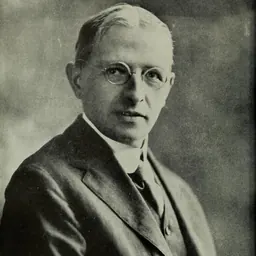
Lived 1916 – 1971 (aged 54). Dinanath Dalal was an Indian painter and writer.
Dinanath Dalal (30 May 1916 – 15 January 1971) was an Indian painter and illustrator. He is well-known for his artworks that gained popularity among the masses through book covers, stories, cartoons, calendars and illustrations, especially in the Deepavali magazine. His works depicted various subjects such as mythology, history, social issues, human emotions and politics.
Early life and education Dalal was born as Narsingh Damodar Dalal Naik on 30 May 1916 in Comba, a village in Margao, Goa. He belonged to a Saraswat Brahmin family who celebrated religious festivals. Thereby, Konkani was spoken at home along with English and Portuguese at school. The surroundings that he grew up in brought him closer to nature, art and language. He was also endowed with a sensitive mind and talent. Therefore, at an early age, he could easily draw sketches of school headmasters and popular leaders of the time. When he shifted to Mumbai, he also learned the Marathi language. Initially, he took formal education in classical painting at the Ketkar Art Institute in Mumbai. This was followed by his graduation from Sir J.J. School of Art in 1937.
Career Cartoons Dalal ventured into the business world right after his graduation in 1937. Initially, he created slides and drawings for an ad distribution company named B. P. Samant & Company. Around the same time, he started drawing cartoons for Anant Kanekar's weekly Chitra. The combination of Kanekar's imagination and the caricatures of Dalal took a gibe on the political policies and the tyranny of the British Raj. Subsequently, his cartoons started to feature in Acharya Atre's Navayug and N. S. Phadke's magazine Zhankar. Young artists of the time, like Bal Thackeray and Vasant Sarwate took inspiration from Dalal's cartoons. alt=Image of caricatures by Dinanath Dalal
Book cover designs Dalal started working for B. D. Satoskar's Sagar Prakashan in around 1938. His first cover was for the book Vaimanik Halla written by Mama Varerkar. By 1943, he had made the covers of fifteen books for Satoskar. In the same year, he started Dalal Art Studio in a small room under the stairs of Mauj Publishing House. Due to the gradual expansion of his work, the studio later relocated to a larger space near Kennedy Bridge in Mumbai in 1944.
The Deepavali magazine Along with Roy Kinikar, Dalal started publishing the annual Diwali magazine titled Deepavali in 1945, which was in Marathi. Dalal and Kinikar deliberated carefully about the selection of literature, reviews, letters from readers, advertisements, stories, font layout, designs, color scheme, blocks, printing etc. that went into the magazine. As a result, the issue was published on time with all its beautiful content. With the fusion of literature and art, Deepavali set a new standard in the field of Marathi periodicals.
Articles from renowned writers like V. S. Khandekar, P. B. Bhave, Vijay Tendulkar, P. L. Deshpande to newcomers were published in Deepavali. P. L. Deshpande's articles like Batatyachi Chaal (1955), Asa Mi Asami, Antu Barwa, Sakharam Gatne (all 1958) and the humorous pictures drawn for these articles were first published in the magazine. Some special features of the publication included a colorful series by Dalal based on Indian Sanskrit literature such as Ragaraginya (Raga-Ragini), Barahmasa, Ritu, Nadya (Rivers), Navarasa and Sringara Nayika.
Later, Deepavali came out as a monthly magazine from 1956. Dalal also published Deepavali in Hindi for almost ten years. The Hindi edition was not a translation of Marathi version. Instead, several eminent Hindi writers and poets were brought to light by Dalal and decorated with various artworks created by him. In 1965, Deepavali received a certificate of excellence from the Government of Maharashtra and the Union Government for its outstanding contribution to publication.
Other roles Dalal was a guide at the Arts Department of the Goa Hindu Association from 1956 to 1971. Plays like Ithe Oshalla Mrityu, Lekure Udand Jahli, Matsyagandha, Natasamrat were produced during his time and he was involved in set design along with the art direction. He was also on the film selection committee for some time. He was a consultant for the advertising company Tom & Bay. Additionally, he worked as an illustrator for The Times of India for five-six years. From 1953 to 1958, Dalal also played a role in the liberation movement of Goa. He created artworks for a variety of formats, including book covers, inside stories, magazine covers, and illustration series based on a specific subject for Diwali magazine. These works showcased multiple styles and attractive colors along with a touch of classical art.
Influences Dalal had studied Indian miniature paintings, including the Jain and Rajput styles during his time in the Bombay School of Art. He also focused on the techniques, color schemes, compositions, shapes of Indian books, manuscripts and murals at Ajanta and Ellora Caves. Indian painters like Raja Ravi Varma, Amrita Sher-Gil, Abanindranath Tagore, S. L. Haldankar, Raghuvir Chimulkar, N. S. Bendre were his inspiration. Dalal also studied the art of European Western artists such as Vincent van Gogh, Rembrandt, Constable, and J. M. W. Turner.
Style The combination of Indian and Western styles provided a unique look to Dalal's artworks. It varied from realistic painting style to neo-inventive style. His paintings were characterized by good sense of morphology, effective color scheme, and simplicity which makes the picture effective by eliminating the unnecessary details. The use of Indian miniature style of drawing and the use of flat colors, on the one hand, and the fragmentation and distortion of modern paintings in an attractive way, on the other, developed a modern outlook, but rooted in the Indian art tradition. In December 2015 through January 2016, a retrospective exhibition was held at the Nehru Planetarium, Mumbai, to commemorate Dalal's birth centenary year. Additionally, in January 2016, a postage stamp was issued in Goa to mark his birth centenary. In the same year, Dinanath Dalal Memorial Art Education Centre was inaugurated at Ponda, Goa. A detailed biography on the life and works of Dalal, titled Dinanath Dalal: Chitra ani Charitra, authored by Suhas Bahulkar and published by Rajhans Prakashan was released on 15 January 2022.
Don’t just read it —
keep it.
Full-length biographies made to live with: read them, listen on the way to work, watch them tonight.
- E-book
- Audio
- Video
Instant download · yours to keep · every purchase keeps this site free
Important facts
People in Dinanath Dalal's life
Named in this biography and alive at the same time


Related people
Same field, nearest in time

Contemporaries
People whose lives overlapped Dinanath Dalal's



Frequently asked questions
Who was Dinanath Dalal?
Indian painter and illustrator (1916-1971)
When was Dinanath Dalal born?
Dinanath Dalal was born on 30 May 1916 in Comba.
When did Dinanath Dalal die?
Dinanath Dalal died on 15 January 1971 in Maharashtra, Mumbai.
What was Dinanath Dalal's occupation?
Dinanath Dalal was a painter and writer.
What nationality was Dinanath Dalal?
Dinanath Dalal was Indian.
Sources & further reading
Cite this page
APA: Biography.guide. (2026). Dinanath Dalal. https://biography.guide/dinanath-dalal/
MLA: "Dinanath Dalal." Biography.guide, https://biography.guide/dinanath-dalal/.
Chicago: "Dinanath Dalal." Biography.guide. https://biography.guide/dinanath-dalal/.
Data last updated: 2026-09-20 · Spot an error? Report a correction.
Page generated 2026-09-27 05:00 UTC