
About Dinabandhu Mitra
Lived 1830 – 1873 (aged 42–43). Dinabandhu Mitra was an Indian writer, poet, playwright and postmaster.
Dinabandhu Mitra, also known as Denobhandhoo Mithra, (10 April 1829 – 1 November 1873) was a Bengali-language writer and dramatist. He is notable for his play Nil Darpan. His work in the postal department had taken him to various parts of the country giving him opportunities to study human life closely and thereby adding to his ability to unfold the drama of life with a degree of realism unknown at that time. Among his books of poems are Suradhuni Kavya (first part appeared in 1871, second part appeared in 1876) and Dvadash Kavita (1872). His plays include Nil Darpan (1860), Nabin Tapasvini (1863), Biye Pagla Budo (1866), Sadhabar Ekadashi (1866), Lilavati (1867), Jamai Barik (1873) and Kamale Kamini (1873). He also wrote a novel titled Poda Mahehshvar. Another one of his noted contributions was Jamalaye Jibanta Manush (An Alive Man in the Abode of Yama), the basic storyline will later be adopted into film in the same name starring Bhanu Bandopadhyay and Basabi Nandi.
Nil Darpan
Mitra's play Nil Darpan was about the plight of indigo farmers. Indigo revolt (1858) in Bengali was the revolt of the indigo farmers against the indigo planters. It was one year after the Sepoy Revolt, Bengal saw one more important revolt in its history. The play was published from Dhaka and soon after its publication it ignited a major argument in the newspapers. His first hand experience of the indigo cultivators, while on the job as the postmaster in rural Orissa and Bengal, were reflected in the drama. Michael Madhusudan Dutt translated the play into English immediately after it was published. and Reverend James Long published it. The play got wide publicity in Europe where it was translated into other languages. No other Bengali book at that time got so wide publicity at such large scale. It was so emotionally motivating that when the play was staged, the notable educator and reformer Iswar Chandra Vidyasagar was so taken in by the realism of the performance of Ardhendushekhar Mustafi (the actor playing the role of the indigo planter Mr Wood) that he threw a shoe at the actor. Bankimchandra Chattopadhyay compared Nil Darpan to Uncle Tom's Cabin for its role in arousing people's awareness of the evils of indigo plantations. He died on 1 November 1873.
The college Dinabandhu Mahavidyalay (estd. 1947) is named after Mitra.
Don’t just read it —
keep it.
Full-length biographies made to live with: read them, listen on the way to work, watch them tonight.
- E-book
- Audio
- Video
Instant download · yours to keep · every purchase keeps this site free
Important facts
People in Dinabandhu Mitra's life
Named in this biography and alive at the same time

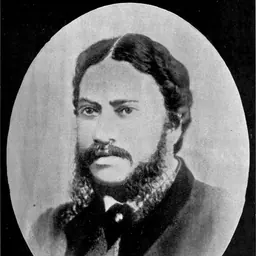
Related people
Same field, nearest in time
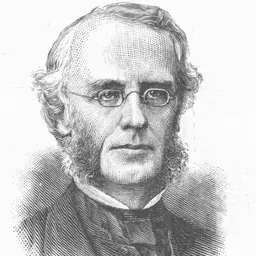

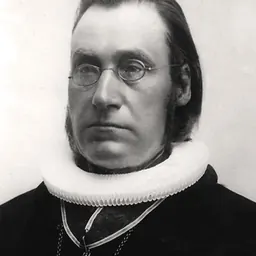
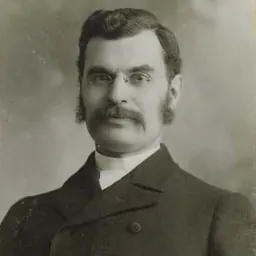
Contemporaries
People whose lives overlapped Dinabandhu Mitra's




Frequently asked questions
Who was Dinabandhu Mitra?
Bengali dramatist (1830–1873)
When was Dinabandhu Mitra born?
Dinabandhu Mitra was born in 1830 in Gopalnagar.
When did Dinabandhu Mitra die?
Dinabandhu Mitra died on 1 November 1873.
What was Dinabandhu Mitra's occupation?
Dinabandhu Mitra was a writer, poet, playwright and postmaster.
What nationality was Dinabandhu Mitra?
Dinabandhu Mitra was Indian.
Sources & further reading
Cite this page
APA: Biography.guide. (2026). Dinabandhu Mitra. https://biography.guide/dinabandhu-mitra/
MLA: "Dinabandhu Mitra." Biography.guide, https://biography.guide/dinabandhu-mitra/.
Chicago: "Dinabandhu Mitra." Biography.guide. https://biography.guide/dinabandhu-mitra/.
Data last updated: 2026-09-20 · Spot an error? Report a correction.
Page generated 2026-09-27 05:30 UTC