
About Dimitrie Ralet
Lived 1816 – 1858 (aged 41–42). Dimitrie Ralet was a translator, writer, politician and magistrate.
Dimitrie Ralet (also rendered as Rallet, Ralett, Ralleti or Raletu; Cyrillic: Дімітріє Ралєт, Раллєтȣ, or Раллєтi; – 25 October 1858) was a Moldavian political figure and celebrated contributor to Romanian literature. Belonging to the upper strata of boyardom, he was of Phanariote and Aromanian descent, and may not have been born in Moldavia; his family history, as well as the circumstances of his birth and early life, remain mysterious and controversial. His father, the Spatharios Alexandru Ralet, was a judge in the northern Moldavian city of Botoșani, and the owner of Bucecea town. Possibly educated abroad, and already a polyglot in his twenties, Dimitrie took over his father's job at the tribunal in 1841—but only served briefly, and with interruptions. He first published as a translator in 1837, before making his actual debut in 1840, with short essays in social satire that evidenced a deep familiarity with 18th-century French literature. Ralet was an introspective and self-deprecating adherent of Romanticism, whose youthful contributions helped establish a deadpan register in modern Romanian humor.
Though created an Aga by the conservative Prince Mihail Sturdza, Ralet embraced rebellious liberalism, endeavoring to outlaw slavery, and exposing Sturdza as the ringleader of a corrupt boyar clique. He arrived at espousing Romanian nationalism, whose immediate agenda was the political unification of Moldavia and Wallachia. Rallying with the National Party in the failed uprising of 1848, he apparently escaped punishment, and networked with the other anti-Sturdzaists from his home in Botoșani. Ralet joined a National-Party cabinet formed by Prince Grigore Alexandru Ghica in 1849, when he contributed to the abolition of slavery, the introduction of educational reforms, and the first steps toward the confiscation of monastery estates. During the Crimean War, as Ghica's diplomat, he advanced points of policy which moved Moldavia closer to the Western powers, and away from her status as a tributary state of the Ottoman Empire. His and Costache Negri's attempt to litigate on the monasteries issue took them on an extended trip to Istanbul.
Ralet was a propagandist for the unionist platform ahead of legislative election in July 1857, opposing the conservative-separatist caucus formed around Caimacami Teodor Balș and Nicolae Vogoride. He exposed Vogoride's discrimination and electoral fraud to international attention, being largely responsible for repeat elections in September. He was subsequently a distinguished figure in the Ad-hoc Divan of Iași, where, as a moderate, he helped recruit conservatives for the unionist cause. His final literary works include comedic plays which were widely acclaimed, including by modern critics, his own version of Hora Unirii, as well as a travelogue of his oriental journey—one of the first such texts by a Moldavian, and among the masterpieces of the genre in its Romanian context. Ralet spent some of his final months in French Empire, trying to obtain support for the union, and also looking after his aggravated tuberculosis. He died upon his return, without managing to see the establishment the United Principalities, occurring just months later.
Biography Early life and debut
Ralet's father was Alexandru or Alecu Ralet, a Spatharios of Botoșani, and also the inaugural chairman of that city's tribunal. Moldavia and neighboring Wallachia (the Danubian Principalities) were at the time vassals and tributaries of the Ottoman Empire; under this regime, they had received a number of Greek settlers, including the Rallet family. Genealogist Octav-George Lecca believes that they formed a distinct branch of the Rallis, and were thus descendants of Byzantine aristocracy; this interpretation is disputed by historian Gheorghe Sibechi, who notes that the original Rallis and another Rallet family had their own representatives in the Principalities, and did not seem to be claimed as relatives by Alexandru's kin. Research initiated by literary scholar Mircea Anghelescu, and completed by historian Andrei Pippidi, points to a close Rallis–Rallet connection. Pippidi hypothesizes that Dimitrie was the great-grandson of Dragoman Christophoros Rallis, and the nephew of Isaac Ralet, who held high-ranking positions in Wallachia in the 1820s. Alexandru's father or elder brother, also called Dimitrie, had arrived to Moldavia within a Phanariote retinue. This Dimitrie accompanied Prince Alexander Ypsilantis on his European trips during the Russian occupation of 1788, and adopted some staples of Westernization—including a coat of arms that displayed Noah's Ark and a self-styling as "count". Little is known about the Dimitrie Jr's earliest years, including the exact date of his birth—with secondary and tertiary sources suggesting "probably 1816", but also 1815 and 1817. The writer was born from Alexandru's marriage to Maria (also known as Marghioala), the daughter of baron Teodor (Tudori) von Mustață, a wealthy merchant from Bukovina District (a former part of Moldavia, then under the Austrian Empire). This side of the family had recent origins among the Aromanians, an Eastern Romance-speaking population that Dimitrie Jr knew as Tsintsari. The Mustațăs had been received into the Austrian nobility in 1794, but maintained links with the Epirus (Ioannina Eyalet), with close relatives still living in Tsepelovo during the 1830s.
An 1825 record provided by the Austrian authorities in Sadagora gives Alexandru's citizenship as Venetian, while listing "Moldavia" for all his wife and children. A funeral oration by Moldavian Metropolitan Neofit Scriban recounted that Dimitrie Jr had been "born a Moldo-Romanian", though such verdicts may be misleading: Pippidi notes the paradox that, for all his embrace of local interests, the writer "was not even born in Moldavia." Scholar Ionel Bejenaru sees him as a Bukovinan by birth, while he notes that identifying the exact place is the subject of much controversy. He also notes that Dimitrie was indeed the oldest of four children—he had a brother, Iancu, as well as two sisters, Catinca and Elencu. Another Iancu, who was the writer's paternal cousin, was a Spatharios in 1822, and lived to 1854. Bucecea was assigned to her husband, and, in January 1828, was elevated by Prince Ioan Sturdza into a Moldavian market town. As a child, Dimitrie lived for a while in that locality, as well as in Botoșani and Nicșeni. He picked up both Greek and French by conversing with his immediate relatives; he later learned German (and was thus regarded as Moldavia's resident expert on German culture), Latin, as well as rudiments of Italian, English, and Russian.
Ralet's first published work was a short volume of translations from Alphonse de Lamartine, in contrast, notes it as "rather dull and of little significance." In his overview of Romanian literature, Nicolae Manolescu deems Ralet "one of the most talented romantic prose writers", his Scrieri being readable, "with only a few wrinkles", by 21st-century standards. He also finds Ralet to be a "memorable exception", as one of the few introspective, self-deprecating, Romanian romantics, and a "master of litotes".
Embracing liberalism
From about 1843, the young man frequently lodged with boyar Costache Negri at Mânjina, where they also networked with other figures of the emerging liberal movement—including Vasile Alecsandri, Manolache Epureanu, Mihail Kogălniceanu, Constantin Negruzzi, Alecu Russo, and Costache Rolla. Ralet was also active in Iași, the Moldavian capital; from 1844, he rented a room in Costachi Sturdza's townhouse, which later also hosted the Naturalists' Society museum. In parallel, from 1841, Ralet was president of the Botoșani tribunal. According to Sion, he owed this appointment, as well as his status as a civilian officer, or Aga, to his father being a political client of the new Prince, Mihail Sturdza. Ralet took this title on 8 May 1842, almost exactly three years before Alexandru's death. since he felt that he did not have a calling. They are consciously modeled on literary portraits, or "physiognomies", introduced in Romanian writing by Constantin Negruzzi, and later developed by Kogălniceanu. Manolescu proposes that Ralet copied this template, but explored new grounds in Romanian humor, reinventing physiognomies as a "burlesque" form of entertainment (while also remaining a "sarcastic moralist" with hints of Voltaire's wit, his "cruelty" presented in "the most neutral tone"). According to Anghelescu, Ralet had "remarkable ease of expression" in presenting the various personality types of a Westernizing society, "characterized with apparent bonhomie in poses that are actually rooted in a mordant ridicule." He sees the satirist as announcing the humorous or polemical essays of Hasdeu and Alexandru Macedonski; like Hasdeu, Ralet spent considerable time in mocking intellectuals who aspired to artificially re-Latinize the Romanian language. Ralet's moderating take on Westernization was also illustrated by fragments which poke fun at Western European travelers to Iași—though Ralet also believed, genuinely so, that boyars who had renounced their işlic headgear in favor of regular hats had also liberated their thinking. As Frunză notes, the humorous aspects of such prose mostly serve to highlight "the decay of contemporary feudal society, with its luxuries, its cosmopolitan habits, and its duplicitous conventionality." Ralet was involved in the conspiratorial meetings of the Botoșani boyars, and established direct links with Polish emigrants, being contacted by Michał Czajkowski. A memoir by fellow revolutionist Kogălniceanu identifies Ralet as the author of propaganda verse, circulating in leaflets and later bound together as Plutarcul Moldovei ("Moldavia's Own Plutarch"). As Frunză notes, its significance is primarily as a historical document. Manolescu retains a "startling image" in one other portrait: Verse translation| Various historians believe that Ralet was forced to escape additional retribution by crossing the border into Bukovina. Bejenariu credits such accounts, believing that Ralet was welcomed by the Hurmuzachi brothers, switching between their homes in Czernowitz and Czernowka; he also reconnected with other exiles, who had formed a Romanian Revolutionary Committee, and helped draft proclamations on their behalf.
The enthronement of a liberal-minded Prince, Grigore Alexandru Ghica (who was a Botoșani native and effectively a leader of the National Party), As Cornea reports, Ralet was universally acclaimed for his competence in that ministry;
Ralet's activity was in any case put on hold by the Crimean War, which finally resulted in the Danubian Principalities being placed under the oversight of European powers, including the French Empire, with the Ottomans still exercising suzerainty. On 9 November 1854, By contrast, Sibechi notes Ralet's "unrelenting efforts for the development of Moldavian education", and especially his success in obtaining a sizable budget from Ghica (much of it went toward the establishment of new schools). The Prince himself was more interested in ending slavery; Ralet and Panu argued that this should be done by sheer abolition, with no compensation for the owners, but their proposal was immediately vetoed by Ștefan Catargiu, who "began shouting that this would mean spoliation." The controversy was abruptly ended by news that a Romani slave, Dincă, had committed a murder-suicide to protest his fate; this soon became a cause célèbre, allowing Ghica to speed up the abolition. Between July 1855 and March 1856,
The first leg of the voyage took the two Moldavians to the Wallachian capital city, Bucharest. They were received there by the reigning Prince, Barbu Dimitrie Știrbei, who informed them that he did not approve of Ghica's plan, which was to take nationalize virtually all the estates held by the "Holy Realms", and would only support the purchase or confiscation of a quarter of the land. Despite this disagreement, the two Moldavians were joined on their journey by a Wallachian diplomat, D. Aristarhi. They then crossed over to Varna, and took the Austrian steamboat service across the Black Sea. Upon his arrival to Istanbul, Ralet became one of the last visitors received by the Polish exile writer, Adam Mickiewicz, before his death later that year; the Wallachian guest met Ottoman figures such as Âli and Kıbrıslı Pasha, and also Sheikh Boumaza, who was a veteran of the French wars in Algeria. They approached the Ottoman officials with proposals for Aromanian cultural autonomy, but found their project swiftly rejected. Their secondary, goodwill, mission was to contact the French Ambassador, to whom they donated 4,240 Guilder
Unionist leader Ralet pledged his support for Romanian nationalism, which now took the form of campaigning for a Moldo–Wallachian political union. Upon making this choice, he decided never again to write his letters in French, as he had done occasionally up to that point, explaining that: "we must now, more than ever before, think and feel in Romanian". In December of that year, possibly after being encouraged by Ion Ghica, he began recording his impressions of the Oriental travel he had just returned from. According to Pippidi, the observations he made on this topic are "perfectly reasonable", and backed up by citations from philologists such as Claude Charles Fauriel and Friedrich Christian Diez; the articles make him one of the first culture critics to have explored the topic of exterior "forms" and native "content". In May, the three of them, alongside Alexandru Papadopol-Calimah, sat on an advisory commission which promoted near-complete freedom of the press. As recalled by Papadopol-Calimah, a group of ministers comprising Ralet, Mavrogheni, Negri and Ion Ghica was most unrelenting in persuading the Prince that he should adopt the most advanced reforms in this particular field. Ralet joined the unionist committee in or around 30 May 1856, almost immediately after Prince Grigore had ended his term (with a farewell speech in which he encouraged his ministers to rally around the unionist ideal). The interval saw him depicted as one of unionist leaders in a lithograph put out by D. I. Cerbureanu. By June, he had embarked on a correspondence with Ion Ghica, informing him that the nationalist platform was taken up by the counties, but also that the "reactionaries" had gone on the offensive. The unionist movement, he noted, was being labeled as anti-state, even as its adversaries "lean on the Austrians for their support" (se anină de nemți ca să se sprijine). He insisted on providing his direct contribution to the modernization of Moldavia's landscape: also in June, he and Alecsandri, alongside Nicolae Vogoride, offered to donate estates they owned along the Siret for building a state railway.
In early 1856, an Austrian informant in Moldavia, known simply as Stokera, reported that Ralet was among a group of 43 boyars who could legitimately contest the princely throne in Iași, but who "rendered no real service to the country, have no partisans, and the same time never stated a claim up to this point". In June, however, various Moldavian opinion-makers were advancing a project to form a triumvirate regency of Caimacami, with Ralet, Mavrogheni and Negri as the three most sympathetic candidates. The anti-unionists managed to appoint one of their patrons, Teodor Balș, to the one-man regency, upon which he began a heavy-handed repression of the National Party. Ralet's correspondence details allegations against the regime, and especially his perception of Balș as a servant of Austrian interests. In January 1857, Ralet, Mavrogheni and Kogălniceanu signed up to an open letter, asking Abdulmejid to recall Balș. This initiative was received with consternation by a Bukovinan associate, C. Hurmuzachi; though he did not approve of Balș, he argued that Ralet and the others were voluntarily chipping away at Moldavia's political autonomy. He also claimed that the letter was a trap set for them by the Sturdzas, in collaboration with another former Caimacam, Stefan Bogoridi.
Ralet at the Ad-hoc Divan rostrum. December 1857 caricature by Henric Cortazzi The Caimacam died suddenly the following March—this turn of events was seen by Ralet as ominous, in that it showed the outcome of policies that go against "public opinion and a people's wishes". Balș had designated Vogoride as his successor. Ralet expressed satisfactions with this move, since Vogoride's status as a foreigner had angered the old and established Moldavian boyardom, pushing it toward unionism. Upon beginning his mandate, Vogoride revealed himself as a conservative, and loyal to the Porte—in what was a last-ditch effort to contain the unionists, ahead of a scheduled legislative election in July 1857. Assisted by his minister Costin Catargi, he introduced censorship of the press during March. Ralet himself channeled the opposition to such moves, opening his house in Iași to be used by "men of letters" who signed petitions; he and the unionist committee presented Vogoride with one of these papers.
The protest was ignored; this prompted the committee to form a delegation, comprising Ralet, Alecsandri and Kogălniceanu, which was sent to contact the European commissars, who operated from Bucharest. They arrived there on 13 April, and went on to meet the plenipotentiaries. The French commissar, Baron Talleyrand, noted that the three "men of high distinction" managed to impress him and his colleagues, who became more favorable toward unionist grievances. Ahead of concurrent elections in Wallachia, Ralet voiced his admiration for the Wallachian campaigners, who, despite forming several distinct electoral committees, had all embraced the unionist platform. He himself became a correspondent for Constantin A. Kretzulescu's Bucharest paper, Concordia, and for V. A. Urechia's Paris-based Opiniunea.
Defeating Vogoride A census of that era shows Ralet as qualifying for the electors' list in Botoșani County as a Vornic, a landowner in Bucecea, and a "government-recognized lawyer". The election was compromised by widespread fraud, attributable to Vogoride and his Ottoman enablers. An indignant Ralet produced commentary on the manner in which Vogoride and Nicolae Istrati had re-engineered the electoral body in order to over-represent the known "reactionaries". A letter he sent to Ioan I. Filipescu of Wallachia, on 17 July, made specific accusations against Vogoride's Vornic in Vrancea County, Iordache Pruncu, whom he depicted as accepting bribery in exchange for fraud. Also then, Ralet found himself stripped of his right to vote, since he "did not provide evidence of his naturalization" (n-a dat dovezi de împământenire); according to Sibechi, the accusation may have been at least partly correct. The full intrigue was uncovered by Vogoride's wife (and Negri's half-sister) Cocuța Conachi, who confiscated her husband's incriminating correspondence with the Porte (represented by Musurus Pasha).
Also in 1857, Ralet was inspired to contribute works of drama, seeing theater as a venue for national pedagogy, and, to this end, contributed several satirical plays in verse. Published in Bucharest as several installments, and also as a volume of Scene naționale ("National Scenes"), they included Pavel Clopotarul ("Pavel the Sexton"), which enjoyed success with the public. Lăzăreanu believes that Ralet had mastered the genre, with all samples being "equally good". He notes that his metaphors had surpassed the poetic standards set by the likes of Dimitrie Bolintineanu, and were reaching for more uncommon comparisons. Lăzăreanu also mentions a comedy of manners, Harță ("Quarrel"), which is "charmingly dosed" and contains a "very interesting lexical matter"; the same work is reviewed by Anghelescu as a study in the yeomanry's encroachment by land-grabbing boyars. He took 37 out of a possible 40 votes, and began his mandate on 30 August. Ralet and Panu were assigned to a 9-member committee which set the main points on the agenda; doing so required his direct cooperation with conservative unionists such as Lascăr Catargiu. On 19 October 1857, Ralet participated in the session which confirmed the Divan deputies' platform—unification, autonomy and neutrality for the resulting state, constitutionalism, and the election of a foreigner as monarch. A Wallachian guest, Marin Serghiescu, found that "our brother Rallet" was largely responsible for the consensus being reached. In November, Ralet was a rapporteur on church affairs, proposing that the Moldavian Metropolis and its Wallachian counterpart form a Romanian autocephalous church; he also spoke in favor of extending liberal policies to cover land reform. Ralet left for France, on what was possibly his final diplomatic mission. One letter by their fellow deputy, C. Hurmuzachi, indicates that they had no legal mandate, and simply took their orders from Bucharest—the situation, Hurmuzachi noted, was anomalous, adding: "Ralet is both sick and a diplomat of that well-known school, or clique." Elsewhere, Hurmuzachi clarifies that he viewed Ralet and Panu as the associates of Kogălniceanu, whom he regarded as Moldavia's "Catiline", a man of "no steady or solid principles". The mission was observed by Henry Bulwer, the British Ambassador to the Porte. According to Bulwer, Ralet was a more practical man than Kogălniceanu, since the latter still did not accept union without a set of democratic reforms (including universal male suffrage, which the Ottomans could have never allowed).
Writing to I. Ghica from France, Ralet revealed the scope of his conversations with Napoleon's courtiers. He had asked that, should unionism be rejected, then "at least [...] spare us from having to deal with the estranged figures of the past". This referred to the activity of several, self-exiled, former princes, whom he saw as groveling for their respective thrones. Ralet was already struggling to remain active. The sickness mentioned by Hurmuzachi was diagnosed as tuberculosis; During his stay, he printed in Paris the definitive account of his Oriental journey: Suvenire și impresii de călătorie în România, Bulgaria, Constantinopole. Rated by critics a talented dilettante who wrote an enjoyable prose, he combined sociological observations with a moralist's indulgent irony. As seen by Pippidi, he may have been "the first interpreter of Turkish culture in Romanian, and for Romanian readers." Scholar Ion Roman highlights another difference between Ralet and his peer Bolintineanu, who was also writing accounts of his Ottoman journeys: the former is "concise in his expression, this being a quality that Bolintineanu does not display." The two men apparently read each other's notes, and there is a degree of intertextuality shared between them. Bolintineanu's own account, in the definitive print, features an homage to his Moldavian colleague, commending him for his "ingenious observations" on the society of Pera. Manolescu agrees that Suvenire is Ralet's masterpiece, one which borrows a standard romantic model from Alecu Russo and enriches it with the "unpredictable associations" that form a staple of Ralet's humor. "One of the most intelligent" travelogues, its essay-like portions (such as one explaining the Islamic take on love and sex, which Ralet found to be healthier than the Moldavians' "efforts and sobs") are "unequaled" and "unblemished by time."
In describing his travels, Ralet commends the Osmanlis and the "Turkish people" for having embraced reform, and especially for doing so without "blindly adopting what we in Europe take to mean civilization [...] We would not wish for them to regard as prejudice all things that hamper vice." In August 1907, historian Nicolae Iorga recorded as news that: "The widow of D. Ralet, that writer and combatant for the Union, has died in Iași." Ralet left his estate to be used by the government, for works of charity. His grave is located in the burial grounds assigned to the Dormition Church of Botoșani. Immediate tributes also include an article by poet Gheorghe Sion, hosted in Bolintineanu's paper, Dâmbovița, in November 1858. Its artistic worth created a bond between Bolintineanu and Sion.
In Ralet's lifetime, Alecsandri had published a comédie en vaudevilles, called Doi morți vii ("Two Living Dead"). During an 1865 performance in Bukovina, Alexandru Hurmuzaki noticed that one of its characters, the poet Acrostichescu, resembled "that poor fella Dumitrachi Rallet". As both Sibechi and Zamfir note, the Vornics terminal affliction had prevented him from witnessing the realization of his cherished dream, namely the formation of the United Principalities in 1859. The state's new institutions included a Central Commission in Focșani, which, in 1860, put out an almanac of "things of interest to the Romanian people", featuring one of Ralet's moralizing essays. One theme from the Vornics comedic writing was reused in the 1860s by Alecsandri, who used it for another of his musical comedies, known as Harță Răzășul. Lăzăreanu and other scholars have proposed that the titular aggrieved yeoman, appearing in both, versions is also the inspiration for the pugnacious rooster in Ion Creangă's 1876 children's story, "The Purse a' Tuppence". Writing in 1882, after the Romanian War of Independence, and after the union had been consolidated into a Kingdom of Romania, Alecsandri spoke of Suvenire as "worthy of a distinct place in all public and private libraries". Despite Alecsandri's efforts, the deceased writer was fading out of the public's memory. Cornea, writing in 1966, called him "one of the most endearing figures among the Forty-Eighters", adding: "the cause of the obscurity surrounding his name [is due] to the adversity of fate."
Don’t just read it —
keep it.
Full-length biographies made to live with: read them, listen on the way to work, watch them tonight.
- E-book
- Audio
- Video
Instant download · yours to keep · every purchase keeps this site free
Important facts
People in Dimitrie Ralet's life
Named in this biography and alive at the same time

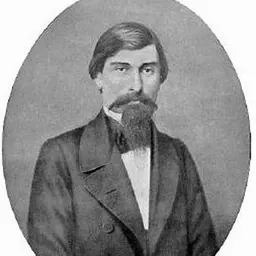
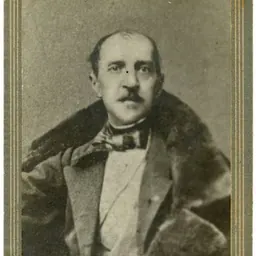

Related people
Same field, nearest in time
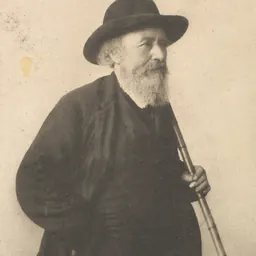
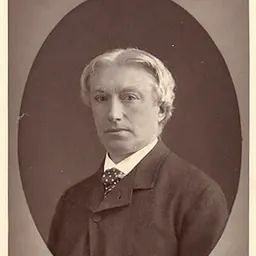
Contemporaries
People whose lives overlapped Dimitrie Ralet's





Frequently asked questions
Who was Dimitrie Ralet?
Moldavian poet
When was Dimitrie Ralet born?
Dimitrie Ralet was born in 1816 in Istanbul, Bukovina District.
When did Dimitrie Ralet die?
Dimitrie Ralet died on 25 October 1858 in Botoșani.
What was Dimitrie Ralet's occupation?
Dimitrie Ralet was a translator, writer, politician and magistrate.
What nationality was Dimitrie Ralet?
Dimitrie Ralet's recorded nationality: Principality of Moldavia.
Sources & further reading
Cite this page
APA: Biography.guide. (2026). Dimitrie Ralet. https://biography.guide/dimitrie-ralet/
MLA: "Dimitrie Ralet." Biography.guide, https://biography.guide/dimitrie-ralet/.
Chicago: "Dimitrie Ralet." Biography.guide. https://biography.guide/dimitrie-ralet/.
Data last updated: 2026-09-20 · Spot an error? Report a correction.
Page generated 2026-09-27 05:20 UTC