
About Grigore Alexandru Ghica
Lived 1804 – 1857 (aged 52). Grigore Alexandru Ghica was a politician.
Grigore Alexandru Ghica or Ghika (1803 or 1807 – 24 August 1857) was a Prince of Moldavia between 14 October 1849, and June 1853, and again between 30 October 1854, and 3 June 1856. His wife was Helena, a member of the Sturdza family and daughter of Ioan Sturdza, who had been Prince of Moldavia from 1822 to 1828.
Biography Early life and first rule Born sometime between 1800 and 1810, Grigore Alexandru was a member of the Albanian Noble Ghica family of boyars, and a descendant of Phanariotes. After being educated in France and the German Confederation, he returned to his native country and rallied with the nationalist and liberal opposition to Prince Mihail Sturdza under the Regulamentul Organic regime. Following the 1848 Revolution and Sturdza's deposition, despite his political choices, with Russia's approval, the Moldavian Divan appointed Ghica as ruler for a seven-year term In 1851, he nominated the Transylvanian-born intellectual August Treboniu Laurian, himself a noted supporter of ethnic Romanian nationalism, as Inspector of the Schools in Moldavia. Additionally, his rule relaxed censorship, and became noted for an increase in literary activities.
Grigore Alexandru Ghica's program was ended by the Crimean War, when Russian troops occupied the Danubian Principalities as a means to attack the Ottoman Empire. The legislative project was drafted by Mihail Kogălniceanu and Petre Mavrogheni, and passed with the Divan's unanimous vote on 22 December 1855, providing compensation for all adult and able Roma, part of which was to be collected from former state-owned slaves. During the late years of his rule, he appointed several Partida Națională representatives to government positions. Ghica appointed a Commission of experts, comprising Laurian, Kogălniceanu, and Costache Negruzzi, which reported that the document was a forgery.
Later years and suicide After his term expired, Ghica left the country and moved to Paris.
A section Ion Creangă's book Amintiri din copilărie, which details the Prince's visit to the school in Târgu Neamț at a time when Creangă was a student there, contains an admiring portrait of Ghica ("handsome in features and gentle"), as well as a section of his speech on the occasion. Grigore Alexandru Ghica was the grandfather of Roman Catholic Archbishop Vladimir Ghika, who was a victim of the Romanian Communist regime.
Don’t just read it —
keep it.
Full-length biographies made to live with: read them, listen on the way to work, watch them tonight.
- E-book
- Audio
- Video
Instant download · yours to keep · every purchase keeps this site free
Important facts
People in Grigore Alexandru Ghica's life
Named in this biography and alive at the same time

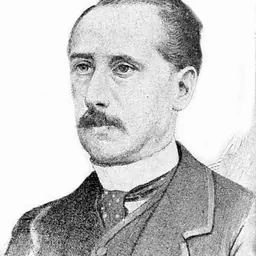
Related people
Same field, nearest in time

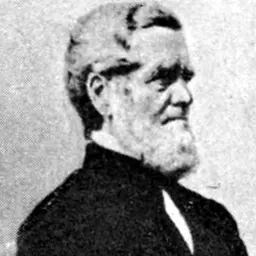

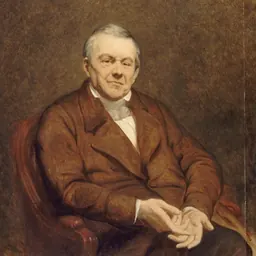


Contemporaries
People whose lives overlapped Grigore Alexandru Ghica's





Frequently asked questions
Who was Grigore Alexandru Ghica?
Prince of Moldavia (1807-1857)
When was Grigore Alexandru Ghica born?
Grigore Alexandru Ghica was born on 27 August 1804 in Botoșani.
When did Grigore Alexandru Ghica die?
Grigore Alexandru Ghica died on 24 August 1857 in Le Mée-sur-Seine.
What was Grigore Alexandru Ghica's occupation?
Grigore Alexandru Ghica was a politician.
What nationality was Grigore Alexandru Ghica?
Grigore Alexandru Ghica's recorded nationality: Principality of Moldavia.
Sources & further reading
· Wikipedia: Grigore Alexandru Ghica
· DBpedia: Grigore Alexandru Ghica
Cite this page
APA: Biography.guide. (2026). Grigore Alexandru Ghica. https://biography.guide/grigore-alexandru-ghica/
MLA: "Grigore Alexandru Ghica." Biography.guide, https://biography.guide/grigore-alexandru-ghica/.
Chicago: "Grigore Alexandru Ghica." Biography.guide. https://biography.guide/grigore-alexandru-ghica/.
Data last updated: 2026-09-26 · Spot an error? Report a correction.
Page generated 2026-09-27 05:15 UTC