
About Diana Baumrind
Lived 1927 – 2018 (aged 91). Diana Baumrind was an American psychologist, known for Parenting styles.
Career After being awarded her doctorate she served as a staff psychologist at Cowell Memorial Hospital in Berkeley. She was also director of two U. S. Public Health Service projects and a consultant on a California state project. From 1958-1960 she also had a private practice in Berkeley.
She was a developmental psychologist at the Institute of Human Development, University of California, Berkeley. She was known for her research on parenting styles and for her critique of deception in psychological research, especially Stanley Milgram's controversial experiment.
Baumrind defined three parenting styles:
Authoritarian: the authoritarian parenting style is characterized by high demandingness with low responsiveness. The authoritarian parent is rigid, harsh, and demanding. Abusive parents usually fall in this category (although Baumrind is careful to emphasize that not all authoritarian parents are abusive). Permissive: this parenting style is characterized by low demandingness with high responsiveness. The permissive parent is overly responsive to the child's demands, seldom enforcing consistent rules. The "spoiled" child often has permissive parents. Authoritative: this parenting style is characterized by high demandingness with huge responsiveness. The authoritative parent is firm but not rigid, willing to make an exception when the situation warrants. The authoritative parent is responsive to the child's needs but not indulgent. Baumrind makes it clear that she favors the authoritative style.
Baumrind studied the effects of corporal punishment on children, and concluded that mild spanking, in the context of an authoritative (not authoritarian) parenting style, is unlikely to have a significant detrimental effect, if one is careful to control for other variables such as socioeconomic status. She observed that previous studies demonstrating a correlation between corporal punishment and bad outcomes failed to control for variables such as socioeconomic status. Low-income families are more likely to employ corporal punishment compared with affluent families. Children from low-income neighborhoods are more likely to commit violent crimes compared with children from affluent neighborhoods. But Baumrind believed that when appropriate controls are made for family income and other independent variables, mild corporal punishment per se does not increase the likelihood of bad outcomes. This assertion has in turn attracted criticism and counterpoints from other researchers in the same publication, for example: Whether harmful or not, there is still no consistent evidence of beneficial effects.
She was influenced in her studies by Theodor Adorno, Else Frenkel-Brunswik, Egon Brunswik, and David Krech
Baumrind died in September 2018 following a car accident.
Don’t just read it —
keep it.
Full-length biographies made to live with: read them, listen on the way to work, watch them tonight.
- E-book
- Audio
- Video
Instant download · yours to keep · every purchase keeps this site free
Important facts
People in Diana Baumrind's life
Named in this biography and alive at the same time



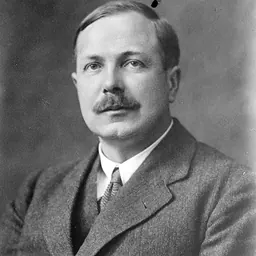
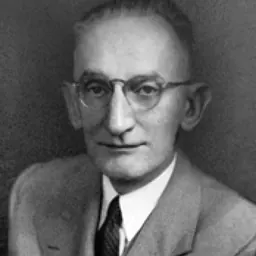
Related people
Same field, nearest in time


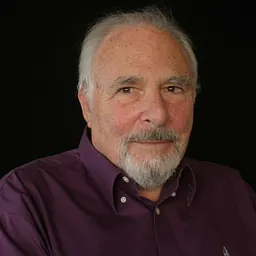


Contemporaries
People whose lives overlapped Diana Baumrind's


Frequently asked questions
Who was Diana Baumrind?
Clinical and developmental psychologist (1927–2018)
When was Diana Baumrind born?
Diana Baumrind was born on 23 August 1927 in New York City.
When did Diana Baumrind die?
Diana Baumrind died on 13 September 2018 in Oakland.
What was Diana Baumrind's occupation?
Diana Baumrind was a psychologist.
What was Diana Baumrind known for?
Diana Baumrind was known for Parenting styles.
What nationality was Diana Baumrind?
Diana Baumrind was American.
Sources & further reading
Cite this page
APA: Biography.guide. (2026). Diana Baumrind. https://biography.guide/diana-baumrind/
MLA: "Diana Baumrind." Biography.guide, https://biography.guide/diana-baumrind/.
Chicago: "Diana Baumrind." Biography.guide. https://biography.guide/diana-baumrind/.
Data last updated: 2026-09-20 · Spot an error? Report a correction.
Page generated 2026-09-27 05:24 UTC