
About Diaa al-Din Dawoud
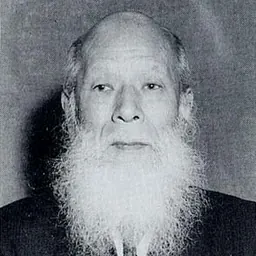
Lived 1926 – 2011 (aged 85). Diaa al-Din Dawoud was an Egyptian politician.
Diaa al-Din Dawoud (name also spelled Diya el-Din Dawud or Diaaeddin Dawoud; 26 March 1926 – 6 April 2011) was an Egyptian politician and activist. He is the founder of the Arab Democratic Nasserist Party, serving as its secretary-general between 1992 and November 2010.
In an interview with Al Ahram Weekly, Dawoud claimed he was the only person from al-Roda who attended university in the 1940s. He spent his first year, 1946, studying at the Alexandria University's Faculty of Law, before being admitted to King Fuad University in Cairo in 1947. He graduated with a law degree in 1950. He briefly joined the Muslim Brotherhood during his time at King Fuad University, but left shortly after due to his disillusionment with what he called "absolutist religious thinking." receiving 104 votes, falling behind Anwar Sadat, Mahmoud Fawzi, Hussein el-Shafei and Ali Sabri. He was affiliated with Sabri's left-leaning faction, and his election to the ASU was seen by observers as strengthening the position of Sabri, who gained the highest votes within the party. Nasser had taken the additional role of Prime Minister in 1967.
Conflict with Sadat In a private meeting with Vice President and Speaker of Parliament Sadat, Al-Ahram editor-in-chief, Mohamed Hassanein Heikal, and ASU Press Secretary Khaled Mohieddin during the 1968 ASU Congress, Dawoud entered into an argument with Sadat, accusing him of "corrupting Egypt's parliamentary life". Conflict between the pro and anti-Sadat factions resumed in April 1971, when members of the Supreme Executive Committee voted 5 to 3 against Sadat's agreement to form a federation with Libya and Syria, with Dawoud being one of the opposing votes. During that meeting Dawoud also called on Sadat to resign from the presidency. In disapproval of Sadat's policies, which they viewed as running counter to the goals of the 1952 Egyptian Revolution and Nasser's legacy, members of the pro-Sabri faction, including Dawoud, announced their resignation on 13 May.
Later that month, Sadat announced that members of the pro-Sabri faction were orchestrating a coup to topple him and ordered the arrests of Sabri and his allies, including Dawoud. The arrest and imprisonment of prominent ASU members was seen as a purge by Sadat, not necessarily of Nasserists, but of powerful members of the party leadership opposed to his rule. The purge was part of a broader monopolization of power by Sadat known as the "Corrective Movement".
The Nasserist Party and the Mubarak era In 1987, during a period of limited political détente offered by President Hosni Mubarak (r. 1981-2011), Nasserist opponents of Sadat from the ASU (it was dissolved in 1978), including Dawoud who had been released from prison by that time, founded the Arab Democratic Nasserist Party. Dawoud was chosen as the party's chief representative. The party modeled itself as the upholder of Nasser's legacy, calling for state-led economic growth, rejection of Zionism and American imperialism and closer inter-Arab ties.
When Dawoud's reentry into politics was opposed by Mubarak's administration due to his 1971 conviction, Dawoud launched an appeal to the Supreme Constitutional Court (SCC) challenging that particular provision law. Dawoud succeeded in arguing that the provision law ran counter to articles 66 and 187 of the constitution because it was a form of retroactive punishment and barred a person's political rights. The SCC nullified the provision. However, when the ADNP sought to be legalized as a party, their application was rejected by the Committee for Parties on account of the ADNP's rejection of the Camp David Peace Treaty with Israel. Dawud remained as secretary-general, but the party was not officially proclaimed until 1992. Dawoud's legal victories opened the door for numerous other opposition activists to press for further rights in the courts. Between 2007 and 2008, tensions developed between Dawoud and party cadre Sameh Ashour, when the latter tried to oust Dawoud from his role as secretary-general. Dawoud stepped down from the party leadership in November 2010, citing health reasons. Although he delegated Ashour to serve as the party's leader, Dawoud was succeeded by Ahmed Hassan, creating further rifts within the ADNP.
Don’t just read it —
keep it.
Full-length biographies made to live with: read them, listen on the way to work, watch them tonight.
- E-book
- Audio
- Video
Instant download · yours to keep · every purchase keeps this site free
Important facts
People in Diaa al-Din Dawoud's life
Named in this biography and alive at the same time




Related people
Same field, nearest in time





Contemporaries
People whose lives overlapped Diaa al-Din Dawoud's


Frequently asked questions
Who was Diaa al-Din Dawoud?
Egyptian politician
When was Diaa al-Din Dawoud born?
Diaa al-Din Dawoud was born on 26 March 1926 in Damietta Governorate, Kingdom of Egypt.
When did Diaa al-Din Dawoud die?
Diaa al-Din Dawoud died on 6 April 2011 in Cairo.
What was Diaa al-Din Dawoud's occupation?
Diaa al-Din Dawoud was a politician.
What nationality was Diaa al-Din Dawoud?
Diaa al-Din Dawoud was Egyptian.
Sources & further reading
· Wikipedia: Diaa al-Din Dawoud
Cite this page
APA: Biography.guide. (2026). Diaa al-Din Dawoud. https://biography.guide/diaa-al-din-dawoud/
MLA: "Diaa al-Din Dawoud." Biography.guide, https://biography.guide/diaa-al-din-dawoud/.
Chicago: "Diaa al-Din Dawoud." Biography.guide. https://biography.guide/diaa-al-din-dawoud/.
Data last updated: 2026-09-20 · Spot an error? Report a correction.
Page generated 2026-09-27 05:28 UTC