
About Derwent Lees
Lived 1884 – 1931 (aged 46). Derwent Lees was an Australian painter, art educator and draftsperson.
Derwent Lees (14 November 1884 – 28 March 1931) was an Australian draughtsman, landscape and figure painter.
Biography Derwent Lees was born in Hobart, Australia, in November 1884, the youngest of ten children. His father was general manager of the Union Bank of Australia. He studied at Melbourne Grammar School in 1899–1900, and later lost a foot in a riding accident, subsequently wearing a wooden prosthetic foot. He moved to London in 1905 and, following a brief stay in Paris, commenced his studies at the Slade School of Fine Art under the supervision of Henry Tonks and Frederick Brown. While still a student, he was invited to join the Slade staff in late 1907, a position he held for ten years.
His earliest known works are pencil drawings created in c.1907 while at the Slade School. These remain held by the Art Museum of University College London. He regularly exhibited in London at many galleries, including the Goupil Galleries and the Chenil Gallery in Chelsea, and with Vanessa Bell’s Friday Club where he was a founding member, was invited to become a member of the New English Art Club in 1911, and in 1913 had works shown at the renowned Armory Show (the first International Exhibition of Modern Art) in New York, Boston and Chicago.
He was a friend of Augustus John and James Dickson Innes and from late 1910 to 1913, painted with them in north Wales, then again with Augustus John in 1914. In 1910, accompanied by Innes and another Slade colleague, Lees went on a painting trip to Collioure in France. He returned to southern France another three times prior to WWI, developing a distinctive highly coloured style following the influence of the post-impressionists.
Lees married his model-muse, Edith Harriet Price (1890-1984), in the summer of 1913. Under the artist-model pseudonym "Lyndra", she was one of Lees's and Augustus John's principal pre-WWI models.
His artistic career was curtailed by poverty and subsequent mental health problems , which saw him confined to asylums, initially in 1918, then permanently from 1919 until his death in 1931 at West Park Hospital, Epsom.
In 1936 his work 'Dorset Scene ' was exhibited posthumously at the Venice Biennale, probably by his widow, as Great Britain did not contribute any works that year due to political tensions.
His works are held in more than 50 public institutions across eight countries in :
the USA at the Yale Center for British Art, the Chicago Institute of Art and the Rhode Island School of Design; the major galleries of the Midlands and North of England, and all of London’s major galleries including the Tate, the V&A, the British Museum and the National Portrait Gallery; the National Galleries of Canada, Wales, New Zealand and Australia, among other major public Australian and South African galleries.
The 2025 catalogue raisonné of Lees's oeuvre details over 450 works, nearly all produced in 12 intense creative years.
Selected paintings
Selected Works in Collections TitleYearMediumGallery no.GalleryLocation Lyndra at the Pool 1913 Oil on wood panel 76.358 National Gallery of Australia Canberra, Australia Four Heads c.1911 Pencil & paper H1979.5 Brighton and Hove Museums Brighton, England Landscape at Collioure 1910 Watercolour & gouache on paper N04241 Tate Gallery London, England The Awakening 1910 Watercolour, pen & ink 79.2588 National Gallery of Australia Canberra, Australia Lyndra in Wales 1914 Oil on paper 2450 Fitzwilliam Museum Cambridge, England Evening 1911 Oil on canvas 9684 Government Art Collection London, England Girl in a Black Hat 1914 Oil on wood panel 1888-4 National Gallery of Victoria Melbourne, Australia Métairie des Abeilles 1912 Oil on wood N05355 Tate Gallery London, England Métairie des Abeilles 1909 Watercolour on paper N05356 Tate Gallery London, England Mas Reig, Banyuls a.k.a. Spanish Landscape 1912 Oil on wood panel 76.359 National Gallery of Australia Canberra, Australia The Round Hill, Banyales a.k.a. Spanish Landscape 1914 Oil on board H1990.24 Brighton and Hove Museums Brighton, England Portrait of Lyndra, the Artist's Wife 1913 Pencil & paper & board H1981.7 Brighton and Hove Museums Brighton, England Lyndra in a Landscape 1913 Oil on wood panel 1821-4 National Gallery of Victoria Melbourne, Australia Pear Tree in Blossom 1913 Oil on wood N05021 Tate Gallery London, England Lyndra at Tanygrisiau a.k.a. Girl Seated 1914 Oil on wood panel 1957-0014-3 Museum of New Zealand Te Papa Tongarewa Wellington, New Zealand Tan-Y-Bwlch a.k.a. The Yellow Skirt 1914 Oil on wood panel 127080 Carrick Hill Adelaide, Australia Self Portrait 1919 Etching D5046 National Portrait Gallery London, England Not titled [Eve holding the apple] c.1909 Watercolour, pen & ink, pencil on cardboard 79.1517 National Gallery of Australia Canberra, Australia Not titled [Portrait study: Woman with head turned to the right] 1915-1918 Brush & ink & pencil on paper 79.15153 National Gallery of Australia Canberra, Australia Profile, Lyndra a.k.a. Profile portrait of a woman 1913 Pencil on paper 79.1515 National Gallery of Australia Canberra, Australia Essil Elmslie Reading a.k.a. Woman reading 1911 Pencil, ink & pen on paper 79.1516 National Gallery of Australia Canberra, Australia Portrait of an Unknown Woman a.k.a. Lady Howard de Walden c.1913 Pencil on paper FA101413 Brighton and Hove Museums Brighton, England Snow on Welsh Mountains a.k.a. Welsh Landscape in Winter c.1911 Oil on wood panel 1951.1086 Glynn Vivian Art Gallery Swansea, Wales
Don’t just read it —
keep it.
Full-length biographies made to live with: read them, listen on the way to work, watch them tonight.
- E-book
- Audio
- Video
Instant download · yours to keep · every purchase keeps this site free
Important facts
People in Derwent Lees's life
Named in this biography and alive at the same time
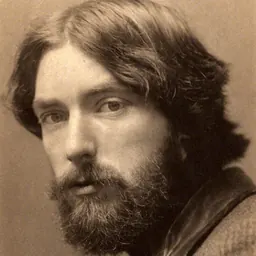




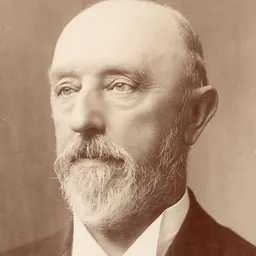
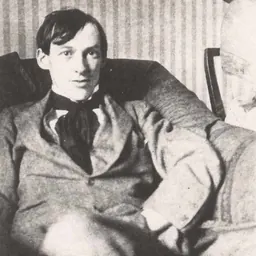
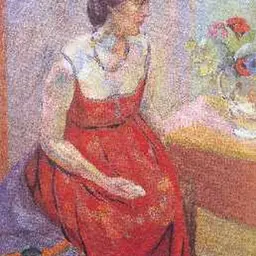
Related people
Same field, nearest in time


Contemporaries
People whose lives overlapped Derwent Lees's

Frequently asked questions
Who was Derwent Lees?
Australian artist (1885-1931)
When was Derwent Lees born?
Derwent Lees was born on 14 November 1884 in Hobart.
When did Derwent Lees die?
Derwent Lees died on 28 March 1931 in London.
What was Derwent Lees's occupation?
Derwent Lees was a painter, art educator and draftsperson.
What nationality was Derwent Lees?
Derwent Lees was Australian.
Sources & further reading
Cite this page
APA: Biography.guide. (2026). Derwent Lees. https://biography.guide/derwent-lees/
MLA: "Derwent Lees." Biography.guide, https://biography.guide/derwent-lees/.
Chicago: "Derwent Lees." Biography.guide. https://biography.guide/derwent-lees/.
Data last updated: 2026-09-20 · Spot an error? Report a correction.
Page generated 2026-09-27 05:24 UTC