
About Deborah Vernon Hackett
Lived 1887 – 1965 (aged 77). Deborah Vernon Hackett was an Australian philanthropist.
Deborah Vernon Buller Murphy (née Drake-Brockman, previously Hackett and Moulden; 18 June 1887 – 16 April 1965), best known as Lady Hackett or Lady Moulden, was an Australian community worker, philanthropist, and mining investor. Early life Born in West Guildford, Western Australia, on 18 June 1887, she was the daughter of surveyor Frederick Slade Drake-Brockman and heroine Grace Vernon Bussell and younger sister of Edmund Drake-Brockman. She was educated at Guildford Grammar School as one of the few female pupils admitted at that time. They had a son, also named John Winthrop Hackett (later General Sir John Hackett (1910–1997) commander-in-chief of the British Army on the Rhine before becoming principal of King's College London upon retirement), and four daughters. Hackett senior died in 1916 leaving a large estate to his family, and a large endowment to the University of Western Australia.
On 10 April 1918, Lady Hackett, now aged 30, married (later Sir) Frank Beaumont Moulden and moved to Adelaide; she was Lady Mayoress of Adelaide 1919–1921, and became Lady Moulden in 1922. Moulden died after a cerebral haemorrhage on 8 April 1932. "Having no children, he helped to raise his wife's five and the three of his late brother".
On 27 June 1936, she married Basil Buller Murphy, a barrister nine years her junior; she became known as Dr Buller Murphy. He died on 10 March 1963. She died at her home, Lordello (in Kilsyth, Victoria), on 16 April 1965 and was buried in Karrakatta cemetery, Perth.
In 1923 she became interested in tantalite, a rare mineral found in the Northern Territory and at Wodgina in Western Australia. Tantalite was scarce throughout the world, and the price of tantalum was enormous; she saw the wealth that it could bring to Australia, particularly if it were processed in Australia, but the government was not particularly interested in the idea. She founded Tantalite Ltd which was incorporated in 1932. In World War II her tantalum was used in developing radar; the need for it became so obvious to the previously reluctant Commonwealth government that it resumed Tantalite Ltd for the duration of the war.
In 1932, the University of Western Australia conferred upon her an honorary Doctorate of Laws. The degree was awarded in absentia, being unavailable due to the recent death of Sir Frank Moulden.
Don’t just read it —
keep it.
Full-length biographies made to live with: read them, listen on the way to work, watch them tonight.
- E-book
- Audio
- Video
Instant download · yours to keep · every purchase keeps this site free
Important facts
People in Deborah Vernon Hackett's life
Named in this biography and alive at the same time





Related people
Same field, nearest in time

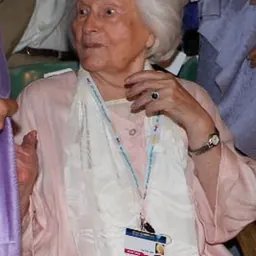
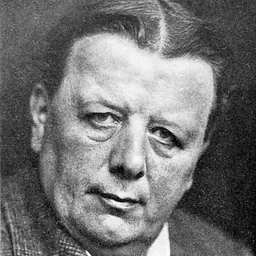
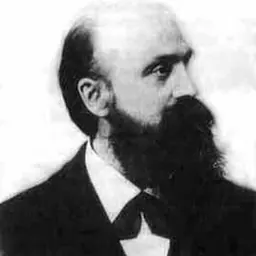
Contemporaries
People whose lives overlapped Deborah Vernon Hackett's


Frequently asked questions
Who was Deborah Vernon Hackett?
Australian philanthropist
When was Deborah Vernon Hackett born?
Deborah Vernon Hackett was born on 18 June 1887 in Bassendean.
When did Deborah Vernon Hackett die?
Deborah Vernon Hackett died on 16 April 1965.
What was Deborah Vernon Hackett's occupation?
Deborah Vernon Hackett was a philanthropist.
What nationality was Deborah Vernon Hackett?
Deborah Vernon Hackett was Australian.
Sources & further reading
· Wikipedia: Deborah Vernon Hackett
· DBpedia: Deborah Vernon Hackett
Cite this page
APA: Biography.guide. (2026). Deborah Vernon Hackett. https://biography.guide/deborah-vernon-hackett/
MLA: "Deborah Vernon Hackett." Biography.guide, https://biography.guide/deborah-vernon-hackett/.
Chicago: "Deborah Vernon Hackett." Biography.guide. https://biography.guide/deborah-vernon-hackett/.
Data last updated: 2026-09-24 · Spot an error? Report a correction.
Page generated 2026-09-27 04:59 UTC