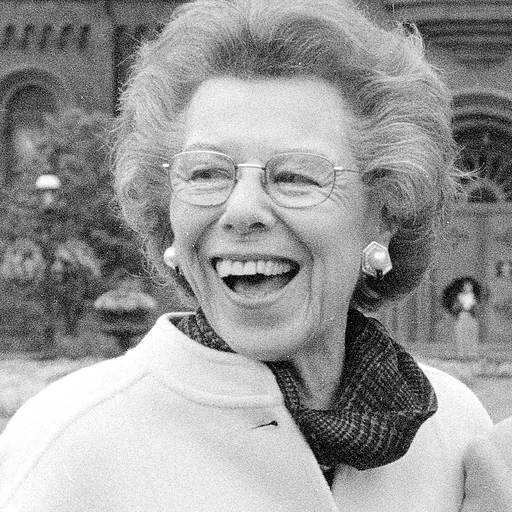
About Enid A. Haupt
Lived 1906 – 2005 (aged 99). Enid A. Haupt was an American philanthropist, journalist, art collector, patron of the arts, businessperson and editor.
Enid Haupt ( Annenberg, formerly Bensinger; May 13, 1906 – October 25, 2005) was an American publisher and philanthropist whose gifts supported horticulture, the arts, architectural and historic preservation, and cancer research. She has been described as "the greatest patron American horticulture has ever known" by Gregory Long, the president of the New York Botanical Garden.
Career In 1953, she was charged with publishing the magazine Seventeen, a post she held until 1970. She also wrote "Young Living", a syndicated fashion, beauty and lifestyle column. and also a four-acre Victorian garden, known as the Enid A. Haupt Garden, on the south side of the Smithsonian Institution Building ("The Castle"). The Garden's architect, Jean Paul Carlihan, intended the Garden to interpret nearby museums. The Garden is situated atop the underground portions of the Quadrangle building, which includes the National Museum of African Art, the Arthur M. Sackler Gallery (Asian art), and the S. Dillon Ripley Center. Accordingly, the end of the Garden nearest the African Art museum contains a modern interpretation of an Islamic garden, and the end nearest the Sackler Gallery is accented with pink granite moongates.
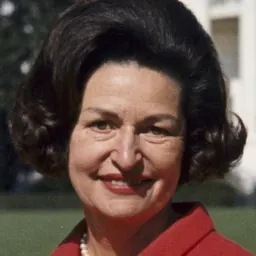
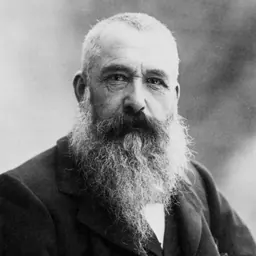
She donated the funds for the American Horticultural Society to purchase River Farm, a 27-acre plantation, located near Mount Vernon and once owned by George Washington. A Victorian style conservatory located in the New York Botanical Garden was saved from demolition through her efforts and funding. She spent large sums over the years to maintain the gardens of The Cloisters, part of the Metropolitan Museum of Art. She contributed to the garden of Claude Monet in Giverny, France, and to Lady Bird Johnson's National Wildflower Research Center.
Among her other contributions are works of art for the Metropolitan Museum of Art and the National Gallery of Art, and funding for the Memorial Sloan-Kettering Cancer Center. According to The New York Times, "The gift that gave her the most satisfaction, she said, was one of her earliest and least heralded: the Enid A. Haupt Glass Garden, a playground for children who are patients at the Rusk Institute of Rehabilitation Medicine at New York University Medical Center."
Death Enid Haupt died at age 99 at her home in Greenwich, Connecticut.
Don’t just read it —
keep it.
Full-length biographies made to live with: read them, listen on the way to work, watch them tonight.
- E-book
- Audio
- Video
Instant download · yours to keep · every purchase keeps this site free
Important facts
People in Enid A. Haupt's life
Named in this biography and alive at the same time



Related people
Same field, nearest in time


Contemporaries
People whose lives overlapped Enid A. Haupt's
Frequently asked questions
Who was Enid A. Haupt?
American philanthropist (1906–2005)
When was Enid A. Haupt born?
Enid A. Haupt was born on 13 May 1906 in Chicago.
When did Enid A. Haupt die?
Enid A. Haupt died on 25 October 2005 in Greenwich.
What was Enid A. Haupt's occupation?
Enid A. Haupt was a philanthropist, journalist, art collector, patron of the arts, businessperson and editor.
What nationality was Enid A. Haupt?
Enid A. Haupt was American.
Sources & further reading
Cite this page
APA: Biography.guide. (2026). Enid A. Haupt. https://biography.guide/enid-a-haupt/
MLA: "Enid A. Haupt." Biography.guide, https://biography.guide/enid-a-haupt/.
Chicago: "Enid A. Haupt." Biography.guide. https://biography.guide/enid-a-haupt/.
Data last updated: 2026-09-21 · Spot an error? Report a correction.
Portrait: Wikimedia Commons · author & licence
Page generated 2026-09-27 05:00 UTC