
About Debendra Mohan Bose
Lived 1885 – 1975 (aged 89). Debendra Mohan Bose was an Indian physicist, nuclear physicist and university teacher.
Debendra Mohan Bose (26 November 1885 – 2 June 1975) was an Indian physicist who made contributions in the field of cosmic rays, artificial radioactivity and neutron physics. He was the first to discover mesons with Bibha Chowdhuri and was the longest serving Director (1938–1967) of Bose Institute. Bose was the nephew of the famous physicist Jagadish Chandra Bose, who laid the foundations of modern science in India.
Early life
Debendra Mohan Bose was born in Calcutta (present day Kolkata) in a famous Brahmo family. He was the youngest son of Mohini Mohan Bose, one of the first Indians to proceed to USA to qualify himself in field of homeopathy. Ananda Mohan Bose was his paternal uncle, while Jagadish Chandra Bose was his maternal uncle. After his father's untimely death, Debendra's education was supervised by his uncle J. C. Bose.
Debendra's plan of getting a degree in engineering from the Bengal Engineering College, Shibpur was cut short when he suffered a severe malaria attack. Nobel laureate Rabindranath Tagore, a close friend of J. C. Bose, suggested him to pursue physics instead. In 1906, Debendra Bose obtained his Master of Arts degree from the University of Calcutta in first class. He stood first in the order of the merit in the examination. He also obtained his Bachelor of Arts degree from Calcutta University. He worked as a research scholar under Jagadish Chandra Bose for one year, during which he participated in his uncle's biophysical and plant physiological investigations. to study cosmic rays using photographic plates. Since the particle accelerators were not available at this time, high-energy subatomic particles were only obtainable from atmospheric cosmic rays. Walther Bothe gave the duo the idea of considering photographic emulsion as a continuously active cloud chamber to register and store tracks.
Due to the World War II restrictions, full tone photographic plates were not available in India at that time. During 1939–1942, Bose and Choudhuri exposed Ilford half-tone photographic plates in the high altitude mountainous regions of Darjeeling, and observed long curved ionizing tracks that appeared to be different from the tracks of alpha particles or protons. In a series of articles published in Nature, they identified a cosmic particle having an average mass close to 200 times the mass of electron. Powell acknowledge the method developed by Bose and Choudhuri as the first attempt in this field in his 1959 book The Study of Elementary Particles by the Photographic Method.
Later life
As director of the Bose Institute, D. M. Bose expanded the activities of the existing departments and also opened the new department of microbiology. He was a dedicated worker of the Sadharan Brahmo Samaj and was served several years as its office bearer (President, Secretary & Treasurer). He was the General President of the Indian Science Congress Session in 1953 at Lucknow. Bose served as the director of the Bose Institute till 1967, when his arthritis and other health problems forced him to take retirement. In the later years of his life, he became more interested in philosophy focusing on the relationship between religion and science.
Don’t just read it —
keep it.
Full-length biographies made to live with: read them, listen on the way to work, watch them tonight.
- E-book
- Audio
- Video
Instant download · yours to keep · every purchase keeps this site free
Important facts
People in Debendra Mohan Bose's life
Named in this biography and alive at the same time

Related people
Same field, nearest in time

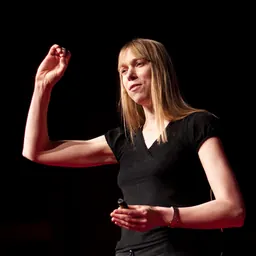
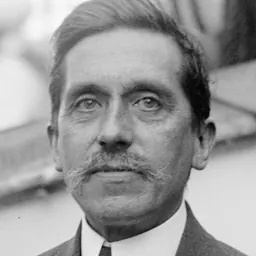
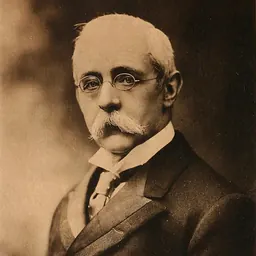
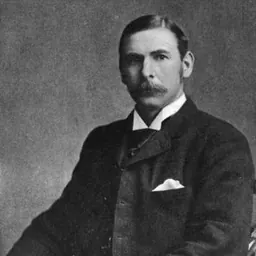
Contemporaries
People whose lives overlapped Debendra Mohan Bose's


Frequently asked questions
Who was Debendra Mohan Bose?
Indian physicist
When was Debendra Mohan Bose born?
Debendra Mohan Bose was born on 26 November 1885 in Kolkata.
When did Debendra Mohan Bose die?
Debendra Mohan Bose died on 2 June 1975 in Calcutta, India.
What was Debendra Mohan Bose's occupation?
Debendra Mohan Bose was a physicist, nuclear physicist and university teacher.
What nationality was Debendra Mohan Bose?
Debendra Mohan Bose was Indian.
Sources & further reading
· Wikipedia: Debendra Mohan Bose
· DBpedia: Debendra Mohan Bose
Cite this page
APA: Biography.guide. (2026). Debendra Mohan Bose. https://biography.guide/debendra-mohan-bose/
MLA: "Debendra Mohan Bose." Biography.guide, https://biography.guide/debendra-mohan-bose/.
Chicago: "Debendra Mohan Bose." Biography.guide. https://biography.guide/debendra-mohan-bose/.
Data last updated: 2026-09-25 · Spot an error? Report a correction.
Page generated 2026-09-27 05:11 UTC