
About David Stavens
Born 1982. David Stavens is an American computer scientist.
Early life and education Stavens grew up in Sioux City, Iowa and attended Princeton University, graduating with a B.S.E. in Computer Science, Magna Cum Laude, at age 19. He is an alumnus of Stanford University's Computer Science department for both M.S. and Ph.D. programs. His Ph.D. was advised by Sebastian Thrun.
Autonomous cars Stavens was a co-creator on Stanford's autonomous car team. The team built Stanley, the winner of the second driverless car competition of the DARPA Grand Challenge in 2005. Stanley has been on display in the Smithsonian Institution's National Museum of American History and National Air and Space Museum. Academic publications from the team (by Stavens along with Hendrik Dahlkamp, Adrian Kaehler, Sebastian Thrun, Gary Bradski) state that they applied self-supervised learning, to detect drivable surfaces in the desert for self-driving cars which led the vehicle to win the race. Stavens's publications state that they apply the concept of self-supervised learning to autonomous driving with the benefit of avoiding human intervention. His dissertation states that this self-supervised learning approach has the potential to improve human driving performance. The Stanford Artificial Intelligence Lab awarded Stavens a gold medal "For his groundbreaking contributions to the winning DARPA Grand Challenge vehicle...."
The Stanford autonomous driving team ultimately joined Google as the foundation of Google's self-driving car team (Waymo).
Stavens also made contributions to the 2009 NASA Mars Rover Mission.
Indoor WiFi maps Stavens worked on research at Stanford on indoor localization using WiFi signal strength measurements. The goal was to create a system capable of delivering GPS-quality localization indoors, where GPS satellites do not function. He and Jesse Levinson were winners of the Qualcomm Innovation Fellowship in 2009 which provided $100,000 in funding for the research.
He published the research along with Joseph Huang, David Milman, Morgan Quigley, Sebastian Thrun, and Alok Aggarwal, stating that it produced excellent results in practice. Joseph Huang went on to found an indoor localization start-up, WifiSLAM, that was acquired by Apple.
Online education Stavens co-founded and was CEO of Udacity. Udacity helped popularize the concept of the offering college courses for free as Massive open online course's (MOOC), intended to make high-quality education accessible and nearly free around the entire world via Internet.
As CEO, he grew the company to 160,000 students and 20 employees. Udacity was valued at $1 billion in 2015. As of 2018, Udacity had over 50,000 paid students and $70 million in revenue.
Don’t just read it —
keep it.
Full-length biographies made to live with: read them, listen on the way to work, watch them tonight.
- E-book
- Audio
- Video
Instant download · yours to keep · every purchase keeps this site free
Important facts
People in David Stavens's life
Named in this biography and alive at the same time
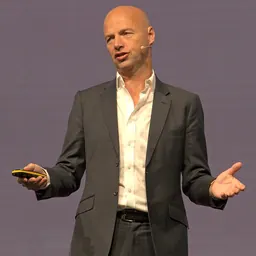
Related people
Same field, nearest in time
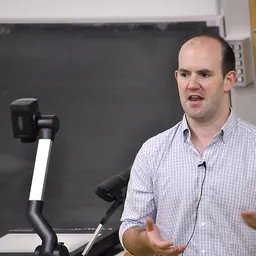
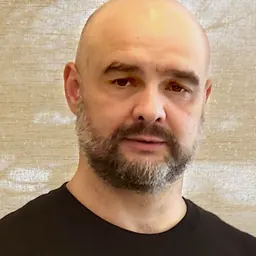


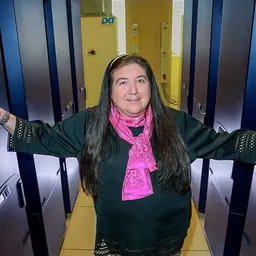

Contemporaries
People whose lives overlapped David Stavens's




Frequently asked questions
Who is David Stavens?
American computer scientist
When was David Stavens born?
David Stavens was born in 1982.
What is David Stavens's occupation?
David Stavens is a computer scientist.
What nationality is David Stavens?
David Stavens is American.
Sources & further reading
Cite this page
APA: Biography.guide. (2026). David Stavens. https://biography.guide/david-stavens/
MLA: "David Stavens." Biography.guide, https://biography.guide/david-stavens/.
Chicago: "David Stavens." Biography.guide. https://biography.guide/david-stavens/.
Data last updated: 2026-09-20 · Spot an error? Report a correction.
Page generated 2026-09-27 05:24 UTC