
David Pitt, Baron Pitt of Hampstead
Grenadian-British politician, political activist, physician
About David Pitt, Baron Pitt of Hampstead
Lived 1913 – 1994 (aged 81). David Pitt, Baron Pitt of Hampstead was a British politician, physician and david Pitt.
David Thomas Pitt, Baron Pitt of Hampstead (3 October 1913 – 18 December 1994) was a British Labour Party politician, general practitioner and political activist. Born in Grenada in the Caribbean, he was the second peer of African descent to sit in the House of Lords, being granted a life peerage in 1975, and was the longest-serving black Parliamentarian.
Early life and career Born in St. David's Parish, Grenada, He studied medicine at the University of Edinburgh, where he was an active member of Edinburgh University Socialist Society. He graduated with honours in 1938. In 1936, he joined the Labour movement.
He returned to the Caribbean to begin his medical career, his first job being as district medical officer in Saint Vincent, followed two years later by a position in Trinidad as house physician at San Fernando Hospital.
After decades of campaigning, the people of Trinidad and Tobago were granted universal adult suffrage by the British Parliament in 1945. The first elections took place in 1946. WINP and others formed the United Front with Pitt as one of the candidates. He was not successful, but he continued his activism and in 1947 led a group of WINP members to Britain to lobby the Attlee government for Commonwealth status for a Federation of the West Indies. From the mid-1950s, Pitt had become involved in local politics. After delivering a speech at the 1957 Labour Party Conference, he was asked by Roy Shaw, the then treasurer of Tribune, if he would stand for Parliament. He subsequently founded the Campaign Against Racial Discrimination.
Two years later, in 1961, he was elected to the London County Council (LCC) as member for Stoke Newington and Hackney North. He was elected to the successor of the LCC, the Greater London Council (GLC), representing Hackney until 1973 and then Hackney North and Stoke Newington until 1977. He was the first minority candidate to be elected to this position in local government. He was deputy chair of the GLC from 1969 to 1970, and in 1974 he was the first black person to become chair of the GLC.
Pitt's second attempt to be elected as an MP came in 1970, when he was the Labour Party candidate for Clapham. Although this had been seen as a safe seat for Labour, the Conservative William Shelton was elected. Racism was a factor in this election defeat as well, with an anonymous leaflet circulated during the campaign featuring the slogan: "If you desire a coloured for your neighbour vote Labour. If you are already burdoned [sic] with one vote Tory."
In 1975, the Prime Minister, Harold Wilson, recommended Pitt's appointment to the House of Lords as a life peer, and he was created Baron Pitt of Hampstead, of Hampstead in Greater London and of Hampstead in Grenada on 3 February 1975, becoming thus the second peer of African-Caribbean heritage (after Lord Constantine). As a member of the House of Lords, he played a leading role in campaigning for the Race Relations Act 1976. He was outspoken on issues such as immigration policy, and in a debate on 24 June 1976 he noted, in part: "...it is a myth, that the fewer the numbers [of black immigrants] the better the quality of race relations. That is a myth, and it is a myth that has inspired the 1962 Commonwealth Immigrants Act, the Immigration White Paper of August 1965 and the Immigration Acts of 1968 and 1971. It is designed to placate the racialists, but it is a fallacy; for to the racialist or the anti-semite the only acceptable number is nought. The proof of what I am saying can be seen in the fact that the National Front admit that their major support lies in areas near to but not in areas of high coloured concentration. The reason for that is that ignorance leads to fear. Thus, when a person fears that his next door neighbour will in future be coloured he wants immigration stopped. However, you will find that the least hostility to coloured people is found among the whites who live next to, shop with, travel with, work with and play with coloured persons."
Pitt was a leader in the movement against apartheid in South Africa, with protest meetings being organised from the basement of his surgery in North Gower Street, London.
He was described as a black radical for suggesting that more ethnic minorities should apply to become police officers; this, ironically, angered many in the black community who felt that the police were institutionally racist. Pitt is quoted as saying: "Some black people regard me as an Uncle Tom, while some whites regard me as a Black Power revolutionary. So I imagine I got it about right."
In 1983, to mark his 70th birthday, The Lord Pitt Foundation was established.
Personal life In 1943, Pitt married Dorothy Elaine Alleyne, whom he met in Trinidad, and they had three children: a son, Bruce, and two daughters, Phyllis and Amanda.
A plaque at 200 North Gower Street in Camden, London, commemorates the building where Pitt worked as a doctor from 1950 to 1984.
Don’t just read it —
keep it.
Full-length biographies made to live with: read them, listen on the way to work, watch them tonight.
- E-book
- Audio
- Video
Instant download · yours to keep · every purchase keeps this site free
Important facts
People in David Pitt, Baron Pitt of Hampstead's life
Named in this biography and alive at the same time
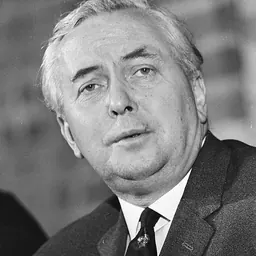
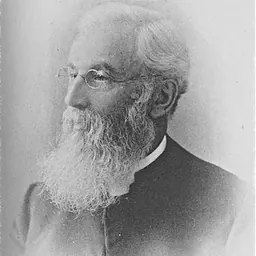






Related people
Same field, nearest in time






Contemporaries
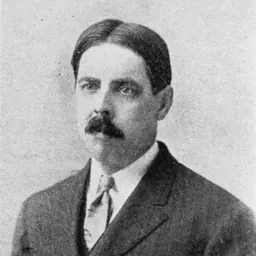
People whose lives overlapped David Pitt, Baron Pitt of Hampstead's


Frequently asked questions
Who was David Pitt, Baron Pitt of Hampstead?
Grenadian-British politician, political activist, physician (1913-1994)
When was David Pitt, Baron Pitt of Hampstead born?
David Pitt, Baron Pitt of Hampstead was born on 3 October 1913 in Saint David Parish.
When did David Pitt, Baron Pitt of Hampstead die?
David Pitt, Baron Pitt of Hampstead died on 18 December 1994.
What was David Pitt, Baron Pitt of Hampstead's occupation?
David Pitt, Baron Pitt of Hampstead was a politician, physician and david Pitt.
What nationality was David Pitt, Baron Pitt of Hampstead?
David Pitt, Baron Pitt of Hampstead was British.
Sources & further reading
· Wikipedia: David Pitt, Baron Pitt of Hampstead
· DBpedia: David Pitt, Baron Pitt of Hampstead
Cite this page
APA: Biography.guide. (2026). David Pitt, Baron Pitt of Hampstead. https://biography.guide/david-pitt-baron-pitt-of-hampstead/
MLA: "David Pitt, Baron Pitt of Hampstead." Biography.guide, https://biography.guide/david-pitt-baron-pitt-of-hampstead/.
Chicago: "David Pitt, Baron Pitt of Hampstead." Biography.guide. https://biography.guide/david-pitt-baron-pitt-of-hampstead/.
Data last updated: 2026-09-22 · Spot an error? Report a correction.
Page generated 2026-09-27 05:09 UTC