
About David Lewis
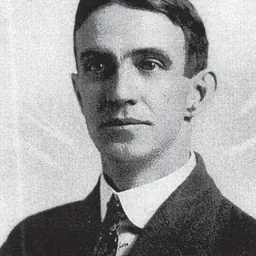
Lived 1917 – 2002 (aged 84–85). David Lewis was a New Zealand and British explorer and sailor.
David Henry Lewis (1917 – 23 October 2002) was a sailor, adventurer, doctor, and scholar of Polynesian culture. He is best known for his studies on the traditional systems of navigation used by the Pacific Islanders. His studies, published in the book We, the Navigators, made these navigational methods known to a wide audience and helped to inspire a revival of traditional voyaging methods in the South Pacific.
Early life Lewis was born in Plymouth, England, and raised in New Zealand and Rarotonga. He was sent to the Polynesian school in Rarotonga, where he apparently developed his appreciation for Polynesian identity and culture.
After an adventurous childhood and teenage years including mountaineering and skiing in New Zealand, and a multi-hundred mile kayak journey, he traveled to England in 1938 for medical training at the University of Leeds, and served in the British army as a medical officer. After the war, he worked as a doctor in London, and was involved in setting up the National Health Service.
Research and literary career
See also: Polyesian navigation Micronesian navigation
In 1967, Lewis acquired another boat, Isbjorn, to embark on further field studies of traditional navigation techniques of Pacific islanders. With a research grant from the Australian National University and with his second wife, two daughters and 19-year-old son, he set out for the Pacific again to study traditional navigation techniques.
David Lewis also sought out navigators of the Caroline Islands, Santa Cruz Islands and Tonga to confirm that traditional techniques had been retained by navigators from Polynesia, Micronesia and Melanesia. The voyages of Lewis on his ketch Isbjorn included: Tevake navigating between the Santa Cruz Islands; and Hipour of Puluwat navigating in the Caroline Islands; and also conversations with Fe’iloakitau Kaho, Ve’ehala and Kaloni Kienga from Tonga; Temi Rewi of Beru and Iotiabata Ata of Tarawa in the Gilbert Islands; and Yaleilei of Satawal in the Caroline Islands.
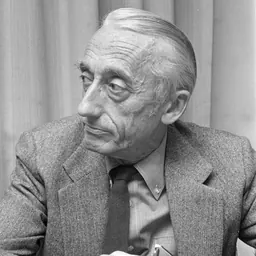
Lewis's next adventure in 1972 was an attempt at circumnavigating Antarctica single-handed. For this he acquired a small steel yacht, named Ice Bird. Facing treacherous conditions in the Southern Ocean after departing, Lewis was not heard from for 13 weeks but eventually managed to sail the Ice Bird to the Antarctic Peninsula under a jury rig after dismasting. Lewis was rescued by personnel from the Antarctic research outpost Palmer Station, who subsequently repaired the Ice Bird while Lewis spent the Antarctic winter in Australia. He also met Calypso during Jacques Cousteau's Antarctica expedition and was greeted by Cousteau and crew onboard who helped him as much as he could and also contacted Lewis' family in Australia.
After returning eight months later, Lewis left Palmer station to complete the voyage, but that very same day was caught in a heavy ice field and had to be towed to open water by the R.V. Hero. Later, Lewis capsized again and eventually brought the boat to Cape Town, South Africa. Edited aspects of these events are described in his bestselling book, Ice Bird.
His son, Barry, sailed the yacht back to Sydney from South Africa where it underwent extensive work to prevent further corrosion. In 1982, Dr. Lewis donated Ice Bird to the Powerhouse Museum in Sydney, Australia.
After the Ice Bird voyage, Lewis was involved in setting up the Oceanic Research Foundation with the aim of sending private expeditions to the Antarctic. In a 17.4-metre (57 ft) Alan Payne-designed steel yacht named "Solo" with seven other crew, Lewis made a summer expedition to Antarctica and wintered over there, 1977–78. Lewis spent some of his later years conducting research into traditional navigation techniques of the Inuit on the Bering Strait region. One obituary said of Lewis that he "always brought his crews home intact. He was a typical Polynesian sailor, getting into trouble through haste and neglect, then, with near superhuman courage and seamanship, fighting his way out of it".
Following this, he retired to New Zealand to write his autobiography, Shapes on the Wind; one of 12 books he wrote. In the 2001 Queen's Birthday Honours, Lewis was appointed a Distinguished Companion of the New Zealand Order of Merit, for services to yachting and exploration. He finally retired to Australia, and died at Gympie, Queensland.
Don’t just read it —
keep it.
Full-length biographies made to live with: read them, listen on the way to work, watch them tonight.
- E-book
- Audio
- Video
Instant download · yours to keep · every purchase keeps this site free
Important facts
People in David Lewis's life
Named in this biography and alive at the same time

Related people
Same field, nearest in time




Contemporaries
People whose lives overlapped David Lewis's

Frequently asked questions
Who was David Lewis?
British-New Zealand sailor and adventurer
When was David Lewis born?
David Lewis was born in 1917 in Plymouth.
When did David Lewis die?
David Lewis died on 23 October 2002 in Tin Can Bay.
What was David Lewis's occupation?
David Lewis was an explorer and sailor.
What nationality was David Lewis?
David Lewis was New Zealand and British.
Sources & further reading
· DBpedia: David Lewis (adventurer)
Cite this page
APA: Biography.guide. (2026). David Lewis. https://biography.guide/david-lewis-explorer/
MLA: "David Lewis." Biography.guide, https://biography.guide/david-lewis-explorer/.
Chicago: "David Lewis." Biography.guide. https://biography.guide/david-lewis-explorer/.
Data last updated: 2026-09-22 · Spot an error? Report a correction.
Page generated 2026-09-27 05:20 UTC