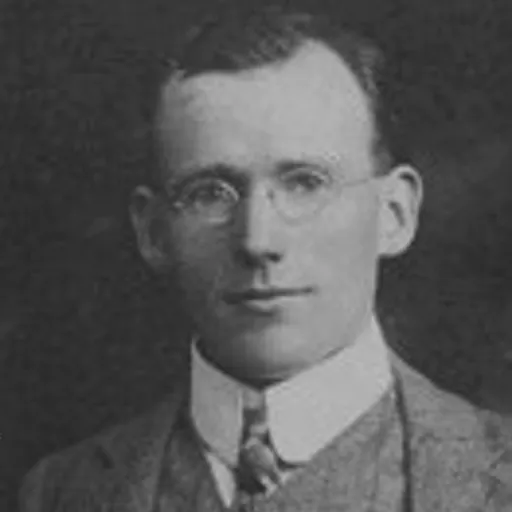
David Ivon Jones
Welsh communist famous for anti-apartheid activism in South Africa
About David Ivon Jones
Lived 1882 – 1924 (aged 41–42). David Ivon Jones was a trade unionist, known for Apartheid and Communist Party of South Africa.
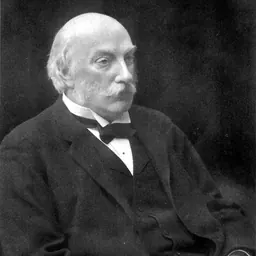
David Ivon Jones (18 October 1883 – 13 April 1924) was a South Africa-based Welsh communist, newspaper editor, and political prisoner — most famous as a leading opponent of South African racial segregation, and for being one of the first white activists in South Africa to fight for equal rights for black South Africans. Jones was also one of the founders of the Communist Party of South Africa, and in 1917 played a leading role in the formation of South Africa's first all-black trade union: the Industrial Workers of Africa (IWA). Later in life he became one of the first people to translate Vladimir Lenin's works into English. He also started some of the first night-classes for African workers, and in 1919 was convicted and imprisoned for publishing a leaflet supporting both communism and racial equality, in what was the first major court case against communism in South Africa's history. He is credited as being the most influential South African socialist of his time.
Upon first arriving in South Africa in 1910, Jones was a Christian liberal and became a supporter of the pro-segregationist party, the South African Labour Party (SALP), becoming their general secretary in 1914. However, shortly afterwards he resigned as the leader of the SALP in 1915, became a communist and an atheist, and spent the remainder of his life fighting against racial segregation, capitalism, and colonialism. In later life, he became a strong supporter of the Bolsheviks and their leader Vladimir Lenin, who in turn was impressed with Jones's reports of class and racial divisions in South Africa.
Jones was also a supporter of the Communist Party of Great Britain (CPGB) and is considered an iconic figure and hero by many socialist and anti-apartheid political parties, including the South African Communist Party, the Communist Party of Britain, and the African National Congress.
Early life, family and background
Childhood and family David Ivon Jones was born on 18 October 1883, in Aberystwyth, Wales. His parents died when he was very young, leaving him to be raised by various family members. In both Aberystwyth and Lampeter, Jones worked as a grocer in the family business.
Early religious beliefs In his youth, Jones became strongly influenced by the beliefs of the former Unitarian minister George Eyre Evans, who inspired Jones to abandon his family's Calvinistic Methodist beliefs and adopt Unitarianism. Jones was often berated by his neighbours for his Unitarianist beliefs and confronted by religious opponents at his workplace and on the streets for his choice to join the people of the "Y Smotyn Du" (The Black Spot). viewing their oppressed position in racist South African society as "slaves in everything but name". Despite his sympathetic views for black Africans and the ANC, Jones was at this stage of his life a Liberal Christian activist, and in 1911 he joined a pro-segregationist political party called the "South African Labour Party" (SALP). Although not yet an anti-capitalist and supporter of communism, he held a deep hatred towards South Africa's Randlords, the capitalists who monopolised the gold and diamond industries.
The Witwatersrand uprising (1913)
During his time in the SALP, many events in South African politics would force him to reconsider his Liberal and Christian beliefs, and pushed him to become a revolutionary communist and an atheist. From May to June 1913, white miners near Witwatersrand rioted in protest over their working conditions before the riots were suppressed by the police and military. The government's murder of unarmed and innocent civilians would plunge Johannesburg into further chaos, crowds rioted and burnt down the railway station and the Star newspaper. Rioters also looted the city centre, and anti-Indian violence began spreading across South Africa.
Turn towards communism and atheism (1914–1915)
In August 1914, Jones was elected the general secretary of SALP, during a time when its membership and popular support was rapidly expanding. He began collecting left-wing political and philosophical publications from Britain, including works by Karl Marx, Friedrich Engels, Karl Kautsky, H. G. Wells, Leo Tolstoy, Ramsay MacDonald, and began studying a vast range of political philosophies, including Marxism. He wrote agitation leaflets for the IWA, addressed to the Bantu, calling for racial equality and proletarian solidarity, however when he could not find a translator the work of translating the leaflets fell upon undercover police spies who had been sent to infiltrate the IWA. The IWA took part in many strikes and industrial disputes in 1918; however, the organisation was crushed via a combination of government repression and police infiltration.
Becoming increasingly aware of the potential of black South Africans in the labour movement, Jones prompted the International Socialist League (ISL) to start publishing socialist works in native African languages, demanding equal status for Black Africans in South African workplaces, and challenging colonial racism. Titled The Bolsheviks are Coming, this leaflet was written and distributed in Pietermaritzburg, and was addressed "to the workers of South Africa, Black as well as White". In March 1921, while still living in Nice, he wrote a report for the executive committee of the Communist International (ECCI) titled Communism in South Africa. This report was a highly detailed and erudite survey of the complex political, social and economic conditions of South Africa, with a heavy emphasis on analysing the country's racial and class divisions. It is believed by researchers of communist history that Jones's survey had a major impact on Vladimir Lenin.
Life in Russia After briefly visiting his home country of Wales, Jones was invited to the 1921 Third Congress of the Communist International held in Moscow, The years of political turmoil had taken a toll on Jones's health, and so the Comintern dispatched him to Yalta to recover from another tuberculosis attack. Writing to South African communist leader WH Bill Andrews, Jones said: "We stand for Bolshevism, and in all minds Bolshevism stands for the Native worker."
In a final political testament written on his deathbed, Jones urged his fellow communists to continue supporting revolution against imperialism and capitalism, and to "carry out the great revolutionary mission imposed on colonies in general and South Africa in particular with revolutionary devotion and dignity, concentrating on shaking the foundations of world capitalism and British imperialism".
Soon afterwards, Jones died on 13 April 1924 from tuberculosis.
Shortly after Nelson Mandela's death in 2013, a remembrance service was held for David Ivon Jones, praising him for his fight against apartheid and recognising that Mandela's struggle against apartheid was a continuation of Jones's struggle for racial equality in South Africa.
In 2015, Jones was voted 30th of the "50 most influential Welsh politicians of all time" in a poll by readers of Wales Online.
His legacy is highly regarded by both the African National Congress, and the Communist Party of South Africa.
A biography of Jones was written by Professor Gwyn Alf Williams and Baruch Hirson, and published in 1995. Archival papers relevant to the study of David Ivon Jones can be found at Swansea University.
Works
The Bolsheviks are Coming! (1919) Bolshevism and Church Property (1922) Africa Awakening (1923) Lenin's First Book (1924)
Don’t just read it —
keep it.
Full-length biographies made to live with: read them, listen on the way to work, watch them tonight.
- E-book
- Audio
- Video
Instant download · yours to keep · every purchase keeps this site free
Important facts
People in David Ivon Jones's life
Named in this biography and alive at the same time
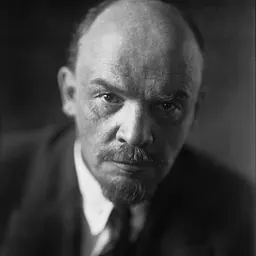
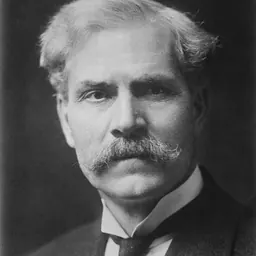
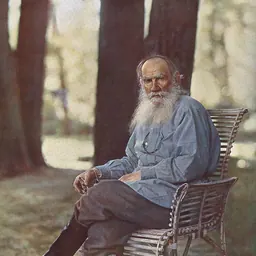



Related people
Same field, nearest in time



Contemporaries
People whose lives overlapped David Ivon Jones's





Frequently asked questions
Who was David Ivon Jones?
Welsh communist famous for anti-apartheid activism in South Africa
When was David Ivon Jones born?
David Ivon Jones was born in 1882 in Aberystwyth.
When did David Ivon Jones die?
David Ivon Jones died on 13 April 1924 in Yalta.
What was David Ivon Jones's occupation?
David Ivon Jones was a trade unionist.
What was David Ivon Jones known for?
David Ivon Jones was known for Apartheid and Communist Party of South Africa.
Sources & further reading
Cite this page
APA: Biography.guide. (2026). David Ivon Jones. https://biography.guide/david-ivon-jones/
MLA: "David Ivon Jones." Biography.guide, https://biography.guide/david-ivon-jones/.
Chicago: "David Ivon Jones." Biography.guide. https://biography.guide/david-ivon-jones/.
Data last updated: 2026-09-22 · Spot an error? Report a correction.
Portrait: Wikimedia Commons · author & licence
Page generated 2026-09-27 05:03 UTC