
David Humphreys
American Revolutionary War soldier and politician
About David Humphreys
Lived 1752 – 1818 (aged 65). David Humphreys was an American diplomat, writer and businessperson.
David Humphreys (July 10, 1752 – February 21, 1818) was an American Revolutionary War lieutenant colonel and aide-de-camp to George Washington, a secretary and intelligence agent for Benjamin Franklin in Paris, American minister to Portugal and then to Spain, entrepreneur who brought Merino sheep to America, and member of the Connecticut state legislature. He was also a prolific poet and author and a member of the Hartford Wits. As secretary and speechwriter to George Washington during his administration, Humphreys was the nation's first U.S. presidential speechwriter.
Early life and education
Humphreys was born in what was then Derby, Connecticut but is present-day Ansonia, Connecticut in a spacious two-story house at 37 Elm Street. The house of his birth, now called the David Humphreys House, is a historic museum in recognition of his birth there. Humphreys was the youngest of five children, including four sons and a daughter. His parents were Daniel and Sarah Riggs Bowers Humphreys. Humphreys' father Daniel served as parson of the town's Congregational church for 54 years from 1733, the year after he graduated from Yale, until 1787. Daniel Humphreys was the second husband of Sarah Riggs Bowers, known in Connecticut as "Lady Humphreys" in tribute to her "dignity and refinement of character," according to biographer Leo T. Molloy. In July 1776, Humphreys enlisted in the Continental Army as a volunteer adjutant in the 2nd Connecticut Regiment and was stationed in New York state. The regiment consisted of several companies of men from Humphreys' hometown of Derby, Connecticut. On June 23, 1780, Humphreys was appointed aide-de-camp at Washington's headquarters staff, and he became a confidential friend and adviser to the general.
Public service Humphreys was appointed to a commission to negotiate treaties of commerce with European nations. Other members of the commission included John Adams, Thomas Jefferson, and Benjamin Franklin. Humphreys became Franklin's secretary in 1784 in Paris, where he also served as a U.S. intelligence agent, and continued as a secretary to the legation under Thomas Jefferson.
In a letter of introduction to Franklin, Washington described Humphreys, writing: "This gentleman was several years in my family as aide-de-camp -- his zeal in the cause of his country -- his good sense, prudence and attachment to me, rendered him dear to me; and I persuade myself you will find no confidence which you may think proper to repose in him, misplaced. He possesses an excellent heart, good natural and acquired abilities and -- sterling integrity -- to which may be added sobriety and an obliging disposition." Humphreys served as Washington's speechwriter and helped add flourish to his speeches and correspondences before and during his presidency.
In 1791, Humphreys had the distinction of being the first minister appointed to a foreign country under the Constitution when he was appointed minister to Portugal. In that post, Humphreys negotiated the ransomed release of American prisoners from the Dey of Tripoli, Libya.
In 1797, he was appointed as minister to Spain, which then controlled the Mississippi River and all of Latin America except Brazil. William Loughton Smith succeeded him as U.S. minister in Lisbon. He remained minister to Spain until 1801, and during his stay there met and married Anne Frances Bulkeley, a cultured and wealthy English woman, whose father, John Bulkeley, was a banker, merchant, and trader.
He served again as a member of the Connecticut House of Representatives from 1812 to 1814, and was elected a Fellow of the Royal Society of London in June 1807. In 1813, Humphreys was also elected a member of the American Antiquarian Society.
Entrepreneur The couple moved to Boston, where they bought a home on Chestnut Street on Beacon Hill and "entertained lavishly." But Humphreys bought a farm in Derby, Connecticut, and the couple also managed to spend considerable time there. He also bought a factory and house, now known as the Sanford-Humphreys House in what is present-day Seymour, Connecticut that produced scythes and other iron tools. For a time, the community was called "Humphreysville."
Having seen poor conditions in mills in England, he was determined to avoid a similar situation in his plant in Seymour. He took many of his employees to New York City for training, educating, and clothing. Humphreys established evening and Sunday schools for his employees and organized them into a uniformed military company, which he drilled personally. and his most popular work, Happiness of America, written in 1785, was published in ten editions between 1786 and 1804.
Humphreys enjoyed writing and had a voluminous correspondence with Washington, now housed in the Library of Congress in Washington, D.C. He also wrote for the public and was the author of a "Life of General Israel Putnam," whose staff he served on.
In 1786, Humphreys wrote an account of the confinement and proposed execution of British Captain Charles Asgill for the New-Haven Gazette. The article, now included in Washington's official papers on the affair, was published posthumously in 1859 as a book, The conduct of General Washington : respecting the confinement of Capt. Asgill, placed in its true point of light.
Humphreys' play The Yankey in England (c. 1814) was influential in forging the stage character of the Yankee, often singing "Yankee Doodle", that came to dominate American and English comedies in the period up to 1850, and comes with a seven-page glossary of the peculiar idiom and pronunciation of Americanisms, which is an important source for American historical dialectology.
Death and legacy Humphreys died in his room at Butler's Tavern in New Haven, Connecticut, where he stayed when he was attending to affairs in Derby, and was interred at Grove Street Cemetery in New Haven.
Humphreys appears in John Trumbull's 1824 painting General George Washington Resigning His Commission, which was featured on the reverse of the United States five-thousand-dollar bill.
Don’t just read it —
keep it.
Full-length biographies made to live with: read them, listen on the way to work, watch them tonight.
- E-book
- Audio
- Video
Instant download · yours to keep · every purchase keeps this site free
Important facts
People in David Humphreys's life
Named in this biography and alive at the same time
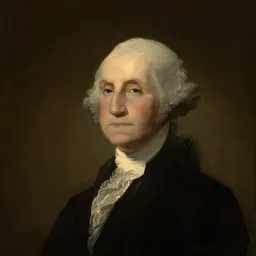
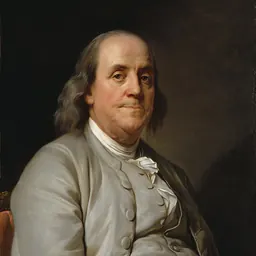
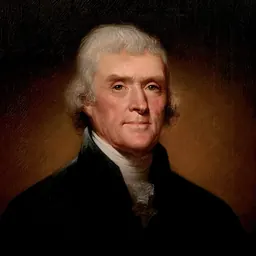
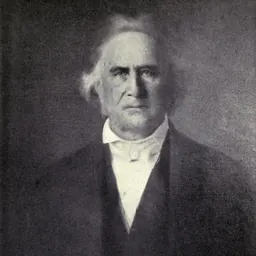

Related people
Same field, nearest in time


Contemporaries
People whose lives overlapped David Humphreys's




Frequently asked questions
Who was David Humphreys?
American Revolutionary War soldier and politician (1752-1818)
When was David Humphreys born?
David Humphreys was born on 10 July 1752 in Derby.
When did David Humphreys die?
David Humphreys died on 21 February 1818 in New Haven.
What was David Humphreys's occupation?
David Humphreys was a diplomat, writer and businessperson.
What nationality was David Humphreys?
David Humphreys was American.
Sources & further reading
· DBpedia: David Humphreys (soldier)
Cite this page
APA: Biography.guide. (2026). David Humphreys. https://biography.guide/david-humphreys/
MLA: "David Humphreys." Biography.guide, https://biography.guide/david-humphreys/.
Chicago: "David Humphreys." Biography.guide. https://biography.guide/david-humphreys/.
Data last updated: 2026-09-20 · Spot an error? Report a correction.
Page generated 2026-09-27 05:30 UTC