
About David H. Turner
Born 1941. David H. Turner is a Canadian anthropologist.
David Howe Turner is a Canadian anthropologist, academic, and author known for his research on Indigenous cultures, particularly Aboriginal societies in Australia and Indigenous communities in Canada and India. He is Professor Emeritus of Anthropology at the University of Toronto, where he held academic appointments for several decades following earlier positions at the Australian National University and the University of Manitoba. Turner's scholarly work focuses on social organization, kinship systems, religion, and cultural adaptation among hunter-gatherer and Indigenous societies. He has conducted long-term fieldwork in Arnhem Land, Australia, as well as research in Canada, India, and other regions, and has published numerous books and articles on anthropology, religion, and Indigenous studies.
Biography Turner was born on July 18, 1941, in England, and emigrated to Canada with his parents in 1948. He pursued his early academic training in sociology at Carleton University, where he completed a Bachelor of Arts with honors in 1965. He later earned a Ph.D. in social anthropology from the University of Western Australia in 1971. His doctoral dissertation, The Warnungamagalyuagba and their neighbours: a study in adaptation, was supervised by Professor R.M. Berndt and examined by scholars including P.M. Worsley, W.E.H. Stanner, and M.J. Meggitt.
Career Turner began his professional career as a Postdoctoral Research Fellow at the Australian Institute of Aboriginal Studies in Canberra (1971). He subsequently joined the Australian National University as a foundation lecturer in Anthropology and Aboriginal Studies. In 1974, he moved to Canada, taking an appointment as Assistant Professor at the University of Manitoba, before joining the University of Toronto in 1975 as Associate Professor in the Department of Anthropology. He was promoted to full Professor in 1982 and later became professor emeritus following his retirement in 2012.
He has served as a Senior Fellow at Trinity College, University of Toronto, and has been a Fellow-in-Residence at the Netherlands Institute for Advanced Studies in the Humanities and Social Sciences.
Turner has also contributed to academic publishing and editorial activities, including serving on advisory boards such as the International Advisory Board of Studies in World Christianity. He is currently a member of the International Campaign for Tibet.
Research Turner's research and fieldwork have constituted a central component of his academic career, spanning several decades and multiple geographic regions, with a primary focus on Indigenous societies in Australia, Canada, India, and parts of Asia.
Following the completion of his doctoral studies, Turner undertook extensive fieldwork in Australia under the auspices of the Australian Institute of Aboriginal Studies. His research in Arnhem Land, particularly in the Groote Eylandt and Bickerton Island regions, involved multiple field visits beginning in the late 1960s and continuing through the 1970s and beyond during which time he was initiated into the Law.
In the 1970s and 1980s, Turner expanded his research within Indigenous Australian contexts to include studies of Aboriginal social organization, rock art, and economic systems. He was also instrumental, along with Barry Coulter, in seeing the return of the Strehlow Research Collection to Australia.
In addition to Australia, Turner conducted fieldwork among Indigenous communities in Canada, particularly Cree communities in Manitoba and Inuit communities in northern regions such as Pangnirtung, Baffin Island.
Turner's view of indigenous Australian society The indigenous Australians, far from being a primitive people, have a highly sophisticated society and worldview which, in Turner's view, is in many ways more advanced than those of modern Western civilization. According to Turner, the Aborigines have developed several social mechanisms for ensuring social and environmental harmony that run contrary to conventional Western thinking. In particular, rather than formulate their society around notions of personal or national autonomy and property, they favour a philosophy of mutual dependence. It is this mutual dependence, or interdependence, which ensures peaceful coexistence.
This is explicit in the Aboriginal practice of renunciation, which resembles reciprocal altruism but runs much deeper. Rather than reciprocal trading of resources, or sharing them by giving a portion of what one has to another, the Aborigines give everything of what they have to whoever needs it, as codified by the statement: "You have nothing, everything I have is yours; I have nothing, everything you have is mine."
Likewise, Turner notes that the Aborigines practice renunciation in their allocation of property. On Bickerton Island, each group of people within Aboriginal society lives within a defined region of land, and each region contains one major resource (such as fresh water or a particular type of food). Rather than having exclusive access to their region's resource (as in conventional concepts of ownership), the group is instead forbidden to consume it. In the Aboriginal world, such resources exist only to be given freely to members of neighbouring groups. Again, this is a method which makes self-sufficiency impossible, ensuring that neighbours must rely on each other and work to make their relations cooperative and peaceful.
Turner's view is that renunciation is not simply a concept or an economic theory, but a literal reenactment of creation as it is perceived by the Aborigines. For the Aborigines, physical and spiritual reality coexist, flowing in and out of each other in an endless process. Spiritual forms are always giving of themselves to make the world and the people in it. In such a world, it makes no sense to hold on to anything, because nothing is ever "yours" to begin with. So, an act of renunciation—even something as simple as giving food to a stranger who does not have any is an action which reflects the fundamental nature of reality itself.
Creation as it is perceived by the Aborigines follows the theoretical formulation: anti-thesis → thesis ⇒ plurality (Nothingness → being ⇒ relationship), an anathema to Western philosophy (thesis → anti-thesis ⇒ synthesis).
During the late 1970s and 1980s, Turner contributed to theoretical and comparative anthropology through works such as Dialectics in Tradition: myth and social structure in two hunter-gatherer societies (1978) and Australian Aboriginal Social Organization: theme and variations (1980). These works explore the interplay between myth, social structure, and cultural systems, and reflect his interest in comparative frameworks across hunter-gatherer societies. He also co-edited Challenging Anthropology (1979) with Gavin Smith, a volume that engages with methodological and theoretical debates within the discipline.
Turner’s later publications reflect a growing interest in religion, philosophy, and comparative cultural analysis. In Life Before Genesis: a conclusion (1985), he examined Aboriginal cultural perspectives in relation to broader questions of origin, meaning, and cosmology. This line of inquiry continued in Return to Eden (1989; revised editions in 1996 and 2025), where he explored symbolic and interpretive dimensions of Aboriginal cultural landscapes. His subsequent works, including Afterlife Before Genesis (1997) and Genesis Regained (1999), further developed comparative analyses between Aboriginal traditions and Judeo-Christian religious frameworks.
In the 2000s and beyond, Turner’s scholarly output increasingly integrated personal reflection with academic inquiry, particularly in works such as The Spirit Lives (2002), which combines autobiographical narrative with discussions of religious experience and transformation. His more recent publications, including Eye of the Shaman: The Visions of Piona Keyuakjuk (2018), Life to the Power of N o t h i n g (2019–2023), and Pathway to the Stars, Playing for Alexa (2023), S e e i n g the E t e r n a l, publications with Rock's Mills Press continue to engage with themes of spirituality, perception, and cultural meaning, often blending ethnographic insight with interpretive and philosophical perspectives.
Selected publications
Books Turner, David H. 1974. Tradition and transformation: a study of the Groote Eylandt area aborigines of northern Australia. Australian aboriginal studies, no. 53. Canberra: Australian Institute of Aboriginal Studies. Turner, David H. 1977. The concept of kinship: some qualifications based on a re-examination of the Australian data. Leiden, Netherlands: Koninklijk Instituut voor Taal-, Land- en Volkenkunde. Turner, David H. 1977. Ideologues of band society: Nambir̄ir̄ma and Wee-sa-kay-jac. Toronto: Victoria University. Turner, David H., and Paul Wertman. 1977 Shamattawa: The Structure of Social Relations in a Northern Algonkian Band. Ottawa: National Museums of Canada. Turner, David H. 1978. Dialectics in tradition: myth and social structure in two hunter-gatherer societies. London: Royal Anthropological Institute of Great Britain and Ireland. Turner, David H., and Gavin A. Smith. 1979. Challenging anthropology: a critical introduction to social and cultural anthropology. Toronto: McGraw-Hill Ryerson. (with G. Smith). Turner, David H. 1980. Leiden anthropology and the reinterpretation of Australian Aboriginal social organization. Leiden, Netherlands: Koninklijk Institut voor Taal-, Land- en Volkenkunde. Turner, David H. 1981. Australian aboriginal social organization. Atlantic Highlands, N.J.: Humanities Press. Turner, David H. 1985. Life before Genesis, a conclusion: an understanding of the significance of Australian Aboriginal culture. Toronto studies in religion, vol. 1. New York: Peter Lang. Turner, David H. 1996. Return to Eden: a journey through the aboriginal promised landscape of Amagalyuagba. Toronto studies in religion, vol. 21. New York: Peter Lang. Turner, David H. 1997. Afterlife before Genesis: an introduction : accessing the eternal through Australian Aboriginal music. Toronto studies in religion, vol. 22. New York: Peter Lang. Turner, David H. 1999. Genesis regained: Aboriginal forms of renunciation in Judeo-Christian scriptures and other major traditions. Toronto studies in religion, vol. 25. New York: Peter Lang. Turner, David H. 2002. The spirit lives: a personal journey from loss to understanding through religious experience. New York: Peter Lang.
Turner, D. H. (2025). Return to Eden: A journey through the promised landscape of Amagalyuagba (3rd ed., with new preface). Oakville: Rock’s Mills Press. Turner, D. H. (2025). “S e e i n g” the eternal. Oakville: Rock’s Mills Press. Turner, D. H. (1991). Brahmanform: The Vedic-Hindu tradition in Aboriginal perspective. Man in India, 71(1), 47–65. Turner, D. H. (1994). Transcendent pluralism: An Aboriginal solution to difference. Sophia, 34(1), 173–187. Turner, David H. 1977. The concept of kinship: some qualifications based on a re-examination of the Australian data. Leiden, Netherlands: Koninklijk Instituut voor Taal-, Land- en Volkenkunde. Turner, D. H. (1995). Reaching out and reaching: Prayer in anthropological perspective. In L. Brown (Ed.), The human side of prayer: The psychology of praying (pp. 67–83). Birmingham: Religious Education Press. Turner, D. H. (1994). Toward a peaceful world order: A commentary. Gandhians in Action, 1, 79–86. Turner, D. H. (1994). Genocide on Groote Eylandt? Indigenous Affairs, 4(Oct–Dec), 54–57. Turner, D. H. (1998). There is no Swaraj without suffering. Gandhians in Action, 4–5 (Golden Jubilee issue), 173–177. Turner, D. H. (1998). Afterlife before Genesis [CD recording]. New York: Peter Lang Publishing. (Produced in collaboration with Marc Costanzo). Turner, D. H. (2000). From here into eternity: Power and transcendence in Australian Aboriginal music. In G. Harvey & K. Ralls-MacLeod (Eds.), Indigenous religious musics. Aldershot: Ashgate Press.
Don’t just read it —
keep it.
Full-length biographies made to live with: read them, listen on the way to work, watch them tonight.
- E-book
- Audio
- Video
Instant download · yours to keep · every purchase keeps this site free
Important facts
People in David H. Turner's life
Named in this biography and alive at the same time





Related people
Same field, nearest in time




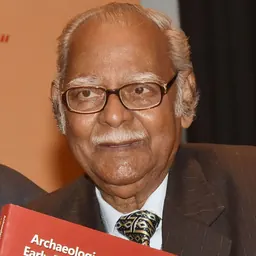
Contemporaries
People whose lives overlapped David H. Turner's
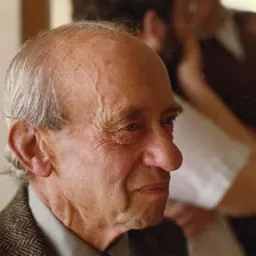
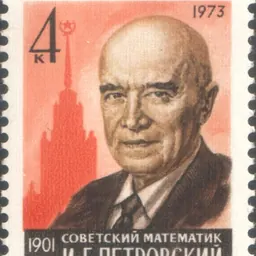


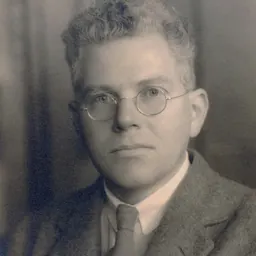
Frequently asked questions
Who is David H. Turner?
Canadian anthropologist
When was David H. Turner born?
David H. Turner was born on 18 July 1941.
What is David H. Turner's occupation?
David H. Turner is an anthropologist.
What nationality is David H. Turner?
David H. Turner is Canadian.
Sources & further reading
Cite this page
APA: Biography.guide. (2026). David H. Turner. https://biography.guide/david-h-turner/
MLA: "David H. Turner." Biography.guide, https://biography.guide/david-h-turner/.
Chicago: "David H. Turner." Biography.guide. https://biography.guide/david-h-turner/.
Data last updated: 2026-09-20 · Spot an error? Report a correction.
Page generated 2026-09-27 05:23 UTC