
About David Gauthier
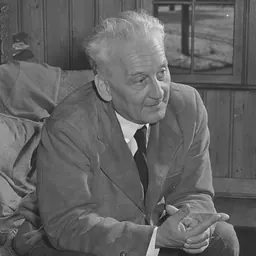
Lived 1932 – 2023 (aged 91). David Gauthier was an American and Canadian philosopher and university teacher.
David Peter Gauthier (; 10 September 1932 – 9 November 2023) was a Canadian philosopher best known for his neo-Hobbesian or contractarian theory of morality, as developed in his 1986 book Morals by Agreement.
Life and career David Gauthier was born in Toronto on 10 September 1932. He was educated at University College, University of Toronto (B.A. (Hons.), 1954), Harvard University (A.M., 1955), and the University of Oxford (B.Phil., 1957; D.Phil., 1961).
Philosophy Gauthier was the author of numerous articles, some of the most important of which are collected in Moral Dealing, as well as several books including Practical Reasoning, The Logic of Leviathan, Morals by Agreement, and Rousseau: The Sentiment of Existence.
In addition to systematic work in moral theory, Gauthier was also interested in the history of political philosophy, especially Thomas Hobbes and Jean-Jacques Rousseau. He conducted work on the theory of practical rationality, where he began from an attempt to understand economic rationality, rather than from Kantian or Aristotelian antecedents.
Gauthier understood value as a matter of individuals' subjective preferences, and argued that moral constraints on straightforward utility-maximizing are prudentially justified. He argued that it is most prudent to give up straightforward maximizing and instead adopt a disposition of constrained maximization , according to which one resolves to cooperate with all similarly disposed persons (those disposed towards cooperation) and defect on the rest (straightforward maximizers), since repeated cooperation provides greater yields than repeated mutual defection from contracts (as is seen in a basic prisoner's dilemma game). According to Gauthier's contractarian ethics , moral constraints are justified because they make us all better off, in terms of our preferences (whatever they may be). A consequence is that good moral thinking is just an elevated and subtly strategic version of means–end reasoning.
In Morals by Agreement, Gauthier defines translucency . An individual is translucent if their intentions can be imperfectly detected (inferred or judged) by others. Celeste M. Friend argues against the argument of translucency in the evolution of cooperation. First, translucency might not be realistic in human societies. This first argument was first brought by Geoffrey Sayre-McCord. Second, translucency might be the product of social interactions: one often becomes more translucent as trust is gained, and not the other way round. Finally, excessive translucency would also reveal the underlying self-interest in being translucent, therefore hindering cooperation.
Don’t just read it —
keep it.
Full-length biographies made to live with: read them, listen on the way to work, watch them tonight.
- E-book
- Audio
- Video
Instant download · yours to keep · every purchase keeps this site free
Important facts
People in David Gauthier's life
Named in this biography and alive at the same time



Related people
Same field, nearest in time



Contemporaries
People whose lives overlapped David Gauthier's

Frequently asked questions
Who was David Gauthier?
Canadian philosopher (1932–2023)
When was David Gauthier born?
David Gauthier was born on 10 September 1932 in Toronto.
When did David Gauthier die?
David Gauthier died on 9 November 2023.
What was David Gauthier's occupation?
David Gauthier was a philosopher and university teacher.
What nationality was David Gauthier?
David Gauthier was American and Canadian.
Sources & further reading
Cite this page
APA: Biography.guide. (2026). David Gauthier. https://biography.guide/david-gauthier/
MLA: "David Gauthier." Biography.guide, https://biography.guide/david-gauthier/.
Chicago: "David Gauthier." Biography.guide. https://biography.guide/david-gauthier/.
Data last updated: 2026-09-20 · Spot an error? Report a correction.
Page generated 2026-09-27 05:21 UTC