
About David Boswell Reid
Lived 1805 – 1863 (aged 57–58). David Boswell Reid was a British chemist, photographer, inventor and physician.
Prof David Boswell Reid MD FRSE FRCPE (1805 – 5 April 1863) was a British physician, chemist and inventor. Through reports on public hygiene and ventilation projects in public buildings, he made a reputation in the field of sanitation. He has been called the "grandfather of air-conditioning".
Early life Reid was born in Edinburgh in June 1805, the second son of Peter Reid (1777–1838) and his wife, Christian Arnot, eldest daughter of Hugo Arnot of Balcormo, and was the elder brother of Hugo Reid (becoming the brother-in-law of Marion Kirkland Reid upon their marriage in 1839). When born the family appear to have lived with Peter Reid Sr., a vintner at Milne's Square (now known as Milne's Court) off the Royal Mile. His father gained his doctorate as a physician c.1810 and in 1815 the family was living independently at 7 Roxburgh Place in Edinburgh's South Side.
David was educated at the High School in Edinburgh then studied medicine at Edinburgh University, obtained his medical diploma on 12 July 1830, and was admitted a fellow of the Royal College of Physicians, Edinburgh, on 2 August 1831.
In 1831 Reid began to give classes in practical chemistry. He was soon appointed assistant to Thomas Charles Hope, professor of chemistry at the university.
In 1833, however, he had a disagreement with Hope. At this point he set up a laboratory of his own. Reid hoped to have a chair in Practical Chemistry set up in his favour; but he came up against Robert Christison as dean of the medical faculty who was opposed, disliking the effect on the existing chair, and regarding Reid's teaching as too mechanical. Reid complained in The Scotsman.
In 1835 at the Dublin meeting of the British Association for the Advancement of Science Reid talked on reform of education in chemistry, and was asked to give evidence to the committee under Thomas Wyse then looking into education in Ireland.
One of his chemistry students was Macquorn Rankine. Reid continued to give private chemistry classes until he moved to London in 1847. He did innovative work in the temporary accommodation on forced ventilation. When the new building work started on the same site, he was in a strong position to carry out plans that were systematic as far as ventilation was concerned. He was remembered as "Dr. Reid the ventilator" in the twenty-first century in discussions of energy efficiency, by Lord Wade of Chorlton. The Central Tower of the Palace of Westminster. This octagonal spire was for ventilation purposes, in the more complex system imposed by Reid on Barry, in which it was to draw air out of the Palace. The design was for aesthetic disguise of its function. In January 1840 Reid was appointed by the committee for the House of Lords dealing with the construction of the replacement for the Houses of Parliament that had burned down six years earlier. The post was in the capacity of ventilation engineer, in effect; and with its creation there began a long series of quarrels between Reid and Charles Barry, the architect. Reid's ventilation system was adopted reluctantly by Barry in this new Palace of Westminster. Reid was engaged for five years at Westminster on this work. The steam vessels built for the Niger expedition of 1841 were fitted with ventilation systems based on Reid's Westminster model. Air was dried, filtered and passed over charcoal. The system proved a cumbersome failure. A detailed account was published by James Ormiston McWilliam.
Reid's ventilation method was also applied more fully to St. George's Hall, Liverpool, the only building, he said, in which his system was completely carried out.
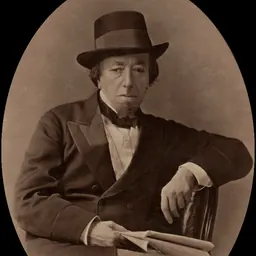
In 1852 Reid was dismissed from his position at the Houses of Parliament. His immediate replacement was Alfred Meeson, who had been assistant to Barry. Leading Tory politicians including Benjamin Disraeli had had enough of his feud with Barry, and Lord Derby thought him a charlatan. In an extended process of settlement, Reid received substantial compensation for his dismissal.
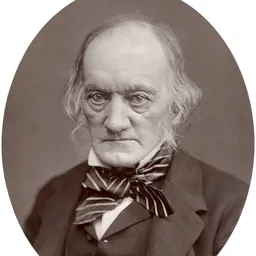
Royal Commission on public health In 1843 Reid sat on the 13-man Royal Commission to inquire into "the state of large towns and populous districts in England and Wales with reference to the causes of disease among the inhabitants, and into the best means of promoting and securing public health". With the other medical men James Ranald Martin, Richard Owen and Lyon Playfair, he made up the dominant group on the committee.
He wrote the 1845 Report on the state of Newcastle-upon-Tyne and other towns (HMSO). His visits had included areas of great poverty and squalor, such as Sandgate. It had immediate effects. For example, his findings on Sunderland and South Shields led to the setting up in 1846 of the Sunderland Water Company. His observation on cholera, that there were no privies in the mines, was mentioned in the celebrated paper On the pathology and mode of communication of cholera of John Snow in 1849.
In the USA In 1856 Reid moved to the United States.
Reid was brought as a professor of physiology and hygiene to the University of Wisconsin-Madison in 1859 by Henry Barnard, and then dismissed after a year. He then became government medical inspector to the sanitary commission of the United States. In a work on public hygiene by John Bell M.D. of Philadelphia for the New York Board of Councilmen, Reid's views on carbonic acid gas in old graveyards and "vitiated" air are quoted; and on "those subtle poisons called miasms" he is said to have reported that he "has detected their escape from graves more than twenty feet deep". Reid took "moving air" to be important to health, and emphasised the health hazards of "defective ventilation". Elements of Chemistry (1837) Textbook for Students of Chemistry(1839).
In 1844 he published Illustrations of the Theory and Practice of Ventilation.
Don’t just read it —
keep it.
Full-length biographies made to live with: read them, listen on the way to work, watch them tonight.
- E-book
- Audio
- Video
Instant download · yours to keep · every purchase keeps this site free
Important facts
People in David Boswell Reid's life
Named in this biography and alive at the same time



Related people
Same field, nearest in time



Contemporaries
People whose lives overlapped David Boswell Reid's





Frequently asked questions
Who was David Boswell Reid?
British scientist
When was David Boswell Reid born?
David Boswell Reid was born in 1805 in Edinburgh.
When did David Boswell Reid die?
David Boswell Reid died on 5 April 1863 in Washington, D.C..
What was David Boswell Reid's occupation?
David Boswell Reid was a chemist, photographer, inventor and physician.
What nationality was David Boswell Reid?
David Boswell Reid was British.
Sources & further reading
· Wikipedia: David Boswell Reid
Cite this page
APA: Biography.guide. (2026). David Boswell Reid. https://biography.guide/david-boswell-reid/
MLA: "David Boswell Reid." Biography.guide, https://biography.guide/david-boswell-reid/.
Chicago: "David Boswell Reid." Biography.guide. https://biography.guide/david-boswell-reid/.
Data last updated: 2026-09-20 · Spot an error? Report a correction.
Page generated 2026-09-27 05:19 UTC