
About David Baulcombe
Born 1952. David Baulcombe is a British botanist, university teacher and geneticist, known for RNA silencing and Small interfering RNA.
known_for = influences = influenced = awards = religion = footnotes = signature = children = 1 son, 3 daughters at the University of Cambridge (Emeritus since 2019) and is currently Biological Secretary and Vice President of the Royal Society. In 2026, Baulcombe was announced as the next Master of Trinity College, Cambridge.
Early life and education David Baulcombe was born on 7 April 1952 in the United Kingdom, in Solihull, Warwickshire, (in England's Midlands), into what he describes as "a non-scientific family".
As a child growing up in England’s West Midlands, David Baulcombe developed a fascination for algae, mosses, and other ‘lower plants’, which eventually led him to study botany at Leeds before shifting his focus to molecular biology.
He received his Bachelor of Science degree in botany from the University of Leeds in 1973, for research on Messenger RNA in vascular plants, supervised by John Ingle.
Career After his doctoral research, Baulcombe spent the next four years as a postdoctoral fellow at McGill University from January 1977 to November 1978, and then at the University of Georgia until December 1980. He then moved to the Plant Breeding Institute in Cambridge In March 2007 he became the professor of botany at the University of Cambridge and in 2009 was elected as a Fellow of Trinity College, Cambridge. In 2009, the Cambridge professorship was renamed "Regius Professor of Botany": the first Regius Professorship created by Queen Elizabeth II.
Since 2024, David Baulcombe has been Biological Secretary and Vice President of the Royal Society. These small RNAs were subsequently discovered in animals and fungi as part of a process first described as RNA interference by Fire and Mello in 1996. although some have argued that Baulcombe was among those overlooked for that year's prize.
Following the discover of small interfering RNAs, the Baulcombe research group at the Sainsbury Laboratory helped unravel the importance of RNA silencing and small interfering RNA in epigenetics and in defence against viruses. More recently, siRNAs have been developed as drugs to treat diseases in humans.
Other interests of the Baulcombe group involve disease resistance mechanisms in plants through the actions of NB-LRR (NLR) proteins. These proteins act in pairs with one partner serving as a sensor and the other as a helper. Baulcombe and his then PHD student Jack Peart provided the first evidence for NLR proteins acting as a pair.
Personal life Baulcombe has been married to Rose Eden since 1976, and they have four children. His interests include music, sailing, and hill walking.
Honours and awards In June 2009, Baulcombe was knighted by Queen Elizabeth II in the 2009 Birthday Honours List, "for services to plant science".
Baulcombe has also received the following honours and awards:
1997 election to EMBO Membership; 2001 election as Fellow of the Royal Society (FRS); 2002 election as Member of the Academia Europaea (MAE); 2002 recipient of the Ruth Allen Award of the American Phytopathological Society; 2008 co-recipient (with Victor Ambros and Gary Ruvkun) of the Albert Lasker Award for Basic Medical Research; 2009 recipient of the Harvey Prize, granted by the Technion Israeli Institute for Technology; 2010 recipient of the Wolf Prize in Agriculture “for pioneering discovery of gene regulation by small inhibitory RNA molecules in plants is of profound importance, not only for agriculture, but also for biology as a whole, including the field of medicine”; 2010 Humphry Davy Award of the Royal Society, in its last year of issue, a part of the Humphry Davy and Claude Bernard Lectures, occasional prizes and exchange lectures established by The Royal Society and Académie des Sciences, in this case, given to a senior British scientist with its lecture to be given on a visit to France; 2010 election as Fellow of the Academy of Medical Sciences; 2012 recipient of the Balzan Prize for Epigenetics; 2014 recipient of the Gruber Prize in Genetics; 2014 recipient, the inaugural recipient, of the Barbara McClintock Prize for Plant Genetics and Genome Studies, from the Maize Genetics Cooperation, for "exceptional contributions in the field of plant epigenetics"; 2015 election as Honorary Fellow of the Royal Society of Edinburgh; 2020 election as an Academician in The Pontifical Academy of Sciences; 2023 recognition as an honorary Doctor of Science of University of Warwick.
Don’t just read it —
keep it.
Full-length biographies made to live with: read them, listen on the way to work, watch them tonight.
- E-book
- Audio
- Video
Instant download · yours to keep · every purchase keeps this site free
Important facts
People in David Baulcombe's life
Named in this biography and alive at the same time

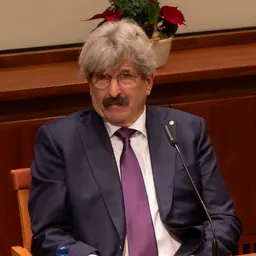


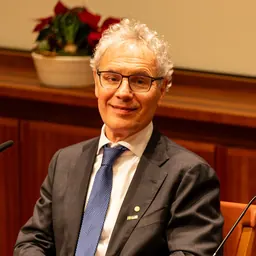
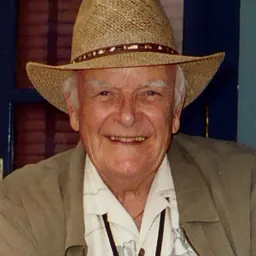

Related people
Same field, nearest in time
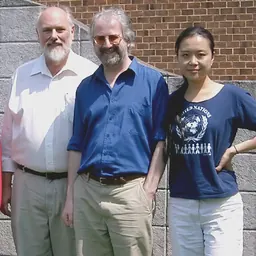



Contemporaries
People whose lives overlapped David Baulcombe's


Frequently asked questions
Who is David Baulcombe?
British geneticist
When was David Baulcombe born?
David Baulcombe was born on 4 July 1952 in Solihull.
What is David Baulcombe's occupation?
David Baulcombe is a botanist, university teacher and geneticist.
What is David Baulcombe known for?
David Baulcombe is known for RNA silencing and Small interfering RNA.
What nationality is David Baulcombe?
David Baulcombe is British.
Sources & further reading
Cite this page
APA: Biography.guide. (2026). David Baulcombe. https://biography.guide/david-baulcombe/
MLA: "David Baulcombe." Biography.guide, https://biography.guide/david-baulcombe/.
Chicago: "David Baulcombe." Biography.guide. https://biography.guide/david-baulcombe/.
Data last updated: 2026-09-20 · Spot an error? Report a correction.
Page generated 2026-09-27 05:23 UTC