
About David B. Hill
Lived 1843 – 1910 (aged 67). David B. Hill was an American politician, lawyer, governor, jurist and mayor.
David Bennett Hill (August 29, 1843 – October 20, 1910) was an American politician from New York. A member of the Democratic Party, he served as the 29th governor of New York from 1885 to 1891 and represented New York in the United States Senate from 1892 to 1897. In 1892, Hill made an unsuccessful bid for president on a platform of bimetallism, but lost the nomination to Grover Cleveland, his longtime political rival and former running mate.
Early life and career David B. Hill was born on August 29, 1843, in Havana, New York. He was educated locally, studied law, and began a practice in Elmira in 1864.
In 1864, he was named Elmira City Attorney.
Hill represented Chemung County in the New York State Assembly in 1871 and 1872. Hill was elected an alderman of Elmira in 1880, Mayor of Elmira in 1882, and was President of the New York State Bar Association from 1886 to 1887.
Governor of New York Hill was elected lieutenant governor in 1882, with more votes than the Democratic gubernatorial nominee, Grover Cleveland.
Hill became governor in 1885, when Cleveland resigned to take office as President of the United States. Hill won election to the office of governor in his own right in 1885 and 1888 despite Cleveland losing the state in the concurrent presidential election.
While Cleveland had publicly advocated for civil service reform, Hill embraced the role of patronage in politics and built up a strong following. During Hill's tenure as governor, the Democratic Party organization in New York polarized between those loyal to Hill and those who favored Cleveland. David B. Hill in 1885 cartoon "The Only Plumber Busy In The Hot Season" by Eugene Zimmerman about Mugwumps, Tammany Hall and Irving Hall As governor, Hill opposed attempts to enact civil service reform and tax liquor. He supported regulation of tenement housing and labor reforms such as maximum work hours. Several other labor reforms were carried out during Hill's time as governor.
On May 15, 1885, Hill signed "a bill establishing a 'Forest Preserve' of 715,000 acres that was to remain permanently 'as wild forest lands.'" This tract soon became the Adirondack Park.
During his tenure as governor, William Kemmler was executed in the electric chair, the first inmate in the country ever to be put to death in this manner. On April 23, 1889, Hill vetoed a bill from the state legislature that would block the street construction at the Polo Grounds. He also vetoed two attempts at ballot reform by the Republican legislature.
United States Senate
After the 1888 elections, which saw the defeat of Cleveland and the re-election of Hill, Hill established effective control over the state Democratic Party. Democratic gains in the 1890 elections gave the Democratic Party a majority in the legislature. The legislature elected Hill to the U.S. Senate.
As Senator, Hill blocked President Cleveland's two appointments to the U.S. Supreme Court, William B. Hornblower and Wheeler H. Peckham, both New York judges who had opposed Hill's political machine.
In 1894, Hill was defeated by Republican Levi P. Morton when, as a sitting U.S. senator, he ran again for governor again.
In 1896, Hill initially opposed the nomination of William Jennings Bryan for president, but supported Bryan in the general election against the Clevelandite Gold Democrats.
In 1897, Hill was defeated for re-election by Republican Thomas C. Platt.
Later career and death Hill received significant support for the vice presidential nomination at the 1900 Democratic National Convention, but the party nominated former Vice President Adlai Stevenson I. Hill served as the campaign manager of Democratic presidential nominee Alton Parker in the 1904 presidential election. He was buried in Montour Cemetery in Montour Falls.
Don’t just read it —
keep it.
Full-length biographies made to live with: read them, listen on the way to work, watch them tonight.
- E-book
- Audio
- Video
Instant download · yours to keep · every purchase keeps this site free
Important facts
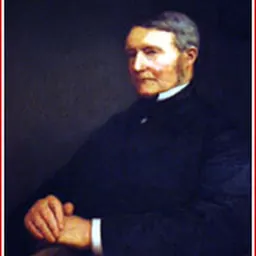
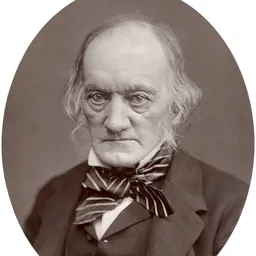
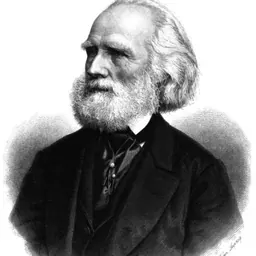
People in David B. Hill's life
Named in this biography and alive at the same time



Related people
Same field, nearest in time

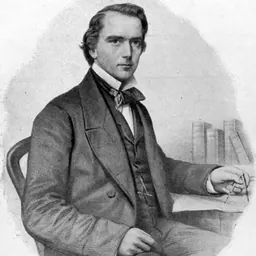



Contemporaries
People whose lives overlapped David B. Hill's

Frequently asked questions
Who was David B. Hill?
American politician (1843-1910)
When was David B. Hill born?
David B. Hill was born on 29 August 1843 in Elmira.
When did David B. Hill die?
David B. Hill died on 20 October 1910 in Albany.
What was David B. Hill's occupation?
David B. Hill was a politician, lawyer, governor, jurist and mayor.
What nationality was David B. Hill?
David B. Hill was American.
Sources & further reading
Cite this page
APA: Biography.guide. (2026). David B. Hill. https://biography.guide/david-b-hill/
MLA: "David B. Hill." Biography.guide, https://biography.guide/david-b-hill/.
Chicago: "David B. Hill." Biography.guide. https://biography.guide/david-b-hill/.
Data last updated: 2026-09-25 · Spot an error? Report a correction.
Page generated 2026-09-27 05:07 UTC