
About Daniel Seiter
Lived 1649 – 1705 (aged 55–56). Daniel Seiter was a German painter.
Daniel Seiter, Saiter, or Seyter (–1705) was a Viennese-born painter of the Baroque, who trained and worked in Italy.
Biography According to Houbraken, Seiter was born on the border of Switzerland and brought up in Vienna. It is unknown who his first teacher was, but as a young man he crossed the alps to Venice, where he apprenticed with Johann Carl Loth. He copied his style so well, that even at the time Houbraken was writing (1718), it was impossible to tell whether a painting was by him or Lott. He then moved to Rome to work in the studio of Carlo Maratta, and while there, he joined the Bentvueghels and received the bent nickname of Morgenstar. His Martyrdom of St Catherine (1685) and Martyrdom of St Lawrence remained on its original place, the side walls of the vestibule of the Cybo Chapel in Santa Maria del Popolo.
Becoming successful in Rome, he married a bookseller's daughter and won a lucrative commission from Charles Emmanuel II, Duke of Savoy. The Duke's son Victor Amadeus II of Sardinia commissioned him in turn to decorate the Royal Palace of Turin in 1675, when he became duke after his father died. He liked Seiter's work so much that he knighted him. Today there is still a gallery there named after him. He also helped decorate in fresco the cupola of the chapel of the Ospedale Maggiore.
Seiter followed Victor Amadeus on his travels, and painted in Brunswick and Dresden.
Trivia
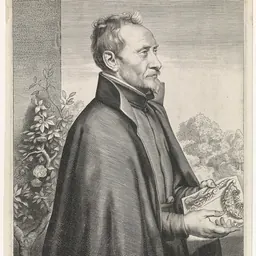
In his biography of Seiter, Houbraken tells a curious anecdote about the Duke and Seiter, saying that Seiter was given a walking cane with diamonds on the head of it, to use as a maulstick to rest his hand on while painting. This story was told to him by a painter named Le Blon. He calls it a Maalstok. When Seiter was done painting he tried to give it back, but the Duke's guard told him to keep it as a token of regard. A similar expensive gift (it was solid gold) was given to Daniel Seghers by Frederick Henry, Prince of Orange in exchange for a garland painting that hangs today in the Mauritshuis museum.
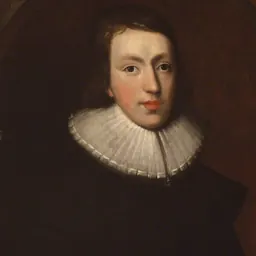
Though details of his career are sketchy, Seiter became a painter for the Dukes of Savoy much later than 1655, and thus was not a witness to his patron's murderous massacre of the Vaudois, which the poet John Milton memorialized in his On the Late Massacre in Piedmont. Seiter died in Turin.
Don’t just read it —
keep it.
Full-length biographies made to live with: read them, listen on the way to work, watch them tonight.
- E-book
- Audio
- Video
Instant download · yours to keep · every purchase keeps this site free
Important facts
more
Daniele Fiammingo Soiter, Il Cavaliere Daniele Seitter, Daniel Soiter, Daniele Fiammingo Seyter, Daniel Saiter, Il Cavaliere Daniele Seiter, Joseph Daniel Seiter, Il Cavaliere Daniele Seuter, Daniele Fiammingo, Daniele Fiammingo Seiter, Daniello Seiter, Joseph Daniel Seuter, Joseph D. Seiter, Joseph Daniel Soiter, Der Abendstern Seiter, Il Cavaliere Daniele Saiter, DanielPeople in Daniel Seiter's life
Named in this biography and alive at the same time


Related people
Same field, nearest in time

Contemporaries
People whose lives overlapped Daniel Seiter's




Frequently asked questions
Who was Daniel Seiter?
Austrian painter (1649-1705)
When was Daniel Seiter born?
Daniel Seiter was born in 1649 in Vienna.
When did Daniel Seiter die?
Daniel Seiter died in 1705 in Turin.
What was Daniel Seiter's occupation?
Daniel Seiter was a painter.
What nationality was Daniel Seiter?
Daniel Seiter was German.
Sources & further reading
Cite this page
APA: Biography.guide. (2026). Daniel Seiter. https://biography.guide/daniel-seiter/
MLA: "Daniel Seiter." Biography.guide, https://biography.guide/daniel-seiter/.
Chicago: "Daniel Seiter." Biography.guide. https://biography.guide/daniel-seiter/.
Data last updated: 2026-09-20 · Spot an error? Report a correction.
Page generated 2026-09-27 05:30 UTC