
About Daniel Coit Gilman
Lived 1831 – 1908 (aged 77). Daniel Coit Gilman was an American librarian, diplomat, geographer, journalist, university teacher and writer.
Daniel Coit Gilman (; July 6, 1831 – October 13, 1908) was an American educator and academic. Gilman was instrumental in founding the Sheffield Scientific School at Yale College, and subsequently served as the second president of the University of California, Berkeley, as the first president of Johns Hopkins University, and as founding president of the Carnegie Institution.
Eponymous halls at both Berkeley and Hopkins pay tribute to his service. He was also co-founder of the Russell Trust Association, which administers the business affairs of Yale's Skull and Bones society. Gilman served for twenty five years as president of Johns Hopkins; his inauguration in 1876 has been said to mark "the starting point of postgraduate education in the U.S."
Biography Early life and education
He was born in Norwich, Connecticut, the son of Eliza (Coit) and mill owner William Charles Gilman, a descendant of Edward Gilman, one of the first settlers of Exeter, New Hampshire; of Thomas Dudley, governor of the Massachusetts Bay Colony and one of the founders of Harvard College; and of Thomas Adgate, one of the founders of Norwich in 1659. Daniel Coit Gilman graduated from Yale College in 1852 with a degree in geography.
At Yale, he was a classmate of Andrew Dickson White, who would later serve as first president of Cornell University. The two were members of the Skull and Bones secret society, and traveled to Europe together after graduation and remained lifelong friends. Gilman was also a member of the Alpha Delta Phi fraternity. Gilman would later co-found the Russell Trust Association, the foundation behind Skull and Bones. After serving as attaché of the United States legation at St. Petersburg, Russia from 1853 to 1855, he returned to Yale and was active in planning and raising funds for the founding of Sheffield Scientific School. Gilman contemplated going into the ministry, and even obtained a license to preach, but later settled on a career in education.
Career
From 1856 to 1865, Gilman served as librarian of Yale College, and was also concerned with improving the New Haven public school system. When the Civil War broke out, Gilman became the recruiting sergeant for the Norton Cadets, a group of Yale graduates and faculty who drilled on the New Haven Green under the oversight of Yale professor William Augustus Norton.
In 1863, he was appointed professor of geography at the Sheffield Scientific School, and became secretary and librarian as well in 1866. Having been passed over for the presidency of Yale, for which post Gilman was said to have been the favorite of the younger faculty, he resigned these posts in 1872 to become the third president of the newly organized University of California, Berkeley.
Gilman's primary interest was in fostering advanced instruction and research, and as president he developed the first American graduate university in the German tradition. The aim of the modern research university, said Gilman, was to "extend, even by minute accretions, the realm of knowledge" At his inaugural address at Hopkins, Gilman asked: "What are we aiming at?" The answer, he said, was "the encouragement of research and the advancement of individual scholars, who by their excellence will advance the sciences they pursue, and the society where they dwell."
In 1884, Gilman was elected a member of the American Antiquarian Society.
Gilman was also active in founding Johns Hopkins Hospital in 1889 and Johns Hopkins Medical School in 1893. He founded and was for many years president of the Charity Organization of Baltimore, and in 1897 he served on the commission to draft a new charter for Baltimore. From 1896 to 1897, he was a member of the commission to settle the boundary line between Venezuela and British Guiana. and Peabody education funds and as a member of John D. Rockefeller's General Education Board. In this capacity, he became active in the promotion of education in the southern United States. He was president of the National Civil Service Reform League (1901–1907) and the American Oriental Society (1893–1906), vice president of the Archaeological Institute of America, and executive officer of the Maryland Geological Survey. He retired from Johns Hopkins in 1901, but accepted the presidency (1902–1904) of the newly founded Carnegie Institution of Washington.
His books include biographies of James Monroe (1883) and James Dwight Dana, a collection of addresses entitled University Problems (1898), and The Launching of a University (1906). From 1902 he served (jointly with Harry Thurston Peck and Frank Moore Colby) as editor of The New International Encyclopedia.
Personal life Gilman's home in BaltimoreGilman married twice. His first wife was Mary Van Winker Ketcham, daughter of Tredwell Ketcham of New York City. They married on December 4, 1861, and had two daughters: Alice, who married Everett Wheeler; and Elisabeth Gilman, who became a social activist and was a candidate for mayor of Baltimore, and for governor and senator of Maryland, on the Socialist Party of America ticket. Mary Ketcham Gilman died in 1869, and Daniel Coit Gilman married his second wife, Elizabeth Dwight Woolsey, daughter of John M. Woolsey of Cleveland, and niece of Yale president Theodore Dwight Woolsey, in 1877. Daniel Gilman's brother Edward Whiting Gilman was married to Julia Silliman, daughter of Yale University professor and chemist Benjamin Silliman. Daniel Coit Gilman died in Norwich, Connecticut. Gilman High School in Northeast Harbor, Maine, was named for Daniel Coit Gilman, who was active in local educational affairs, but it was later rebuilt and christened Mount Desert High School.
He was awarded American Library Association Honorary Membership in 1895.
Published works by Daniel Coit Gilman Scientific Schools in Europe, Hartford, 1856 A Historical Discourse Delivered in Norwich, Connecticut, September 7, 1859, at the Bi-Centennial Celebration of the Settlement of the Town, Boston, 1859 The Library of Yale College: Historical Sketch, New Haven, 1860 Our National Schools of Science, Cambridge, 1867 Statement of the Progress and Condition of the University of California, Berkeley, 1875 James Monroe in His Relations to the Public Service During Half a Century, 1776–1826, Boston, 1883. Published in a slightly different version in 1898 and again in 1911 The Benefits Which Society Derives from Universities, Baltimore, 1885. An Address Before the Phi Beta Kappa Society of Harvard University, July 1, 1886, Baltimore, 1886 Development of the Public Library in America, Ithaca, 1891 Our Relations to Our Other Neighbors, Baltimore, 1891 The Johns Hopkins University from 1873 to 1893, Baltimore, 1893 Recollections of the Life of John Glenn Who Died in Baltimore, March 30, 1896, Baltimore, 1896 University Problems in the United States, New York, 1898 Democracy in America, Alexis de Tocqueville, introduction by Daniel Coit Gilman, New York, 1898 The Life of James Dwight Dana, Scientific Explorer, Mineralogist, Geologist, Zoologist, Professor in Yale University, New York, 1899 Memorial of Samuel de Champlain: Who Discovered the Island of Mt. Desert, Maine, September 5, 1604, Baltimore, 1904 The Launching of a University and Other Papers, New York, 1906
Papers of Daniel Coit Gilman The Papers of Daniel Coit Gilman were donated to Johns Hopkins University by Gilman's daughter Elisabeth, and are open on an unrestricted basis to the public at the Milton S. Eisenhower Library at Hopkins. Aside from many photographs of Gilman and his contemporaries, the papers include Gilman's correspondence with leading figures of the day, including Charles W. Eliot, Sidney Lanier, Ralph Waldo Emerson, Henry James, James Russell Lowell, Henry Wadsworth Longfellow, William McKinley, Basil Gildersleeve, Theodore Roosevelt, Woodrow Wilson, George Bancroft, Alexander Graham Bell, Thomas Huxley, Andrew Carnegie, Horace Greeley, Helen Keller, Louis Pasteur, Henry Ward Beecher, William Osler, W.E.B. Du Bois, Booker T Washington and others.
Don’t just read it —
keep it.
Full-length biographies made to live with: read them, listen on the way to work, watch them tonight.
- E-book
- Audio
- Video
Instant download · yours to keep · every purchase keeps this site free
Important facts
Family & relationships
People in Daniel Coit Gilman's life
Named in this biography and alive at the same time


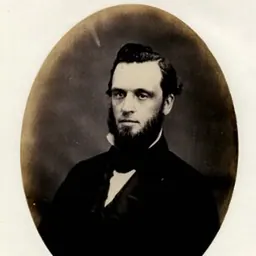

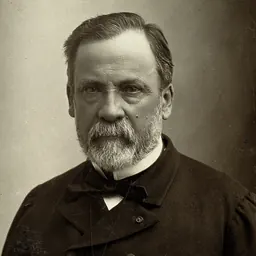

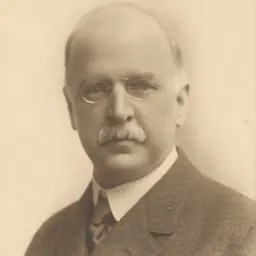
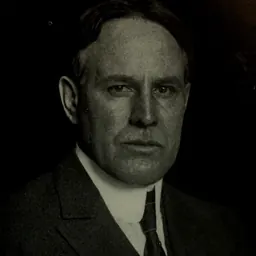
Related people
Same field, nearest in time

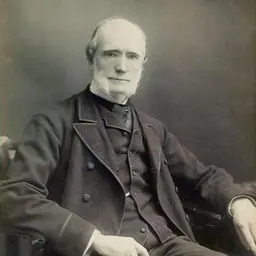

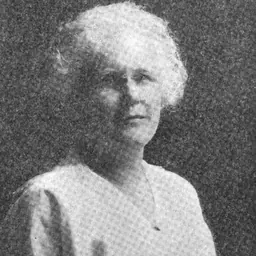
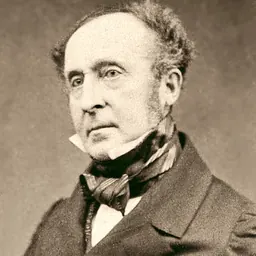
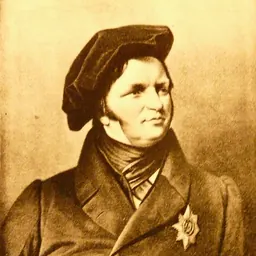
Contemporaries
People whose lives overlapped Daniel Coit Gilman's


Frequently asked questions
Who was Daniel Coit Gilman?
American educator and academic (1831–1908)
When was Daniel Coit Gilman born?
Daniel Coit Gilman was born on 6 July 1831 in Norwich.
When did Daniel Coit Gilman die?
Daniel Coit Gilman died on 13 October 1908 in Norwich.
What was Daniel Coit Gilman's occupation?
Daniel Coit Gilman was a librarian, diplomat, geographer, journalist, university teacher and writer.
What nationality was Daniel Coit Gilman?
Daniel Coit Gilman was American.
Sources & further reading
· Wikipedia: Daniel Coit Gilman
Cite this page
APA: Biography.guide. (2026). Daniel Coit Gilman. https://biography.guide/daniel-coit-gilman/
MLA: "Daniel Coit Gilman." Biography.guide, https://biography.guide/daniel-coit-gilman/.
Chicago: "Daniel Coit Gilman." Biography.guide. https://biography.guide/daniel-coit-gilman/.
Data last updated: 2026-09-20 · Spot an error? Report a correction.
Page generated 2026-09-27 05:33 UTC