
Daniel Berrigan
American Catholic priest, peace activist, and poet
About Daniel Berrigan
Lived 1921 – 2016 (aged 94). Daniel Berrigan was an American peace activist, theologian, writer, university teacher, poet and hIV/AIDS activist, known for Anti-nuclear movement and Opposition to United States involvement in the Vietnam War.
Daniel Joseph Berrigan (May 9, 1921 – April 30, 2016) was an American Jesuit priest, anti-war activist, Christian pacifist, playwright, poet, and author.
Berrigan's protests against the Vietnam War earned him both scorn and admiration, especially regarding his association with the Catonsville Nine. He was arrested multiple times and sentenced to prison for destruction of government property, and was listed on the Federal Bureau of Investigation's "most wanted list" after flight to avoid imprisonment (the first-ever priest on the list).
For the rest of his life, Berrigan remained one of the United States' leading anti-war activists. In 1980, he co-founded the Plowshares movement, an anti-nuclear protest group, that put him back into the national spotlight. Berrigan was an author of some 50 books, a teacher, and a university educator. He was the fifth of six sons.
At age 5, Berrigan's family moved to Syracuse, New York. Berrigan was devoted to the Catholic Church throughout his youth. He joined the Jesuits directly out of high school in 1939 and was ordained to the priesthood on June 19, 1952. In 1946, Berrigan earned a bachelor's degree from St. Andrew-on-Hudson, a Jesuit seminary in Hyde Park, New York. In 1952 he received a master's degree from Woodstock College in Baltimore, Maryland.
In 1954, Berrigan was assigned to teach French and theology at the Jesuit Brooklyn Preparatory School. In 1957 he was appointed professor of New Testament studies at Le Moyne College in Syracuse, New York. The same year, he won the Lamont Prize for his book of poems, Time Without Number. He developed a reputation as a religious radical, working actively against poverty and on changing the relationship between priests and lay people. While at Le Moyne, he founded its International House.
While on a sabbatical from Le Moyne in 1963, Berrigan traveled to Paris and met French Jesuits who criticized the social and political conditions in Indochina. Taking inspiration from this, he and his brother Philip founded the Catholic Peace Fellowship, a group that organized protests against the war in Vietnam.
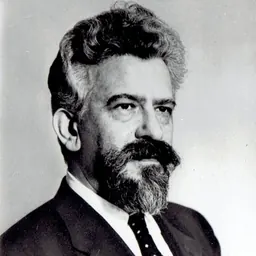
On October 28, 1965, Berrigan, along with the Reverend Richard John Neuhaus and Rabbi Abraham Joshua Heschel, founded an organization known as Clergy and Laymen Concerned About Vietnam (CALCAV). The organization, founded at the Church Center for the United Nations, was joined by the likes of Doctor Hans Morgenthau, the Reverend Reinhold Niebuhr, the Reverend William Sloane Coffin, and the Reverend Philip Berrigan his brother, among many others. The Reverend Dr. Martin Luther King Jr., who delivered his 1967 speech Beyond Vietnam: A Time to Break Silence under sponsorship from CALCAV, served as the national co-chairman of the organization.
From 1966 to 1970, Berrigan was the assistant director of the Cornell University United Religious Work (CURW), the umbrella organization for all religious groups on campus, including the Cornell Newman Club (later the Cornell Catholic Community), eventually becoming the group's pastor. Berrigan was the first faculty advisor of Cornell University's first gay rights student group, the Student Homophile League, in 1968.
Berrigan at one time or another held faculty positions or ran programs at Union Theological Seminary, Loyola University New Orleans, Columbia, Cornell, and Yale.
Berrigan appeared briefly in the 1986 Warner Bros. film The Mission, playing a Jesuit priest. He also served as a consultant on the film.
Activism Vietnam War era
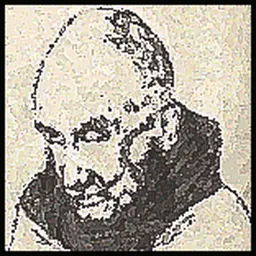
Berrigan, his brother and Josephite priest Philip Berrigan, and Trappist monk Thomas Merton founded an interfaith coalition against the Vietnam War and wrote letters to major newspapers arguing for an end to the war. In 1967, Berrigan witnessed the public outcry that followed from the arrest of his brother Philip, for pouring blood on draft records as part of the Baltimore Four. Philip was sentenced to six years in prison for defacing government property. The fallout he had to endure from these many interventions, including his support for prisoners of war and, in 1968, seeing firsthand the conditions on the ground in Vietnam, further radicalized Berrigan, or at least strengthened his determination to resist American military imperialism.
Berrigan traveled to Hanoi with Howard Zinn during the Tet Offensive in January 1968 to "receive" three American airmen, the first American prisoners of war released by the North Vietnamese since the US bombing of that nation had begun.
In 1968, he signed the Writers and Editors War Tax Protest pledge, vowing to refuse to make tax payments in protest of the Vietnam War. In the same year, he was interviewed in the anti-Vietnam War documentary film In the Year of the Pig, and later that year became involved in radical non-violent protest.
Catonsville Nine
Berrigan published Sorrow Built a Bridge: Friendship and AIDS reflecting on his experiences ministering to AIDS patients through the Supportive Care Program at St. Vincent's Hospital and Medical Center in 1989. The Religious Studies Review wrote, "the strength of this volume lies in its capacity to portray sensitively the impact of AIDS on human lives." Speaking about AIDS patients, many of whom were gay, The Charlotte Observer quoted Berrigan saying in 1991, "Both the church and the state are finding ways to kill people with AIDS, and one of the ways is ostracism that pushes people between the cracks of respectability or acceptability and leaves them there to make of life what they will or what they cannot."
Other activism
Although much of his later work was devoted to assisting AIDS patients in New York City,
P. G. Coy, P. Berryman, D. L. Anderson, and others consider Berrigan to be a Christian anarchist.
In media January 25, 1971: Featured on the cover of Time along with his brother Philip. Adrienne Rich's poem "The Burning of Paper Instead of Children" makes numerous references to the Catonsville Nine and includes an epigraph from Daniel Berrigan during the trial ("I was in danger of verbalizing my moral impulses out of existence"). It is frequently claimed that "the radical priest" in Paul Simon's song "Me and Julio Down by the Schoolyard" refers to or was inspired by Berrigan Berrigan appeared briefly in the 1986 Roland Joffé film The Mission, which starred Robert De Niro and Jeremy Irons. Berrigan's oral history is included in the 2006 book Generation on Fire: Voices of Protest from the 1960s by Jeff Kisseloff. Berrigan's involvement with the Catonsville Nine is explored in the 2013 documentary Hit & Stay. The Chairman Dances album Time Without Measure, a nod to Berrigan's Time Without Number, includes the song “Catonsville 9 (Thomas and Marjorie)” about the protest and the group's expected arrest and imprisonment. Dar Williams' song "I Had No Right" from her album The Green World is about Berrigan and his trial.
Death Berrigan died in the Bronx, New York City, on April 30, 2016, at Murray-Weigel Infirmary, the Jesuit infirmary at Fordham University. he had lived on the Upper West Side at the West Side Jesuit Community.
Awards and recognition 1956: Lamont Poetry Selection 1974: War Resisters League Peace Award 1974: Gandhi Peace Award (accepted then resigned) 1988: Thomas Merton Award 1989: Pax Christi USA Pope Paul VI Teacher of Peace Award 1991: The Peace Abbey Foundation Courage of Conscience Award 1993: Pacem in Terris Award 2008: Honorary Degree from the College of Wooster 2017: Daniel Berrigan Center at Benincasa Community, 133 W. 70th Street, New York, NY 10023
Don’t just read it —
keep it.
Full-length biographies made to live with: read them, listen on the way to work, watch them tonight.
- E-book
- Audio
- Video
Instant download · yours to keep · every purchase keeps this site free
Important facts
People in Daniel Berrigan's life
Named in this biography and alive at the same time


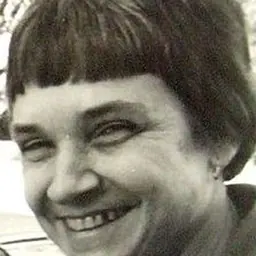
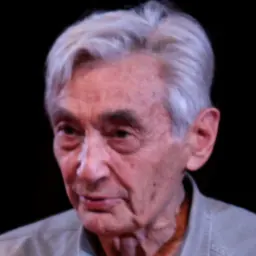
Related people
Same field, nearest in time


Contemporaries
People whose lives overlapped Daniel Berrigan's





Frequently asked questions
Who was Daniel Berrigan?
American Catholic priest, peace activist, and poet (1921–2016)
When was Daniel Berrigan born?
Daniel Berrigan was born on 9 May 1921 in Virginia.
When did Daniel Berrigan die?
Daniel Berrigan died on 30 April 2016 in The Bronx.
What was Daniel Berrigan's occupation?
Daniel Berrigan was a peace activist, theologian, writer, university teacher, poet and hIV/AIDS activist.
What was Daniel Berrigan known for?
Daniel Berrigan was known for Anti-nuclear movement and Opposition to United States involvement in the Vietnam War.
What nationality was Daniel Berrigan?
Daniel Berrigan was American.
Sources & further reading
Cite this page
APA: Biography.guide. (2026). Daniel Berrigan. https://biography.guide/daniel-berrigan/
MLA: "Daniel Berrigan." Biography.guide, https://biography.guide/daniel-berrigan/.
Chicago: "Daniel Berrigan." Biography.guide. https://biography.guide/daniel-berrigan/.
Data last updated: 2026-09-20 · Spot an error? Report a correction.
Page generated 2026-09-27 05:27 UTC