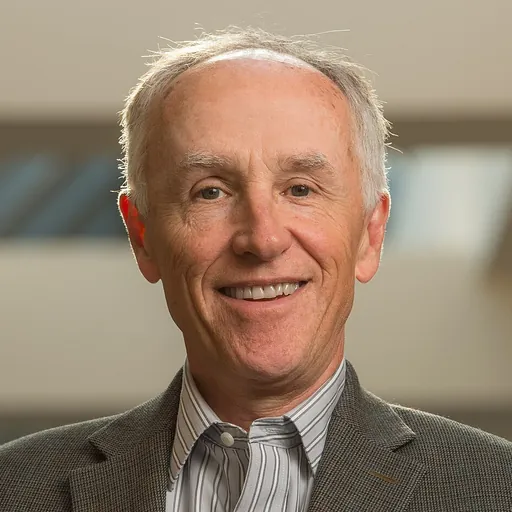
About David Cortright
Born 1946. David Cortright is an American peace activist, academic, non-fiction writer and soldier.
Work Cortright is widely known for his pioneering scholarship and sustained advocacy in several interconnected areas of peace and conflict studies. Central to his work is the promotion of nonviolent social change and civil resistance as powerful tools for achieving political and social justice. Drawing from his own experiences as a Vietnam-era soldier who actively organized protests within the military, Cortright has emphasized the critical role that grassroots activism plays in shaping broader political movements and influencing public policy. His leadership in the nuclear disarmament movement is particularly notable. Cortright was involved in the nuclear freeze campaign of the 1980s, which mobilized millions of Americans to freeze and reverse the arms race and helped shift public opinion on Cold War arms control.
Beyond disarmament, Cortright has made substantial contributions to understanding and advocating for the strategic use of multilateral sanctions and incentives as effective instruments for international conflict prevention and resolution.
His research, often in collaboration with other experts, has influenced how governments and international organizations apply sanctions not just as punitive measures but as nuanced tools to encourage compliance with peace agreements and international norms. He has provided research services to several foreign ministries, including those of Canada, Sweden, Switzerland, Japan, Germany, Denmark, and The Netherlands, and has advised agencies of the United Nations, the Carnegie Commission on Preventing Deadly Conflict, the International Peace Academy, and the John D. and Catherine T. MacArthur Foundation.
He collaborated with George A. Lopez, Alistair Millar and others in analyzing nonmilitary means of countering terrorism and violent extremism.
He worked with civil society organizations to analyze the often harmful impacts of counterterrorism measures on development and peacebuilding activities in affected countries. He co-authored the report Friend Not Foe, with support from the Dutch development agency Cordaid. He was a consultant to Catholic Relief Services on guidelines for improving governance in local communities receiving development and humanitarian assistance.
Cortright's historical analyses of peace movements in the United States, including the Iraq antiwar movement, the Nuclear Freeze movement and the Vietnam antiwar movement, highlight the complex interplay between mass protest, electoral politics, and shifts in government policy. He documents how these movements, driven by diverse coalitions of activists, veterans, students, and faith communities, were instrumental in ending wars and reshaping American attitudes toward military engagement and nuclear policy.
Cortright's work bridges the gap between local grassroots activism and global peace policy, illustrating how participatory and inclusive approaches at the community level can contribute to sustainable peace and governance worldwide. Drafted in 1968 at the height of the conflict, Cortright was initially a non-political young man from a conservative Catholic working-class family. He volunteered for the Army Band to avoid infantry combat, and was stationed at Fort Wadsworth, New York, and later at Ft. Bliss Texas. Early exposure to the realities of the war and conversations with returning veterans deeply challenged the official military narrative he had been taught.
As he immersed himself in studying the history of Vietnam, including reading a biography of Ho Chi Minh, Cortright came to view the Vietnamese struggle as one for independence rather than Communist aggression, likening Ho Chi Minh to a George Washington figure.
Struggling with these realizations, Cortright experienced intense internal conflict about his role in the military and contemplated options such as desertion and conscientious objection but ultimately sought a path of open dissent that would allow him to stay engaged with his family and community. Inspired by early examples of organized opposition within the military such as the American Servicemen's Union at Fort Sill, Oklahoma, he decided to join the growing GI antiwar resistance movement.
Despite the risks, including potential military discipline, Cortright actively organized protests, circulated underground newspapers, and fostered discussions among soldiers opposing the war.
His activism reflected a broader surge of opposition within the ranks that significantly contributed to shifting public opinion and applying pressure on U.S. policymakers.
Cortright's experience as an active-duty soldier turned peace activist laid the foundation for his lifelong commitment to nonviolent social change, disarmament, and peace advocacy. shorter booklet A Peaceful Superpower: The Movement against War in Iraq (Goshen, Ind.: Fourth Freedom Forum, 2004). Truth Seekers: Voices of Peace and Nonviolence (Maryknoll, New York: Orbis Books, 2020); published in an early edition as Buscadors de la Veritat: Veus per la pau i la noviolència (Barcelona: International Catalan Institute for Peace, 2017) Waging Peace in Vietnam: U.S. Soldiers and Veterans Who Opposed the War, co-edited with Barbara Doherty and Ron Carver (New York: New Village Press, 2019) Governance for Peace: How Inclusive, Participatory and Accountable Institutions Promote Peace and Prosperity, co-authored with Conor Seyle and Kristin Wall (Cambridge: Cambridge University Press, 2017) Civil Society, Peace and Power, co-edited with Melanie Greenberg and Laurel Stone (Lanham, MD: Rowman & Littlefield Publishing, 2016). Drones and the Future of Armed Conflict, co-edited with Rachel Fairhurst and Kristen Wall (Chicago, IL: The University of Chicago Press, 2015). Ending Obama's War: Responsible Military Withdrawal from Afghanistan (Boulder, CO: Paradigm Publishers, 2011). Towards Nuclear Zero with Raimo Väyrynen (London: IISS, Routledge, 2010). Gandhi and Beyond: Nonviolence for A New Political Age, 2nd ed. (Boulder, Colo.: Paradigm Publishers, 2009); first edition Gandhi and Beyond (Paradigm, 2006). Peace: A History of Movements and Ideas (Cambridge: Cambridge University Press, 2008). Uniting Against Terror: Cooperative Nonmilitary Responses to the Global Terrorist Threat, co-edited with George A. Lopez (Cambridge, Mass.: The MIT Press, 2007). Soldiers in Revolt: GI Resistance During the Vietnam War, 2nd ed. (Chicago: Haymarket Books, 2005); original edition Soldiers in Revolt: The American Military Today (New York: Anchor/Doubleday, 1975). Sanctions and the Search for Security: Challenges to UN Action, with George A. Lopez (Boulder, Colo.: Lynne Rienner Publishers, 2002). Smart Sanctions: Targeting Economic Statecraft, co-edited with George A. Lopez (Lanham, Md.: Rowman & Littlefield, 2002). The Sanctions Decade: Assessing UN Strategies in the 1990s, with George A. Lopez (Boulder, Colo.: Lynne Rienner Publishers, 2000). Pakistan and the Bomb: Public Opinion and Nuclear Options, co-edited with Samina Ahmed (Notre Dame, Ind.: University of Notre Dame Press, 1998 and Karachi: Oxford University Press, 1999). The Price of Peace: Incentives and International Conflict Prevention, editor (Lanham, Md.: Rowman & Littlefield, 1997), commissioned by The Carnegie Commission on Preventing Deadly Conflict. Political Gain and Civilian Pain: Humanitarian Impacts of Economic Sanctions, co-edited with Thomas G. Weiss, George A. Lopez, and Larry Minear (Lanham, Md.: Rowman & Littlefield, 1997). India and the Bomb: Public Opinion and Nuclear Options, co-edited with Amitabh Mattoo (Notre Dame, Ind.: University of Notre Dame Press, 1996). Economic Sanctions: Panacea or Peacebuilding in a Post–Cold War World? co-edited with George A. Lopez (Boulder, Colo.: Westview Press, 1995). Peace Works: The Citizen's Role in Ending the Cold War (Boulder, Colo.: Westview Press, 1993). Left Face: Soldier Unions and Resistance Movements in Modern Armies, with Max Watts (Westport, Conn.: Greenwood Press, 1991).
Don’t just read it —
keep it.
Full-length biographies made to live with: read them, listen on the way to work, watch them tonight.
- E-book
- Audio
- Video
Instant download · yours to keep · every purchase keeps this site free
Important facts
People in David Cortright's life
Named in this biography and alive at the same time





Related people
Same field, nearest in time

Contemporaries
People whose lives overlapped David Cortright's


Frequently asked questions
Who is David Cortright?
American peace studies scholar (1946-)
When was David Cortright born?
David Cortright was born in 1946 in East Stroudsburg.
What is David Cortright's occupation?
David Cortright is a peace activist, academic, non-fiction writer and soldier.
What nationality is David Cortright?
David Cortright is American.
Sources & further reading
Cite this page
APA: Biography.guide. (2026). David Cortright. https://biography.guide/david-cortright/
MLA: "David Cortright." Biography.guide, https://biography.guide/david-cortright/.
Chicago: "David Cortright." Biography.guide. https://biography.guide/david-cortright/.
Data last updated: 2026-09-22 · Spot an error? Report a correction.
Portrait: Wikimedia Commons · author & licence
Page generated 2026-09-27 05:02 UTC