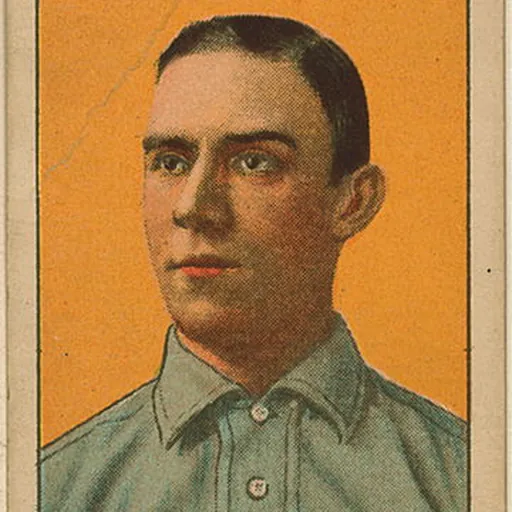
About Dan McGann
Lived 1871 – 1910 (aged 39). Dan McGann was an American baseball player.
Dennis Lawrence "Dan" McGann (July 15, 1871 – December 13, 1910) was an American professional baseball first baseman and second baseman. He played in Major League Baseball (MLB) from 1896 to 1910, and won the World Series in 1905 with the New York Giants.
After beginning his professional career in minor league baseball in 1895, McGann played in MLB for the Boston Beaneaters (1896), Baltimore Orioles (1898), Brooklyn Superbas (1899), Washington Senators (1899), and St. Louis Cardinals (1900–1901) of the National League (NL) before jumping to the rival American League to play for the Baltimore Orioles in 1902. He returned to the NL, playing for the New York Giants (1902–1907) and Boston Doves (1908). In 1909–10, he played for the Milwaukee Brewers in the American Association.
McGann had a troubled personal life. He suffered from depression, and several members of his family committed suicide. After the 1910 season, with rumors of McGann signing with another minor league team, McGann committed suicide with a firearm.
Career
Early career (1891–1897) McGann began his professional baseball career in minor league baseball with a team representing his hometown, Shelbyville, Kentucky, in 1891. He also played for Kentucky teams representing Harrodsburg in 1892, Lexington in 1893, and Maysville in 1894. McGann played for the Norfolk Clams/Crows of the Class-B Virginia State League in 1895 and the Lynchburg Hill Climbers of the Class-B Virginia League in 1896. He initially played all positions except for pitcher, catcher, and first baseman. He played one season with the Orioles, in which he batted .301 with 106 runs batted in (RBI) in 1898, good for fifth place in the NL. McGann finished second on the team in RBIs with 106, behind Kelley. The Cardinals replaced McGann with Bill Richardson.
With the formation of the American League (AL) as a competitor to the NL, McGann joined many fellow NL players who jumped to the AL. Following Cardinals teammate John McGraw, who became player-manager of the Baltimore Orioles of the AL before the 1901 season, McGann signed with the Orioles.
However, the Orioles struggled with debt. Joe Kelley, star player for the Orioles and son-in-law of part-owner John Mahon, reported that the team owed as much as $12,000 ($ in current dollar terms). Unable to afford that debt, Mahon purchased shares of the team from Kelley and John McGraw. With this, Mahon became the majority shareholder, owning 201 of the team's 400 shares. On July 17, 1902, Mahon sold his interest in the Orioles to Andrew Freedman, principal owner of the New York Giants, and John T. Brush, principal owner of the Cincinnati Reds, also of the NL. That day, Freedman released McGann, McGraw, Cy Seymour, Roger Bresnahan, Joe Kelley, Joe McGinnity, and Jack Cronin from their contracts with Orioles. Freedman signed McGann, Bresnahan, McGinnity and Cronin to the Giants, joining McGraw, who had signed with the Giants ten days earlier. Brush signed Seymour and Kelley to the Reds.
With the Giants, McGraw installed McGann at first base, moving Christy Mathewson to pitcher.
McGann stole 42 bases in 1904, finishing fourth in the NL. He stole five bases on May 27, 1904, setting an NL record. McGann's record stood until Davey Lopes stole five bases in a game in 1974, and Otis Nixon stole six in a game in 1991. Though the Giants won the NL pennant in 1904, they refused to compete in the 1904 World Series. Brush and McGraw refused to face the AL champion Boston Americans, following their altercations with Johnson.
McGann developed a reputation as a fighter in 1905. On April 21, 1905, in a game against the Philadelphia Phillies, McGann punched catcher Fred Abbott after McGann was thrown out at home plate. Abbott hit McGann in the back with the ball, resulting in both players being ejected from the game. McGann batted .299 with 14 triples in 1905 as the Giants won NL pennant for the second consecutive year. Competing in the 1905 World Series, a series the Giants won over the Philadelphia Athletics in five games, McGann contributed with his bat and glove. Although McGann batted .235 in the series, he recorded four RBIs on three hits in a Game Three victory. McGann finished first in the NL fielding percentage at first base from 1903 through 1906. Despite this, rumors began to circulate that the Giants were looking to trade McGann, which the team denied.
Before the 1907 season, a report surfaced that the Giants would shift Mike Donlin from the outfield to first base, in order to replace McGann. Donlin denied the claim. McGann suffered a broken wrist when he was hit by a pitch thrown by Andy Coakley of the Cincinnati Reds during spring training in 1907.
McGann returned to the Giants out of shape midway through the 1907 season, although he did bat .298 that season. That winter, trade rumours began to swirl that the Giants would trade him to the Reds. Instead, the Giants traded McGann to the Boston Doves with Frank Bowerman, George Browne, Bill Dahlen and Cecil Ferguson for Al Bridwell, Tom Needham and Fred Tenney on December 13, 1907. Tenney, also a first baseman, was designated as McGann's replacement at first. When a reporter asked McGraw about McGann and Tenney, pointing out that both first basemen were 36 years old, McGraw replied that Tenney had taken better care of himself. Agreeing to terms with George Dovey, president of the Doves, McGann played 135 games during the 1908 season, but batted only .240. During an April 1908 game between the Doves and the Giants, McGraw insulted McGann as slow, referring to him as a "damned ice wagon", noting "that's how the Giants lost a lot of games last season". Dovey released McGann from the Doves after the 1908 season.
Later career (1909–1910) McGann signed with the Milwaukee Brewers of the Class-A American Association for the 1909 season. He played for Milwaukee in 1909 and 1910, batting only .225 in 1910, his career low.
Family McGann suffered from severe clinical depression, a condition which ran throughout his family. One of McGann's sisters committed suicide in 1889 after their mother died. On New Year's Eve in 1901, one of McGann's brothers died as a result of an accidental shooting. In 1910, another of McGann's brothers committed suicide.
Death On December 13, 1910, McGann committed suicide by shooting himself in the heart at a Louisville hotel. At the time of his death, he was 39 years old, and reportedly had been "in the best of health and humor" when last seen. McGann was survived by two sisters, who, despite the family history of suicide, believed their brother had been murdered, as a diamond ring valued at $800 ($ in current dollar terms) McGann had been seen wearing was missing.
Don’t just read it —
keep it.
Full-length biographies made to live with: read them, listen on the way to work, watch them tonight.
- E-book
- Audio
- Video
Instant download · yours to keep · every purchase keeps this site free
Important facts
People in Dan McGann's life
Named in this biography and alive at the same time


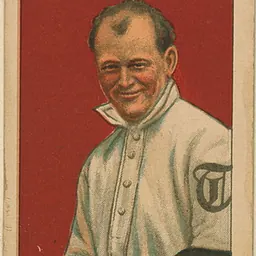
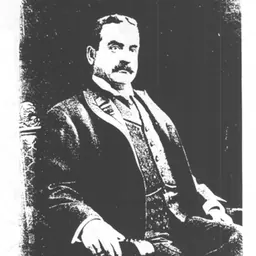


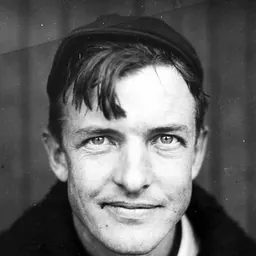
Related people
Same field, nearest in time


Contemporaries
People whose lives overlapped Dan McGann's



Frequently asked questions
Who was Dan McGann?
American baseball player
When was Dan McGann born?
Dan McGann was born on 15 July 1871 in Shelbyville.
When did Dan McGann die?
Dan McGann died on 13 December 1910 in Louisville.
What was Dan McGann's occupation?
Dan McGann was a baseball player.
What nationality was Dan McGann?
Dan McGann was American.
Sources & further reading
Cite this page
APA: Biography.guide. (2026). Dan McGann. https://biography.guide/dan-mcgann/
MLA: "Dan McGann." Biography.guide, https://biography.guide/dan-mcgann/.
Chicago: "Dan McGann." Biography.guide. https://biography.guide/dan-mcgann/.
Data last updated: 2026-09-20 · Spot an error? Report a correction.
Page generated 2026-09-27 05:10 UTC