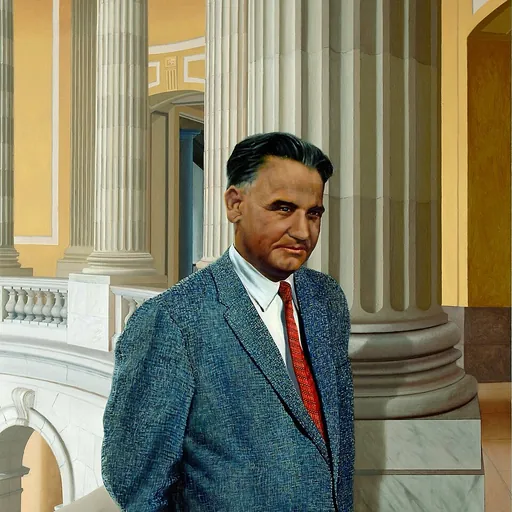
About Dalip Singh Saund
Lived 1899 – 1973 (aged 73). Dalip Singh Saund was an American and Indian politician, judge, businessperson and farmer.
Dalip Singh Saund (; September 20, 1899 – April 22, 1973) was an Indian-born American farmer, lobbyist, judicial officer, academic, and Democratic Party politician who served in the United States House of Representatives from 1957 to 1963. He was the first Sikh, Punjabi American, Indian American, and Asian American elected to the United States Congress. As a resident of Westmoreland, California, Saund represented , which at the time consisted of Imperial and Riverside counties.
Born in Chhajulwadi, Punjab Province, British India, Saund studied at Prince of Wales College and University of the Punjab, where he was active in the Indian independence movement. In 1920, he immigrated to the United States to continue his studies at the University of California, Berkeley, where he earned a Master of Arts and Ph.D. After marrying and settling in California's Imperial Valley as a farmer, he continued his activism for Indian independence and established the Indian Association of America, lobbying for the eligibility of Indians for naturalization, which was permitted under the Luce–Celler Act of 1946. He became a naturalized citizen of the United States in 1949.
As a long-time supporter of President Franklin D. Roosevelt, Saund became active in local Democratic Party politics, winning a local election for a justice of the peace in 1952. Despite the area's strong Republican tendency at the time, Saund was elected to an open seat in the U.S. House of Representatives in 1956. As a member of the House Committee on Foreign Affairs, he was a critic of United States foreign policy in the Middle East and conducted a tour of Asia where he met with David Ben-Gurion, Sukarno, and Jawaharlal Nehru. He won election to three terms before he was hospitalized for a debilitating stroke in 1962 and defeated by Republican Patrick M. Martin. He died after a second stroke in 1973.
Early life
Dalip Singh Saund was born in Chhajulwadi, Punjab Province, British India, on September 20, 1899, to Punjabi Sikh parents Natha Singh and Jeoni Kaur. His father died when he was ten years old. He attended Prince of Wales College. Saund supported the Indian independence movement while studying at the University of the Punjab. In 1919, he graduated with a Bachelor of Science in mathematics from the University of Punjab.
In 1920, Saund immigrated to the United States using money from his brother to study food preservation at the University of California, Berkeley and arrived on September 27. He graduated with a Master of Arts in 1922, and Ph.D. in 1924. He married Marian Z. Kosa, with whom he had three children, on July 21, 1928.
Saund ran for Justice of the Peace in the 1950 election, but was not allowed to take the position as he had not been a U.S. citizen for long enough. In 1951, Saund attempted to be appointed by the Imperial County Board of Supervisors, but they selected Frank Lyall instead. Saund defeated Lyall in the 1952 election to become Justice of the Peace of Westmoreland.
United States House of Representatives Elections
During the 1956 election, Saund ran to replace John R. Phillips, who was retiring, as the United States representative from . On April 16, a legal challenge was filed against Saund claiming that he had not been a U.S. citizen long enough to run in the election, but the challenge was dismissed by the 4th District California Court of Appeal. He won the Democratic nomination and later defeated Republican nominee Jacqueline Cochran in the general election despite Dwight D. Eisenhower winning the area in the presidential election.
Saund defeated John Babbage, a former member of the California State Legislature, in the 1958 election and Charles H. Jameson in the 1960 election.
Tenure Following his election to the United States House of Representatives, Saund stated that he wanted a seat on the House Interior Committee to make sure that his district received a fair share of the Colorado River's water. In 1957, he was appointed to serve on a sub-committee in the United States House Committee on Foreign Affairs.
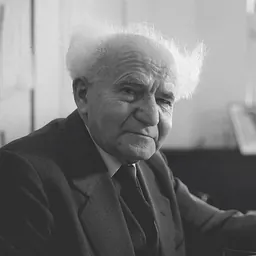
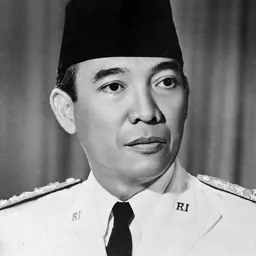
Saund stated during the 1956 election that he would travel to Asia if elected. He conducted a tour of multiple eastern Asian countries which included visits to Japan, Taiwan, British Hong Kong, the Philippines, South Vietnam, Indonesia, Thailand, Burma, India, and Pakistan in 1957. He also visited Israel, where he met with Prime Minister David Ben-Gurion, on his way returning to the United States. In Indonesia he met with President Sukarno and in India he met with Prime Minister Jawaharlal Nehru. Singh voted in favor of both the Civil Rights Act of 1957 and the Civil Rights Act of 1960.
Death Saund was moved to be hospitalized at UCLA Medical Center in January 1963 following the earlier stroke he had suffered in May 1962 while flying to Washington, D.C. He died on April 22, 1973, following a second stroke in Hollywood, California. Twenty-four members of the United States House of Representatives paid tribute to Saund on the House floor and a memorial service was held.
Political positions In 1957, Saund criticized the United States for its policy of "buying kings and protecting oil" in the Middle East while ignoring the people. He stated that the British had done a similar policy in India and were "tossed out of India". He stated that the same thing would happen to the United States if it continued the policy. He praised President Dwight D. Eisenhower for his stand against the United Kingdom, France, and Israel during the Suez Crisis. He criticized the United States Department of State for giving a more elaborate welcome to Queen Elizabeth II than any Asian leader. He defended the United States during the Little Rock Crisis while on tour in Japan stating that in "thirty-five out of the forty-eight states of the Union there was no discrimination against Negroes in schools or public places".
Electoral history
Don’t just read it —
keep it.
Full-length biographies made to live with: read them, listen on the way to work, watch them tonight.
- E-book
- Audio
- Video
Instant download · yours to keep · every purchase keeps this site free
Important facts
People in Dalip Singh Saund's life
Named in this biography and alive at the same time



Related people
Same field, nearest in time





Contemporaries
People whose lives overlapped Dalip Singh Saund's

Frequently asked questions
Who was Dalip Singh Saund?
Indian-born American politician (1899-1973)
When was Dalip Singh Saund born?
Dalip Singh Saund was born on 20 September 1899 in Amritsar.
When did Dalip Singh Saund die?
Dalip Singh Saund died on 22 April 1973 in Hollywood.
What was Dalip Singh Saund's occupation?
Dalip Singh Saund was a politician, judge, businessperson and farmer.
What nationality was Dalip Singh Saund?
Dalip Singh Saund was American and Indian.
Sources & further reading
· Wikipedia: Dalip Singh Saund
Cite this page
APA: Biography.guide. (2026). Dalip Singh Saund. https://biography.guide/dalip-singh-saund/
MLA: "Dalip Singh Saund." Biography.guide, https://biography.guide/dalip-singh-saund/.
Chicago: "Dalip Singh Saund." Biography.guide. https://biography.guide/dalip-singh-saund/.
Data last updated: 2026-09-20 · Spot an error? Report a correction.
Portrait: Wikimedia Commons · author & licence
Page generated 2026-09-27 04:57 UTC